
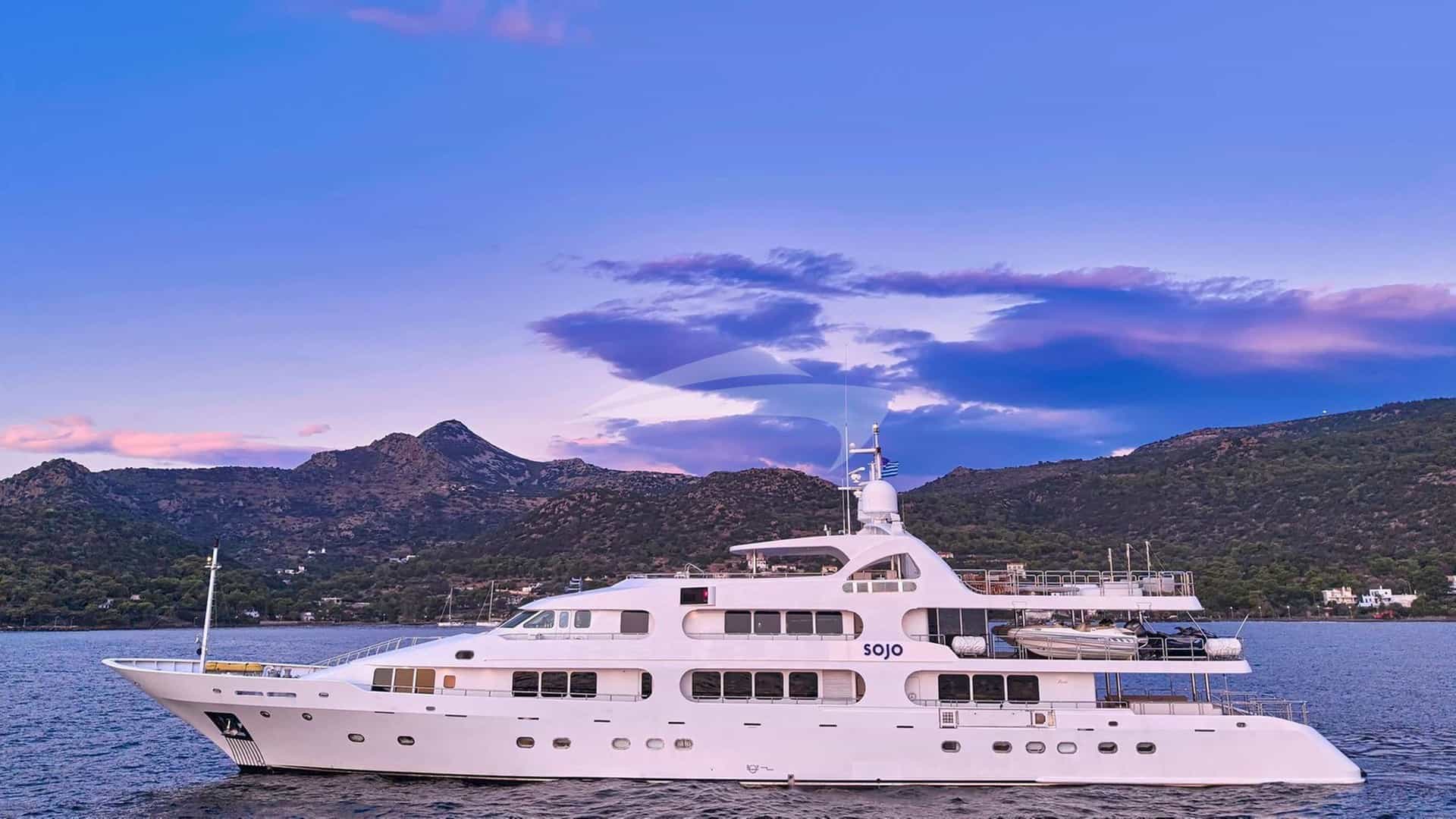
Cruising the remote waters of West Papua presents a radical departure from the established infrastructure of the Mediterranean or the Caribbean. An Explorer Yacht Charter Raja Ampat voyage operates in an environment entirely void of conventional superyacht marinas, service quays, and shore-side support facilities. Covering roughly 40,000 square kilometres of ocean off the Bird’s Head Peninsula, this Indonesian archipelago demands meticulous operational planning, robust onboard self-sufficiency, and experienced local shore handling.
For captains, charter managers, and brokers, executing a successful charter in Raja Ampat relies on understanding that the yacht operates as an autonomous offshore platform. From securing entry clearances in Sorong to staging complex air-freight supply lines for delicate provisions, every logistical element must be arranged weeks before guests set foot on deck.
The Operational Hub: Sorong Harbour and Commercial Infrastructure
The city of Sorong (00°53'S, 131°15'E) on the mainland of West Papua serves as the non-negotiable operational gateway for all yachting activities in Raja Ampat. Sorong possesses no dedicated luxury yacht marinas, finger pontoons, or superyacht berths. Instead, the port functions as a busy commercial and industrial hub supporting oil and gas sector vessels, inter-island cargo ships, regional ferries, and local fishing fleets.
Superyachts visiting Sorong operate predominantly at anchor in the sheltered roadstead situated between the mainland city and Pulau Doom. This anchorage offers good holding ground in soft mud and silt at depths ranging from 15 to 25 metres. However, captains must maintain an active watch due to significant commercial traffic, floating debris, and strong tidal streams. Tidal currents running through the Sorong Strait can reach velocities of up to 3.5 knots during spring tides, requiring adequate chain scope and vigilant generator management for bow-thruster operations during guest transfers.
For heavy logistical operations—such as taking on bulk fresh water, loading heavy freight, or conducting crew changes during inclement weather—vessels occasionally utilise commercial piers such as the Usahamina quay or the main Pelindo commercial terminal. Docking at these commercial facilities requires advance coordination through a local port agent to clear quay space among local timber and supply vessels. High-fendering is mandatory to protect hull gelcoats or paintwork against timber piling and rough concrete quay walls designed for industrial ships rather than motor yachts.
Marine Regulations, Permits, and Port Clearances
Navigating the waters of West Papua involves strict compliance with Indonesian maritime administrative protocols, environmental regulations, and regional Papuan entry frameworks. Navigating these requirements without a specialized Indonesian shore agent based in Sorong is virtually impossible.
To operate legally within the archipelago, a vessel must secure several distinct tiers of approval well in advance of the charter start date.
- Customs, Immigration, Quarantine, and Port Authority (CIQP) clearances processed at the port of entry, alongside the temporary import documentation (Vessel Declaration / PIP).
- Surat Persetujuan Berlayar (SPB) port clearance issued by the Sorong Harbour Master (KSOP) prior to every domestic leg.
- Raja Ampat Marine Park Entry Tags and environmental maintenance permits (Kartu Pemeliharaan Lingkungan) administered by the BLUD UPTD local authority.
- Naval clearances (Lantamal XIV) and local police travel permits (Surat Jalan) required for navigating border-adjacent zones and protected conservation sectors.
The processing window for these clearances requires a minimum lead time of 30 to 60 days. The Indonesian Vessel Declaration system allows foreign-flagged yachts to cruise domestic waters, but every movement between regencies requires formal notifications. Captains should budget significant time for the administrative sign-off in Sorong upon arrival.
Environmental compliance is strictly enforced by the local Marine Park Authority. Raja Ampat contains multiple Marine Protected Areas (MPAs) spanning Dampier Strait, Misool, Wayag, Alyui Bay, and the Ayau Atoll. Marine park rangers actively patrol these zones. Failure to present valid environmental entry tags for every guest and crew member, or anchoring outside designated zones, can result in immediate impounding of tenders, substantial fines, or the revocation of cruising permits.
Bunkering, Fuel Quality, and Water Logistics
Fuel management is a critical factor when planning an Explorer Yacht Charter Raja Ampat yacht charter expedition. Bunkering operations in Sorong require careful planning due to supply constraints and potential fuel quality variances in remote Papuan ports.
High-grade Marine Gas Oil (MGO) must be ordered well in advance through a reputable marine logistics provider to ensure delivery of clean, low-sulphur fuel. Fueling is typically carried out in the Sorong roadstead via a certified bunker barge or by arranging tank truck deliveries at the Usahamina dock. Directly sourcing fuel from local roadside suppliers or unverified coastal barges carries a high risk of water contamination, high sediment content, or microbial growth common in tropical storage tanks.
Captains must ensure their fuel treatment systems are fully operational prior to bunkering in Sorong. It is standard practice to route all taken-on MGO through high-capacity Racor fuel-water separators and onboard centrifugal purifiers before it enters the primary day tanks. Furthermore, Indonesia’s mandatory biodiesel mandates (such as B35 mixtures) require captains to verify engine compatibility, monitor fuel shelf life, and maintain an extensive inventory of spare fuel filter elements onboard.
Potable water supply presents another significant logistical challenge. The municipal water infrastructure in Sorong cannot guarantee water purity suitable for superyacht standards, and shore-side water connections at commercial piers carry a high risk of bacterial contamination or mineral discoloration. Vessels operating in Raja Ampat must be completely self-contained regarding water production.
Explorer vessels should run dual high-capacity reverse-osmosis desalination plants (watermakers) capable of producing between 5,000 and 15,000 litres of fresh water daily. Because watermakers cannot be safely operated in the sediment-heavy, oily waters of Sorong Harbour or shallow muddy bays, water tanks must be fully topped off once the vessel reaches the clear, open ocean of the Dampier Strait or the Outer Sagewin Strait. Onboard mineral re-hardening and UV sterilization systems are essential to maintain water quality throughout extended charters.
Provisioning Supply Chains and Cold-Chain Management
Delivering a fine-dining experience in one of the world's most remote marine wildernesses requires an air-freight cold-chain supply pipeline. Sorong possesses local markets—most notably Pasar Remu—which offer abundant local produce, including tropical fruits (papayas, mangos, mangosteens), local vegetables, fresh coconut, and exceptional locally caught seafood such as yellowfin tuna, red snapper, groupers, and mud crabs. However, the specialized luxury ingredients expected on a high-end charter cannot be sourced locally in West Papua.
All premium provisioning—including prime cuts of meat, European cheeses, butter, fine wines, champagne, specialty produce, and artisan dry goods—must be sourced from specialized marine provisioning agents operating out of Bali (Denpasar - DPS), Jakarta (Soekarno-Hatta - CGK), or Singapore (SIN), and flown into Sorong via air cargo.
- Primary cold-chain route: Daily direct flights operating from Denpasar (DPS) or Jakarta (CGK) into Sorong (SOQ) carrying temperature-controlled freight.
- Secondary freight route: Dry-goods sea containers pre-staged from Singapore or Surabaya weeks in advance of the charter season.
Executing this cold chain requires precision timing. Provisions are packed into insulated, heavy-duty styrofoam containers lined with dry ice or gel packs, delivered to the departure airport in Bali or Jakarta in the early hours of the morning, and flown on morning commercial flights to Sorong. The yacht’s port agent in Sorong must collect the cargo directly from the airport terminal apron, clear local quarantine inspections, and transfer the boxes via covered, air-conditioned transport to the tender launch within two hours of touchdown.
Captains and head chefs must account for potential flight delays or lost cargo by maintaining a ten-day baseline of high-quality frozen proteins, vacuum-sealed items, and dry stores onboard before guest arrival.
Aviation Handling, Jet Logistics, and Guest Transfers
Guest transit into Raja Ampat centers entirely around Domine Eduard Osok Airport (SOQ) in Sorong. Situated just 3 kilometres east of Sorong city centre, the airport features a modern terminal and a 2,500-metre asphalt runway (Direction 03/21) capable of handling medium-haul commercial airliners such as the Boeing 737-800 and Airbus A320, as well as long-range business jets.
Private aviation logistics at SOQ require advance preparation. While the runway length is sufficient for large private jets such as the Gulfstream G650, Bombardier Global 6000, or Dassault Falcon 8X, apron parking space for non-scheduled general aviation aircraft is limited. Private jet handling, landing permits, ground power units (GPU), and fuel supply (JET A-1) must be requested through local handling agents at least 14 days prior to flight operations. During peak charter months—from November through April—overnight aircraft parking at SOQ may be restricted, requiring aircraft to ferry to Makassar (UPG) or Bali (DPS) for repositioning after offloading passengers.
For commercial arrivals, international guests typically fly into Jakarta (CGK), Bali (DPS), or Singapore (SIN), connecting onto overnight domestic flights that land in Sorong in the early morning hours.
Guest transfers from the airport to the vessel require coordinated ground transport. The drive from the terminal at SOQ to the primary tender pickup points—such as the private pier near the Swiss-Belhotel or the Usahamina quay—takes between 15 and 30 minutes in air-conditioned vehicles. Guests are then ferried out to the anchored superyacht via the vessel's primary tender.
For large long-range explorer yachts equipped with certified helipads, direct helicopter transfers can be arranged from SOQ Airport or dedicated staging grounds directly to the yacht's deck, eliminating the road transfer and anchorage steam. Furthermore, rotary-wing support allows guests to meet the vessel deeper in the archipelago, such as in the central Dampier Strait or near Misool, saving up to ten hours of cruising time from Sorong.
Navigational Realities, Draught Limits, and Marine Protection
Navigating Raja Ampat requires exceptional seamanship and active monitoring of shallow waters, as large swathes of the archipelago remain inadequately surveyed. Nautical charts for West Papua—even modern electronic vector charts (ENCs)—can exhibit positioning offsets of several cables. Captains must rely heavily on visual navigation, forward-looking sonar, and scout tender reconnaissance when entering tight passages or uncharted anchorages.
Vessel draught is a key constraint when planning itineraries through specific sectors of the park.
- Dampier Strait and Central Waigeo: Deep-water channels allow passage for vessels of any draught, but tidal currents exceeding 5 knots create heavy standing waves and whirlpools around Kri and Mansuar islands.
- Wayag and Penemu Lagoons: Shallow, razor-sharp karst limestone entrances limit lagoon entry to small tenders or shallow-draft vessels drawing less than 1.5 metres. Large explorer yachts must anchor outside the barrier reefs in deep water (30 to 50 metres).
- Kabui Passage: A narrow, highly scenic channel between Waigeo and Gam with severe depth restrictions, overhead canopy constraints, and extreme tidal flow. It is passable only by tenders or very shallow-draught vessels during slack water.
- Alyui Bay: A deep, sheltered fjord extending 15 nautical miles into western Waigeo, offering secure anchorage in 25 to 40 metres over mud, suitable for deep-draught explorer vessels seeking shelter from open swells.
Anchoring protocol throughout Raja Ampat is governed by strict conservation mandates. Dropping an anchor on live coral reef structures is illegal and severely damage the ecosystem. Explorer yachts must anchor exclusively in pre-verified sand pockets in deep water, or moor using heavy-duty conservation buoy systems established by the Marine Park Authority. In locations where deep sand shelves drop off precipitously from 5 metres down to 60 metres within a single boat length, vessels routinely deploy a bow anchor into deep sand and run stern lines to secure land-fast rocks onshore, supervised by crew in a tender.
Seasonal Weather Windows and Regional Logistics
Logistical planning must align with the equatorial monsoonal shifts that govern West Papua’s weather patterns.
The primary cruising season for an Explorer Yacht Charter Raja Ampat yacht charter runs from November to April, coinciding with the Northwest Monsoon. During this period, seas across the northern and central regions—including Waigeo, Gam, Batanta, Dampier Strait, and Wayag—are exceptionally calm, with minimal wind and clear underwater visibility ideal for diving and tender operations.
The Southeast Monsoon prevails from May through September, bringing stronger winds and persistent ocean swells from the south. During these summer months, the southern region of Misool becomes exposed to heavy sea states, making anchorages uncomfortable and tender operations challenging. However, the northern sectors, particularly protected fjords like Alyui Bay and the sheltered waters of Kabui, remain navigable year-round.
Crew Operations, Local Integration, and Emergency Protocols
Operating an extended expedition charter in West Papua places elevated demands on the crew. The absence of shore-side support means the yacht’s engineering team must carry a comprehensive inventory of critical engine, generator, watermaker, and tender spare parts. Technical failures that could be resolved within hours in the Mediterranean can take days or weeks to rectify in Sorong due to customs delays on imported marine electronics or mechanical components.
Local community integration is an essential element of operating in Papua. Local regulations mandate that yachts employ certified Papuan marine park guides or local rangers when entering specific MPAs. These guides provide invaluable navigational insight regarding shallow heads, assist with securing stern lines ashore, facilitate respectful visits to indigenous Papuan villages such as Arborek or Sawinggrai, and ensure cultural protocol is observed.
Communication across Raja Ampat relies entirely on satellite networks. Cellular coverage (Telkomsel) is available near Sorong town, Waisai (the regency capital on Waigeo), and select island villages, but quickly drops off in remote locations like Wayag or southern Misool. Explorer yachts must be equipped with high-throughput Starlink Maritime or VSAT systems to maintain uninterrupted operational connectivity, weather updating, and guest communications.
Finally, medical evacuation protocols must be established prior to departure. Sorong features regional medical facilities capable of basic stabilization, but serious medical emergencies require immediate air-medevac operations. Shore agents must have pre-arranged access to private charter aircraft capable of evacuating patients from Sorong (SOQ) directly to international medical facilities in Darwin, Australia, or Singapore. Onboard medical kits should be upgraded to offshore expedition status, and at least one crew member should hold advanced medical care certification.
Executing an Explorer Yacht Charter Raja Ampat yacht charter requires blending bluewater self-sufficiency with precise local shore logistics. By establishing strong supply networks through Sorong, adhering strictly to marine park regulations, and respecting the environmental realities of West Papua, yachts can deliver seamless, world-class charter operations in one of the planet's final pristine marine environments.