
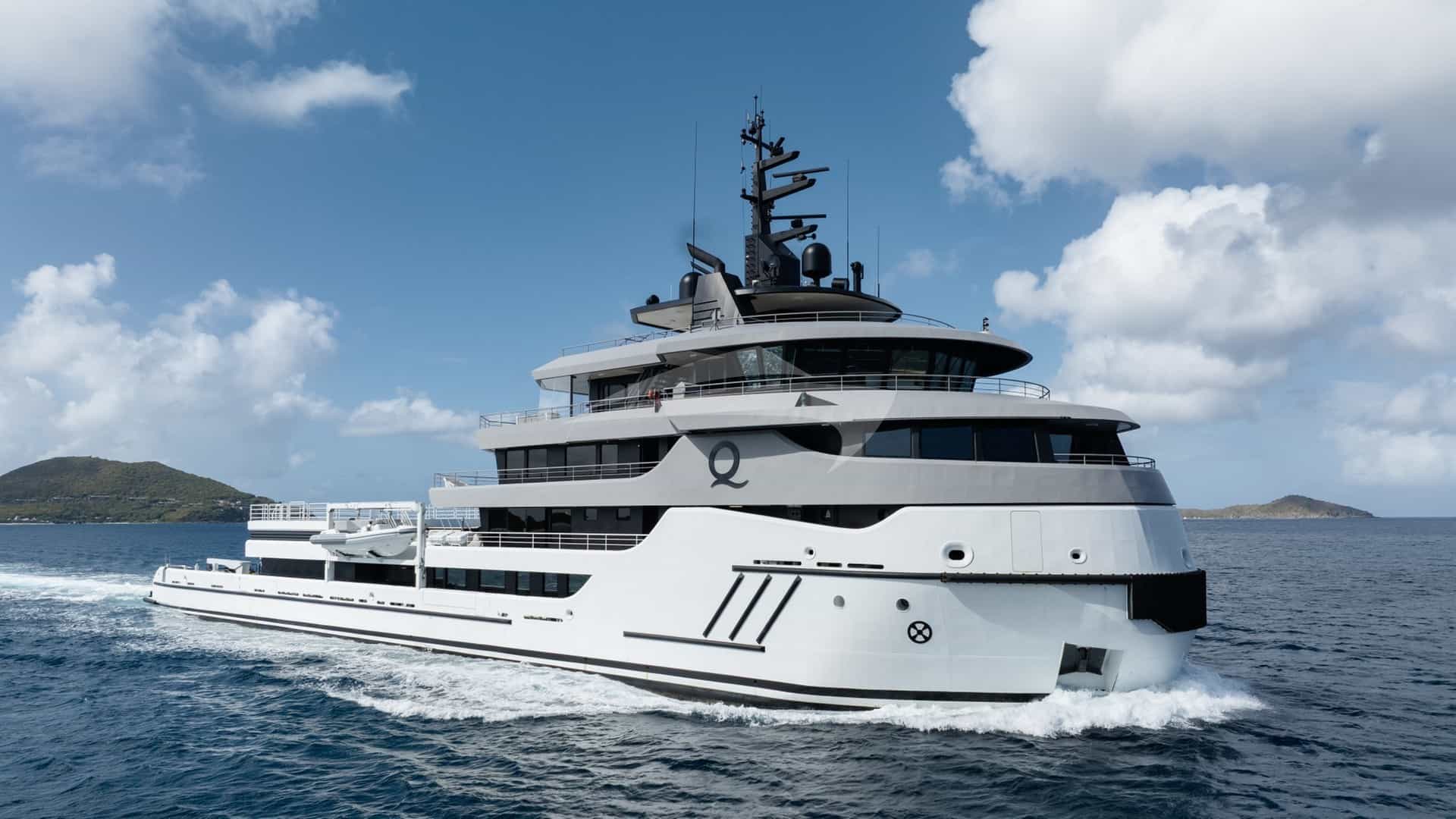
Situated on the western bank of the Rio Arade estuary in Portugal’s Barlavento region, Portimão represents the most versatile deep-water maritime gateway along the southern Iberian peninsula. While much of the Algarve coast is characterized by shallow river mouths, shifting sandbanks, and exposed roadsteads, Portimão provides a sheltered, all-weather sanctuary capable of handling vessels ranging from high-performance motor yachts to 100-metre-plus megayachts. Functioning both as a primary port of call for Western Mediterranean charter itineraries extending into the Atlantic and as an essential staging post for transatlantic crossings, the port combines extensive marina infrastructure with heavy-commercial dockage. Executing a seamless Portimão Yacht Charter yacht charter requires a precise understanding of the local hydrography, seasonal berth competition, customs procedures, and shore-side supply chains.
Navigating the Arade Estuary: Maritime Access and Hydrography
Approaching Portimão from seaward is straightforward compared to other southern Portuguese harbours, due to the substantial granite breakwaters—the Molhe Leste and Molhe Oeste—that project nearly a mile south into the Gulf of Cádiz. These structures tame the Atlantic swell and maintain a navigable fairway into the Rio Arade.
The approach fairway is dredged to a charted depth of 8.0 metres below Lowest Astronomical Tide (LAT) up to the commercial port, though severe winter storms can cause localized siltation near the outer pierheads. Captains approaching from the west past Cabo de São Vicente (Cape St. Vincent), situated 24 nautical miles downwind, must account for the prevailing summer Norteada—a steady north-to-northwesterly wind that routinely accelerates to 25–30 knots around the headland before backing slightly off Praia da Rocha. While the outer bay offers good holding ground in sand and clay, south-westerly gales (Leste or Sueste) create heavy breaking seas at the harbour entrance, rendering entry hazardous for smaller draft vessels during severe winter depressions.
Tidal ranges in the Arade estuary vary from approximately 1.3 metres during neap tides to 3.8 metres during spring tides. The tidal current within the main channel runs at up to 2.5 knots during spring ebbs. Captains of deep-draught vessels or twin-screw motor yachts with limited lateral bow-thruster power must plan berthing manoeuvres at slack water, particularly when securing alongside the river-facing quays where cross-currents run parallel to the pontoons.
Approach & Entrance Parameters:
• Outer Fairway Position: 37°07.2' N, 08°31.8' W
• Fairway Channel Depth: 8.0m LAT (Dredged)
• Tidal Range: 1.3m (Neaps) to 3.8m (Springs)
• Maximum Tidal Current: 2.5 knots in mid-channel
Principal Berthing Infrastructure in Portimão
Berthing options in Portimão fall into three distinct operational zones depending on the vessel’s length overall (LOA), draught, and operational requirements: Marina de Portimão, the Cais Comercial (Commercial Terminal), and the outer estuary anchorages.
Marina de Portimão: Specifications and Capacity
Located immediately inside the western breakwater, Marina de Portimão is the premier leisure facility in the region. Designed specifically to accommodate modern luxury yachts, the marina basin is fully protected from ocean swell by the outer mole and an internal concrete acoustic wall.
The marina contains 620 berths, with dedicated infrastructure for vessels up to 50 metres LOA. The depth within the superyacht basin ranges from 3.5 metres to 4.2 metres at LAT, allowing most high-volume displacement motor yachts and deep-keeled performance sailing yachts to remain afloat at all states of the tide.
Pontoons are constructed from heavy-duty concrete floating fingers and continuous walkways equipped with rubber friction dampening. Berths feature wide fairways, allowing adequate turning basins even when larger motor yachts are moored stern-to with extended passerelles. The marina layout provides high privacy, as the superyacht pontoons (Pontoons A and B) are isolated from public pedestrian access via gated security bridges monitored by 24-hour CCTV and private shore patrols.
Cais Comercial: Deep-Water Operations for Superyachts
Vessels exceeding 50 metres LOA or those drawing more than 4.0 metres cannot be accommodated within the inner marina basin and must use the Cais Comercial (Commercial Quay), situated approximately 1.2 nautical miles upriver on the western bank. Managed by the Port Authority of Sines and the Algarve (APS), this heavy-industrial concrete quay offers continuous alongside berthing with depths alongside up to 10.0 metres at LAT.
The commercial quay is the only berth in the Barlavento Algarve capable of accommodating megayachts up to 150 metres in length. While the infrastructure is functional rather than recreational—requiring heavy pneumatic fenders (Yokohama style) to protect hulls against the exposed concrete quay face—it provides unhindered crane access, high-volume fuel delivery via direct pipe or heavy tanker, and unlimited shore power step-up transformations.
Securing a berth at Cais Comercial requires advance coordination with a local port agent, as priority is given to commercial cruise liners and short-sea freight vessels during peak summer months. Vessels alongside must maintain a active gangway watch due to the significant tidal rise and fall against the fixed quay wall.
Anchorage Options: Ferragudo Roads and Outer Bay
For yachts waiting for berth space or preferring to remain at anchor, two primary options exist:
1. The Outer Anchorage (Praia da Rocha): Located south-east of the western breakwater in 8 to 12 metres of water over a sand and hard-packed mud bottom. Excellent holding in northern and westerly winds, but exposed to southerly swell. 2. Ferragudo Roads (Rio Arade Estuary): Situated inside the breakwater opposite the main marina off the historic fishing village of Ferragudo. Holding is good in mud, but space is tightly constrained by local moorings, navigable channel lines, and strong tidal streams. Vessels anchoring here must maintain a minimum distance from the commercial shipping lane serving the upriver cement and grain docks.
Berth Availability, Seasonal Timing, and Reservation Protocols
Demand for berths in Portimão follows a dual seasonal curve. Unlike interior Mediterranean hubs like Monaco or Palma, Portimão experiences two distinct peak periods: the summer charter season (July through August) and the Atlantic migration windows (May–June for westbound crossings to North America/Caribbean, and September–October for eastbound returns).
Berth Booking Windows & Lead Times:
• July – August (Peak Summer Charter): Reserve 6 to 9 months ahead
• May – June / Sept – Oct (Transatlantic Migration): Reserve 3 to 4 months ahead
• November – April (Winter Layover): Reserve 2 to 3 months ahead
During July and August, Marina de Portimão operates at near 100 percent capacity for berths above 24 metres. Unscheduled arrivals risk being directed to the outer anchorage. High-capacity berths on Pontoons A and B require formal written application, complete with ship's papers, insurance certificates showing minimum third-party liability cover (typically €5 million to €10 million depending on LOA), and full crew/guest lists submitted via the marina's online portal or through a broker.
For winter layovers (November through April), Portimão is an increasingly favored alternative to Gibraltar, Vilamoura, or mainland Spanish ports due to its mild winter climate, competitive monthly rates, and comprehensive technical repair support nearby. Winter berths should be secured by late August.
Essential Shore Logistics: Bunkering, Power, and Technical Support
Bunkering and Fuel Delivery
Portimão is one of the primary bunkering points along the southern coast of Portugal. Marina de Portimão maintains a dedicated high-capacity fuel dock near the harbour entrance, supplying standard Automotive Diesel (EN590) and Gasoil at rates up to 300 litres per minute.
For superyachts requiring high-speed bunkering or large volumes (exceeding 20,000 litres of Low Sulphur Marine Gasoil - MGO 0.1% sulphur), bunkering is conducted via road tankers directly to the berth on Pontoon A or at the Cais Comercial. Tanker deliveries must be cleared through Customs (Alfândega) 24 to 48 hours in advance. Duty-free (exempt) fuel is available for commercially registered vessels holding a valid Charter Agreement and active Out-of-EU clearance papers, provided the ordering process is handled through a licensed Portuguese marine fuel supplier.
Shore Power, Potable Water, and Waste Handling
Shore power infrastructure at Marina de Portimão includes 32A, 63A, 125A, and 250A single and three-phase industrial sockets delivering standard 230V/400V at 50Hz. Vessels requiring American frequencies (60Hz) or ultra-high amperage must run onboard generators or utilize mobile shore-power converters, which can be arranged via local marine engineering logistics firms.
Potable water is supplied directly to all berths from the municipal network. Flow rates at the superyacht berths range from 5 to 10 tonnes per hour. The water is heavily chlorinated; fine-particle filtration and water-softening treatment systems should be engaged on board prior to filling fresh-water tanks or utilizing water directly for exterior washdowns to prevent water spotting on dark hull paintwork.
Waste disposal services meet MARPOL Annex I, IV, and V standards. Black and greywater pump-out facilities are available on the main fuel dock, while mobile suction trucks can be brought alongside for larger capacities. Hazardous waste, including used engine oil, sludge, contaminated fuel, and lead-acid batteries, requires declaration through the marina office for specialized collection by accredited environmental services.
Technical Services and Yard Infrastructure
Portimão offers substantial technical capabilities for yachts undergoing routine maintenance, emergency repairs, or scheduled refits:
- Portimão Shipyard (Navagal / Oceanico): Situated adjacent to the commercial port, featuring a 300-tonne travel lift capable of handling vessels up to approximately 45 metres LOA and 8.5 metres beam. The yard provides covered workshops, sandblasting bays, underwater hull maintenance, composite repairs, and engine overhauls.
- Specialist Marine Trades: The local industrial zone supports certified marine electricians, refrigeration specialists, hydraulic technicians, and marine carpenters. Specialized electronics engineers for Furuno, Raymarine, B&G, and Simrad systems can be dispatched locally or from Lisbon within three hours.
Cruising Formalities, Customs, and Entry Documentation
Portimão is a designated EU Port of Entry. Captains bringing vessels into Portimão from outside the Schengen Zone—including direct passages from Gibraltar, the United Kingdom, Morocco, or the Caribbean—must complete mandatory entry declarations.
Border Control and Immigration (AIMA / GNR-UCC)
Upon arrival, the vessel must hoist the 'Q' flag if arriving from a foreign non-Schengen port. The Maritime Police (Polícia Marítima) and the National Republican Guard Coastal Control Unit (GNR - Unidade de Controlo Costeiro) will inspect the vessel’s documentation. Passenger and crew passports must be presented to the Agency for Integration, Migration and Asylum (AIMA)—formerly SEF—for stamping.
Required documents for entry clearance include:
1. Certificate of Registry (Flag State Document) 2. International Tonnage Certificate 3. Ship's Radio License and Operator Certificates 4. Crew List (with passport details, ratings, and discharge books) 5. Guest Manifest (with passport details and dates of birth) 6. Certificate of Insurance showing valid P&I / Third Party Liability 7. Last Port Clearance Document
Customs Clearance and T1 Transit Status
Vessels flying non-EU flags (e.g., Cayman Islands, British Virgin Islands, Marshall Islands) operating under Temporary Admission rules must report immediately to the Portimão Customs Office (Alfândega). If the yacht is entering the EU for charter operations or carrying out extensive yard works, it may be placed under a T1 transit procedure or local fiscal representation to suspend Import VAT.
Non-EU crew members joining or departing the vessel in Portimão must have their Schengen log days managed meticulously. Crew sign-ons and sign-offs must be executed in person at the Maritime Police headquarters in the harbour to ensure correct immigration logging and prevent crew from exceeding their 90-day allowance within the Schengen Area.
Provisioning and Shore Support
Provisioning in Portimão is efficient, combining high-grade regional produce with international luxury logistics networks.
Local Sourcing and Culinary Supplies
The primary source for fresh seafood, meat, and local produce is the Mercado Municipal de Portimão, located in the city centre along Avenida São João de Deus. The market features line-caught fish from the Atlantic, including wild sea bass, sea bream, octopus, red mullet, and local Portuguese sardines. High-grade Portuguese beef, Iberian pork (Porco Preto), and organic fruits from the inland Monchique region are available daily.
Local specialties easily integrated into luxury charter menus include fresh shellfish (alvor clams, goose barnacles), regional cheeses from the Serra da Estrela, and fine Algarve DOC wines alongside top-tier vintages from the Douro and Alentejo regions.
High-End Provisioning Logistics
For specialized international luxury items—such as French caviars, Wagyu beef, specific vintage champagnes, or exotic tropical fruits—superyacht chefs rely on specialized marine provisioning companies based in Lisbon or Loulé. Orders placed 24 to 48 hours in advance are delivered in refrigerated trucks directly to the pontoon berth.
Dry stores, bonded goods, high-end galley consumables, and fine wines can be delivered duty-free for commercial charter yachts subject to customs clearance.
Aviation Links and Passenger Transfers
The logistical efficiency of Portimão is enhanced by its proximity to international aviation hubs and private jet terminals.
Transport & Transit Times:
• Portimão Municipal Aerodrome (LPPR): 10 minutes (7 km)
• Faro Airport (FAO) / Private Jet FBOs: 45 minutes (72 km via A22)
• Lisbon Portela Airport (LIS): 2 hours 30 minutes (270 km via A2)
Faro Airport (FAO)
Located 72 kilometres east of Portimão, Faro Airport is the principal international gateway to the Algarve. Connected by the double-lane A22 motorway (Auto-estrada do Algarve), transfer times by private car or luxury chauffeur van are approximately 45 minutes. Faro features a dedicated General Aviation Terminal (GAT) operated by Omni Handling and Sky Valet, providing private jet handling, customs clearance, VIP lounges, and direct apron access for chauffeur vehicles.
Portimão Municipal Aerodrome (LPPR)
Situated just 7 kilometres west of the harbour at Montes de Alvor, Portimão Aerodrome features a 850-metre asphalt runway suitable for light twin-turboprops (such as King Airs or Pilatus PC-12s), light private charter helicopters, and skydiving operations. It serves as an ideal disembarkation point for guests transferring directly from regional hubs like Lisbon, Seville, or Málaga via private charter aircraft.
Executive Ground Transfers and Helipads
Helicopter landings can be accommodated directly at Portimão Aerodrome or pre-arranged at designated landing spots near the marina with local municipal approval. Luxury ground transport operators maintain fleets of Mercedes-Benz S-Class, V-Class, and Range Rover vehicles stationed in Portimão, enabling quick transfers for charter guests embarking or disembarking at the pontoon gate.
Crew Logistics, Turnaround, and Maintenance Support
Portimão is a practical turn-around and crew hub due to its comprehensive shore infrastructure, high level of safety, and lower operating costs compared to French or Italian ports.
Crew Accommodation and Amenities
During major maintenance periods or rapid charter turnarounds, excess crew members can be housed in high-specification apartments or boutique hotels located around Praia da Rocha and Ferragudo, within walking distance of the main marina.
The marina perimeter features crew-friendly amenities including fitness centres, laundromats, marine supply stores, and restaurants. The expansive sandy beach of Praia da Rocha and the coastal hiking trails along the Ponta João d'Arens cliffs offer recreational outlets for off-duty crew.
Marine Supplies and Chandlery
Portimão houses several stocked marine chandleries handling deck hardware, safety gear, line riggings, paints (International, Awlgrip), marine hydraulics, and safety equipment servicing (liferafts, Pyrotechnics, EPIRBs). Specialist safety equipment inspections—including RINA, Lloyd’s Register, and MCA certifications—can be conducted on board by surveyors based in Lisbon or Cadiz with minimal notice.
By leveraging Portimão’s deep-water access, full-service infrastructure, efficient customs framework, and proximity to regional transportation hubs, yacht captains and charter brokers can execute flawless itineraries while securing maximum operational security along the Atlantic coast of Southern Europe.