
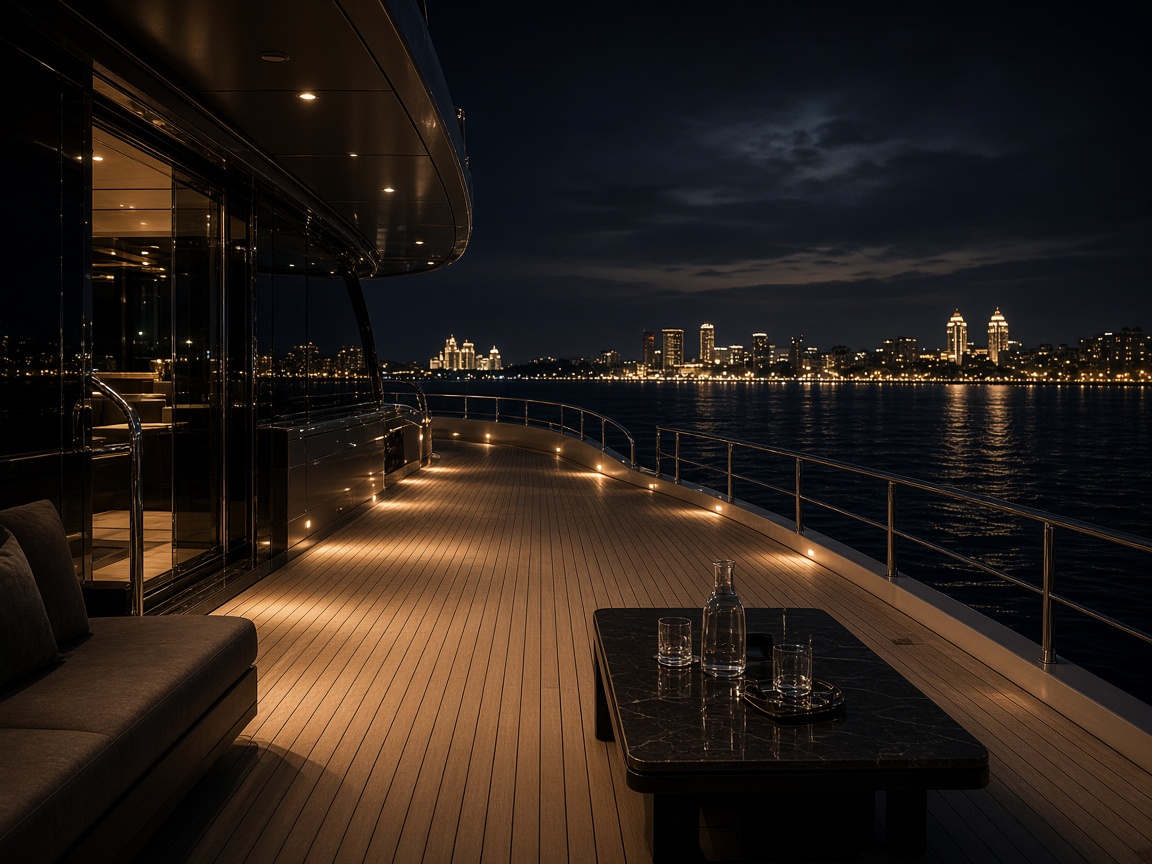
Sitting at the southernmost tip of Martinique, Sainte-Anne occupies a strategic position where the sheltered waters of the Caribbean Sea meet the open Atlantic Ocean. For captains and charterers alike, this vibrant coastal commune serves as the true maritime gateway to the southern windward chain. Framed by white-sand beaches, vast coconut groves, and an expansive sheltered bay, Sainte-Anne offers a distinct blend of French administrative efficiency and authentic Creole culture.
Operating a luxury yacht in these waters requires an understanding of the local geography, seasonal weather shifts, and complex reef systems that defend the coast. Whether hosting guests on a extended southern Caribbean itinerary or using the peninsula as a launching pad for passages across the St Lucia Channel, understanding how to navigate Sainte-Anne and its surrounding anchorages is essential for a seamless voyage.
The Maritime Landscape of Sainte-Anne and the Far South
The geography of the Sainte-Anne peninsula dictates the sailing conditions along Martinique’s southern coast. The coastline transitions rapidly from the mangrove-lined lagoons of the Cul-de-Sac du Marin to the wave-swept Atlantic headlands of Cap Chevalier and Pointe d’Enfer.
The primary cruising zone sits on the leeward western face of the peninsula. Here, the waters of the Baie de Sainte-Anne provide a tranquil roadstead protected from the relentless easterly trade winds by the elevated topography of the interior, including Morne Jacqueline and the surrounding hills. To the north-west lies the deep natural inlet of Cul-de-Sac du Marin, home to one of the largest and most equipped marina complexes in the Lesser Antilles. To the south, the land narrows toward Pointe Dunkerque and the famous curve of Grande Anse des Salines, before terminating at the exposed shoals that mark the edge of the St Lucia Channel.
Understanding this layout is critical when executing a Sainte-Anne Yacht Charter yacht charter. The transition from the sheltered western lee to the exposed Atlantic windward coast occurs over a distance of less than three nautical miles around Cap Cabaret. A captain must account for immediate shifts in sea state, wind force, and current speed as soon as the vessel clears the southern capes.
Seasonal Conditions: Winds, Swells, and Sea State
Cruising off Sainte-Anne is governed by the North-East Trade Winds, locally augmented by land and sea breeze effects along the Martinique coastline. Knowing what to expect by month enables precise itinerary planning and optimal comfort for guests on board.
### December to February This period brings the traditional 'Christmas Winds'. The trade winds blow consistently from the east-north-east at 20 to 25 knots, frequently gusting to 30 knots during passing squall lines. The sea state in the St Lucia Channel is moderate to rough, with open-ocean swells reaching 2.5 to 3.5 metres. The western anchorage off Sainte-Anne town remains calm, though powerful northerly swells generated by distant low-pressure systems in the North Atlantic can occasionally refract around Pointe Marin, creating a gentle roll in shallow waters.
### March to May Widely considered the premier cruising window for a Sainte-Anne Yacht Charter yacht charter, these months feature moderate trade winds shifting slightly to the east or east-south-east at 15 to 20 knots. Sea states settle significantly, with channel swells dropping to 1.5 to 2 metres. The anchorages along the leeward side of Sainte-Anne are exceptionally flat, offering ideal conditions for water sports, tender operations, and comfortable overnighting at anchor.
### June to August Winds become lighter and variable, typically prevailing from the east-south-east at 10 to 15 knots. Air temperatures and humidity rise, and the region experiences an increase in tropical waves. The waters surrounding Sainte-Anne are generally glassy and smooth, though captains must monitor radar closely for localized thunderstorm cells that can produce sudden, intense wind shifts.
### September to November This coincides with the peak of the Atlantic hurricane season. While modern weather forecasting provides ample warning, trade winds during these months can drop to minimal breezes interrupted by convective weather. When conditions are clear, sea states are extremely calm. However, many crewed yachts undergo seasonal maintenance during this window, and operations require flexible planning around regional tropical weather systems.
Primary Anchorages and Protection Profiles
The south-western coast of the Sainte-Anne peninsula provides several distinct holding grounds, each offering specific degrees of shelter, bottom topography, and operational advantages.
### Baie de Sainte-Anne The principal anchorage lies directly off the town of Sainte-Anne, extending from the beach at Pointe Marin down to Anse Caritan. The seabed is primarily fine white sand interspersed with patches of turtle grass, offering outstanding holding in depths between 3 and 7 metres. Protection:* Excellent shelter from north-east, east, and south-easterly winds. Open to the west and north-west. Operational Notes:* The shallow shelf extends a considerable distance offshore. Deep-draft yachts (drawing over 3 metres) should anchor further out, roughly 0.4 nautical miles west of the parish church spire, where depths average 8 to 10 metres. The clear water makes visual identification of sandy patches straightforward during bright daylight.
### Anse Caritan Located south of Sainte-Anne village, Anse Caritan is a smaller, highly protected pocket anchorage bounded by dense vegetation and low cliffs. Depths range from 4 to 6 metres over a muddy sand seabed. Protection:* Exceptional protection from easterly trade winds and high-altitude thermal draughts coming off the land. Operational Notes:* The proximity to the shoreline offers a wind-break, making it a favoured spot for yachts seeking a undisturbed night at anchor. Care must be taken when dropping anchor to avoid small local moorings and designated swimming zones marked by yellow buoys.
### Anse Meunier (Grande Anse d'en Haut) Positioned further south toward Les Salines, Anse Meunier offers a wilder, undeveloped backdrop. Surrounded by sea-grape trees and mangroves, the holding ground consists of clean, soft sand in 3 to 5 metres of water. Protection:* Good shelter from east-north-east through east-south-east. Susceptible to westerly swells. Operational Notes:* Access by tender to the beach is straightforward, though swinging room can be limited if several vessels are present. It is an ideal lunch stop before or after a channel crossing.
### Baie des Anglais and Cap Chevalier Situated on the windward Atlantic coast of the peninsula, Baie des Anglais is a deep mangrove estuary protected by an outer barrier reef. Protection:* Total protection from all swell once inside, though trade winds blow directly into the bay. Operational Notes:* Accessing this area requires navigating narrow passes through the barrier reef, such as Passe Mitan or Passe du Loup. Local knowledge or an experienced skipper is mandatory, as depth soundings change rapidly and navigational markers can be sparse. Deep-draft vessels should refrain from entering; it is best suited to catamarans drawing under 1.5 metres under settled light-wind conditions.
Navigational Hazards and Local Pilotage
While the waters around Sainte-Anne are generally clear and deep, several specific navigational hazards require precise attention during passage planning and coastal execution.
The most prominent underwater hazard on the approach to Sainte-Anne from the south is the Cayes de Sainte-Anne, a series of coral heads and shallow reef formations extending west-south-west from Pointe Dunkerque. The reef system rises sharply from depths of 20 metres down to less than 1.5 metres. Vessels rounding the southern tip of Martinique must give Pointe Dunkerque a berth of at least 1 nautical mile, staying clear of the 10-metre depth contour until the green buoy marking the southern fairway into Cul-de-Sac du Marin is sighted.
Another challenge for watchkeeping officers is the concentration of unlit fish traps (known locally as nasas) set by artisanal fishermen along the 20-metre to 50-metre depth contours. Marked only by small plastic bottles or dark flags, these lines pose a risk of fouling propellers and pod drives, particularly during low-light conditions or night arrivals.
When entering Cul-de-Sac du Marin or approaching the Sainte-Anne anchorage from the west, captains must navigate around the Banc de Sable off Pointe Marin. This shallow sandbank shifts slightly following major storm events and reduces depths to under 2 metres just outside the buoyed channel. Adhering to the lateral buoys marking the main channel into Le Marin is recommended before branching off south-east toward Sainte-Anne town.
Currents along the south coast are significantly influenced by the St Lucia Channel. A persistent westerly ocean current flows past Pointe des Salines at speeds between 1.5 and 2.5 knots. During an ebb tide combined with strong easterly winds, heavy wind-against-current seas develop off the southern capes, requiring yachts to adjust speed and trim to ensure guest comfort.
Key Day-Hops and Nautical Distances
Sainte-Anne is ideally situated for short coastal hops along Martinique's leeward side, as well as serving as the primary departure point for offshore passages to neighbouring islands.
+------------------------------------------+-------------------+
| Route                                    | Distance (nm)     |
+------------------------------------------+-------------------+
| Sainte-Anne to Le Marin Marina           | 2.5 nm            |
| Sainte-Anne to Rocher du Diamant         | 8.5 nm            |
| Sainte-Anne to Anse d'Arlet (Bourg)      | 13.0 nm           |
| Sainte-Anne to Fort-de-France (Bay)      | 19.5 nm           |
| Sainte-Anne to St Pierre                 | 33.0 nm           |
| Sainte-Anne to Rodney Bay (St Lucia)     | 21.0 nm           |
| Sainte-Anne to Cap Chevalier (via south) | 7.5 nm            |
+------------------------------------------+-------------------+
### Coastal Highlights Sainte-Anne to Rocher du Diamant (8.5 nm):* A scenic west-north-westerly run across the Baie de Fort-de-France outer approach. Diamond Rock rises 175 metres out of the sea. Anchoring is prohibited around the rock due to its protected nature reserve status and steep underwater dropping, but sailing close-by offers exceptional photographic opportunities. Sainte-Anne to Anse d'Arlet (13 nm):* A comfortable two-hour beam reach up the coast brings you to the sheltered coves of Grande Anse, Anse d'Arlet Bourg, and Anse Noire. These anchorages feature white and black sand beaches, excellent mooring buoy fields managed by the local maritime authority, and sea turtle feeding grounds. Sainte-Anne to Rodney Bay, St Lucia (21 nm):* The standard open-ocean passage south across the St Lucia Channel. Leaving the lee of Sainte-Anne, vessels enter the open swell. On a broad reach in normal trade winds, a performance sailing yacht or motor yacht completes the crossing in two to three hours.
Captain’s One-Week Itinerary Strategy
Executing a seamless itinerary along Martinique's south coast requires balancing energetic open-water sailing with relaxed periods at anchor. Below is how an experienced charter captain structures a seven-day voyage starting and ending in the Sainte-Anne region.
### Day 1: Embarkation at Le Marin to Sainte-Anne (2.5 nm) Guests embark at the marina in Le Marin. After safety briefings and vessel familiarisation, the yacht slips its berth in the late afternoon and completes a short, smooth run down the fairway to drop anchor in Baie de Sainte-Anne. Guests enjoy their first evening at anchor with a view of the illuminated town and church spire, eating fresh seafood prepared on board while acclimatising to the tropical environment.
### Day 2: Sainte-Anne to Les Salines and Anse d'Arlet (14 nm) At morning light, the crew raises anchor and moves the yacht south to Anse Meunier or off Grande Anse des Salines for breakfast and a morning paddleboarding session. At midday, the yacht gets underway for a beam reach across to Rocher du Diamant, rounding the basalt fortress before dropping anchor in the sheltered waters of Anse d'Arlet Bourg. Guests go ashore via tender to visit the historic waterfront church and enjoy local Creol-French hospitality.
### Day 3: Anse d'Arlet to Anse Noire and Fort-de-France (10 nm) The morning is spent snorkelling alongside green sea turtles at Anse Dufour and the dramatic dark volcanic cove of Anse Noire. Before lunch, the yacht lifts anchor and heads north across the Baie de Fort-de-France toward the anchorage off Pointe du Bout or directly into the capital's harbor to explore the historic Fort Saint-Louis and the vibrant spice markets.
### Day 4: Fort-de-France to St Pierre (14 nm) Sailing north under the lee of Mount Pelée, the yacht moves past rainforest-covered cliffs down to St Pierre, the former 'Paris of the Caribbean' destroyed by the volcanic eruption of 1902. The yacht anchors in deep sand (8 to 12 metres) off the town beach. Guests go ashore to explore the ruins and tour the local Depaz rum distillery situated on the slopes of the volcano.
### Day 5: St Pierre to Grande Anse d'Arlet (22 nm) A morning departure allows for a full day of downwind sailing back down the western coast. The vessel makes a extended stop at Anse à l'Âne for water sports before settling into Grande Anse d'Arlet for the night. This wide bay offers excellent holding, clear water, and several beachfront venues for sundowners.
### Day 6: Anse d'Arlet to Sainte-Anne Peninsula (13 nm) The yacht heads back toward the far south, beating gently against the light coastal breezes. The captain sets anchor off Anse Caritan for a quiet afternoon. The crew sets up the yacht's water toys, while guests enjoy a quiet swim in the calm, turquoise water. Dinner is served on the aft deck under clear skies.
### Day 7: Sainte-Anne to Le Marin (2.5 nm) A final early morning swim off Pointe Marin is followed by a short breakfast cruise back into the Cul-de-Sac du Marin for disembarkation.
On-Shore Culture, Provisioning, and Gastronomy
A key feature of chartering in Sainte-Anne is the high quality of on-shore amenities combined with distinct local traditions. Unlike many purely resort-driven destinations in the Caribbean, Sainte-Anne is an authentic, living Martinican village.
### Local Markets and Fresh Provisioning The daily covered market in the centre of Sainte-Anne town, situated steps from the dinghy dock, is an excellent resource for yacht chefs. Open early every morning, local vendors offer: Freshly harvested tropical fruits, including chadeks (local grapefruit), passionfruit, mangoes, and small sweet bananas (bananes frressinette*). House-blend Creole spices, Colombo curry powders, vanilla pods, and homemade hot pepper sauces (piment oiseau*). Catch of the day directly off local fishing boats (gommiers*), including yellowfin tuna, mahi-mahi, kingfish, and red snapper.
For comprehensive provisioning, chef teams can utilise the high-end European supermarkets and specialist wine merchants located nearby in Le Marin, which import fresh produce, cheeses, and meats twice weekly directly from Paris.
### Local Cuisine and Distilleries The culinary scene in and around Sainte-Anne blends classic French technique with Caribbean ingredients. On-shore dining options near the anchorage range from informal beach shacks (boucards) serving accras de morue (salted cod fritters) and grilled lambi (conch), to refined beachfront establishments offering line-caught fish in a court-bouillon sauce.
No cruising guide to southern Martinique is complete without acknowledging its world-renowned Rhum Agricole—rum distilled directly from fresh sugar cane juice rather than molasses, holding the prestigious French Appellation d'Origine Contrôlée (AOC) designation. A short taxi ride inland from the Sainte-Anne anchorage brings guests to historic estates such as Habitatin La Mauny or Distillerie Trois Rivières. Here, guests can sample vintage single-cask rhums that showcase the complex terroir of Martinique’s southern soils.
By understanding the region's sea conditions, precise anchorage profiles, and cultural highlights, captains can deliver an exceptional yachting experience in one of the Caribbean's most complete cruising grounds.