
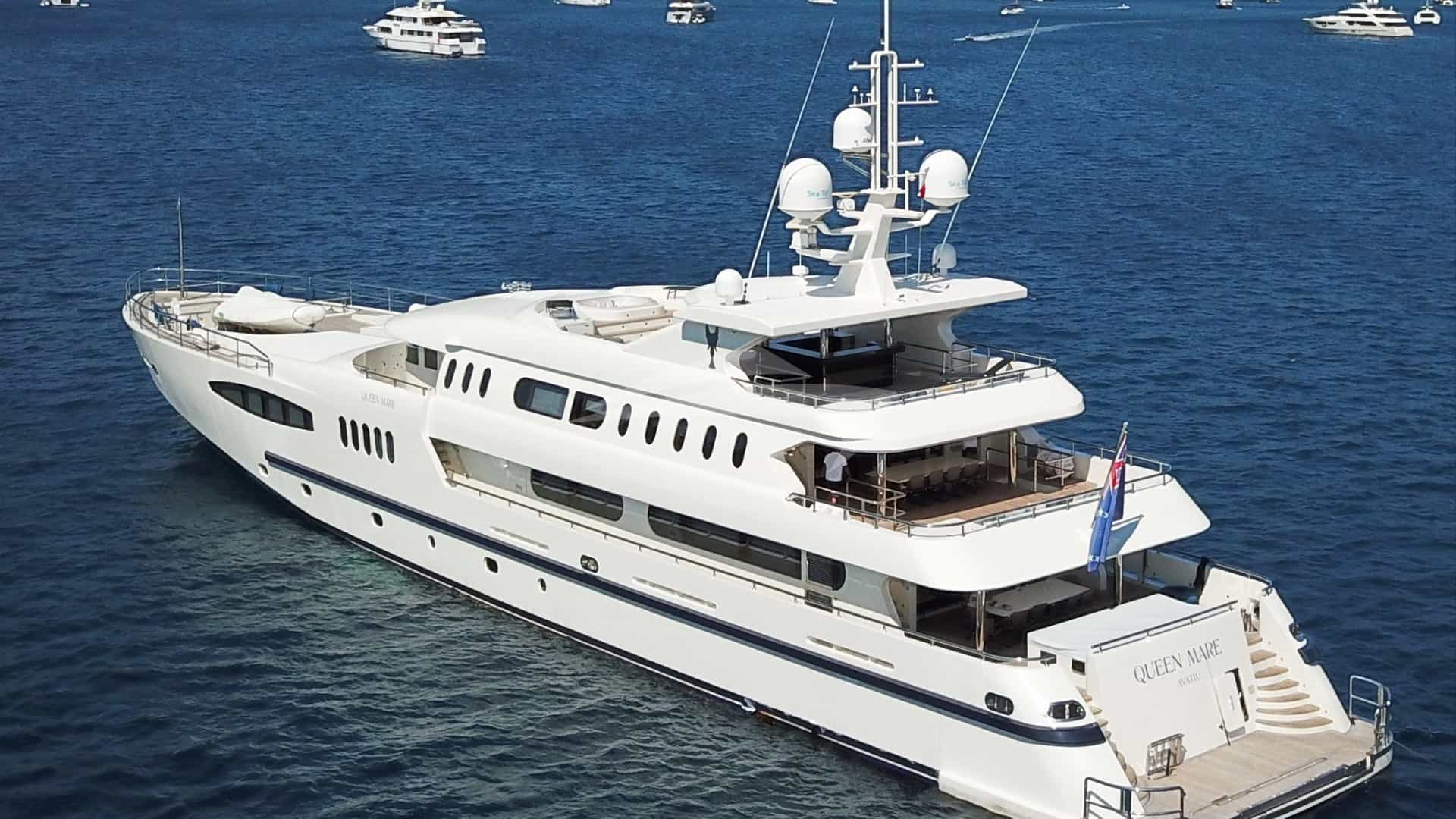
Taranto occupies a position of significant strategic value at the apex of the Gulf of Taranto, situated at 40°28'N 17°14'E on the northern rim of the Ionian Sea. Divided between the open expanse of the Mar Grande and the sheltered inner lagoon of the Mar Piccolo, this Apulian city has served as a primary naval base and maritime crossroad since antiquity. For superyachts navigating between the Adriatic, the Ionian islands of Greece, and the Tyrrhenian Sea via the Strait of Messina, Taranto represents an exceptionally functional, deep-water port of call. Executing a seamless Taranto Yacht Charter yacht charter requires detailed knowledge of local berthing facilities, draft constraints, port authority protocols, and regional logistics, all of which differ notably from the standard resort hubs of the Western Mediterranean.
Marinas and Berthing Infrastructure
Berthing options in Taranto fall into two distinct categories: dedicated leisure facilities inside the Mar Grande and deep-water commercial quays capable of accommodating mega yachts exceeding 60 metres in length.
The primary facility for private and commercial luxury yachts up to 60 metres is Marina di Taranto (Molo Sant'Eligio), positioned on the western edge of the historic old town (Borgo Antico). Molo Sant'Eligio offers 254 berths protected by a solid breakwater structure. The outer quay provides maximum depths ranging from 4.5 to 5.5 metres, making it suitable for high-displacement motor yachts and large sailing yachts. Shore power connections provide 220V and 380V supply up to 250 Amperes, while fresh water is piped directly to each berth pedestal. The marina operates 24-hour security, provides private parking, and maintains blackwater and greywater pump-out services upon request.
For superyachts over 60 metres, or vessels requiring drafts greater than 5.5 metres, berthing is arranged within the commercial port sector (Porto Mercantile), managed by the Autorità di Sistema Portuale del Mare di Taranto.
The commercial quays, specifically Molo San Cataldo and Calata 1, offer deep-water berths with depths ranging between 8.0 and 11.0 metres. These berths feature heavy-duty mooring bollards and extensive quay space suitable for crane access, heavy equipment staging, and container unloading. Because these quays fall under the International Ship and Port Facility Security (ISPS) Code, access is strictly controlled, and advance coordination with a local maritime agency is mandatory to secure security clearances, pilotage, and line-handling services.
Key Berthing Specifications in Taranto:
- Marina di Taranto (Molo Sant'Eligio): Max LOA 60m, Max Draft 5.5m, 250A Power, Fuel Dock.
- Porto Mercantile (Molo San Cataldo): Max LOA 120m+, Max Draft 11.0m, ISPS Compliant, Deep-Water Quays.
Navigational Constraints and the Ponte Girevole
Navigating into Taranto requires a clear understanding of the geography separating the Mar Grande from the Mar Piccolo. The Mar Grande is an open bay enclosed by the breakwaters of Diga di San Vito to the south and Diga di San Cataldo to the north, anchored by the islands of San Pietro and San Paolo. Entry into the outer harbour is made through either the Passo di San Vito (southern channel) or the Passo di Taranto (western channel). Depths in these principal approach channels exceed 12 metres, presenting no hazard to deep-draft vessels.
The Mar Piccolo, however, is connected to the Mar Grande by two narrow passages: the natural Canale Navigabile to the west and the Canale di Porta Napoli to the northwest. The Canale Navigabile is spanned by the iconic Ponte Girevole (revolving bridge) adjacent to the historic Castello Aragonese.
The Ponte Girevole opens only by prior arrangement with the Italian Navy (Marina Militare) and the Port Captaincy (Capitaneria di Porto di Taranto). Openings are rare, scheduled primarily for military operations or maintenance. Furthermore, air draft restrictions (under 12 metres when closed) and draft limitations inside the channel (under 5.0 metres) mean that virtually all visiting charter yachts remain berthed or anchored within the Mar Grande. Charter captains should plan all operations around berths in the Mar Grande or Molo Sant'Eligio, treating entry into the Mar Piccolo as an exception requiring weeks of advance clearance.
Berth Availability and Seasonal Lead Times
Taranto does not suffer from the extreme berth congestion experienced in hotspots like Capri, Porto Cervo, or Monaco. However, availability at Molo Sant'Eligio tightens considerably during the peak summer months of July and August, as well as during regional regattas and local festivals, such as the Settimana Santa (Holy Week) processions in April and the Festa di San Cataldo in early May.
To secure prime berthing on the outer breakwater at Molo Sant'Eligio for yachts between 35 and 60 metres, reservation requests should be lodged three to four months in advance. For off-peak visits in May, June, or September, a lead time of three to four weeks is generally sufficient.
When requesting commercial berths at Molo San Cataldo for vessels over 60 metres, lead times are governed by commercial shipping schedules. A minimum notice period of 14 working days is required by the Port Authority to allocate quay space, arrange pilotage, and clear ISPS compliance, regardless of the time of year.
Regional Berthing and Anchorage Alternatives
When operating along the Gulf of Taranto, captains must account for varying degrees of coastal protection and marina infrastructure. The northern coast of the gulf features shallow sandy shelves, while the eastern coast towards the Salento peninsula presents rugged limestone shelves and deep bays.
- Isola di San Pietro Anchorage (3 NM from Taranto city center): Positioned within the Mar Grande, the eastern side of Isola di San Pietro provides excellent protection from westerly and south-westerly winds. The seabed consists of sand and weed, offering reliable holding in depths between 6 and 10 metres. This is the primary day-anchorage for yachts embarking or disembarking guests in Taranto.
- Marina di Pulsano / Torretta (8 to 12 NM southeast): Moving southeast along the coast, small coves such as Luogovivo and Serrone offer anchorage for tender operations and swimming stops in light offshore winds (Northerly/Northeasterly). Depths range from 4 to 8 metres over sand. Exposed to any southern or south-westerly swell.
- Campomarino di Maruggio (18 NM southeast): A small harbour suitable for tenders or support vessels under 15 metres length overall, with a maximum entrance draft of 2.2 metres. Yachts anchor off the outer breakwater in 5 to 7 metres of water over sand and rock.
- Gallipoli (45 NM southeast): The principal superyacht destination on the eastern shore of the Gulf of Taranto. Gallipoli offers two major berthing areas: the commercial harbour (deep-water berths up to 80m LOA) and Bleu Marina / Darsena Fontanelle (yachts up to 35m LOA, draft up to 4.5m). High season lead times for Gallipoli are extended; berths for July and August must be booked five to six months ahead.
- Marinagri / Policoro (28 NM southwest): Located across the gulf in Basilicata, Marinagri is a modern inland canal marina system accessed via a dredged sea channel. Maximum draft in the entry channel is restricted to 2.5 to 3.0 metres depending on recent siltation. Suitable for mid-sized motor yachts and shallow-draft catamarans up to 35 metres.
Prevailing Weather and Harbour Protection
The Gulf of Taranto is subject to specific local meteorological dynamics. During the summer charter season, the prevailing winds are the Maestrale (Northwesterly) and the Sirocco (Southeasterly).
The Maestrale blows down off the Apennines and across the Apulian plain, bringing clear skies and moderate seas near the shore, though localized squalls can develop during late afternoon thermal cycles.
The Sirocco presents the greatest challenge to berthed vessels. A strong Southeasterly generates significant wave action across the open waters of the gulf. While Molo Sant'Eligio's outer breakwater absorbs the primary wave energy, a persistent Sirocco creates a moderate surge within the marina basin. Captains berthed on the outer quay at Sant'Eligio should ensure heavy-duty lines, snubbers, and adequate fender coverage are deployed when a Southeasterly forecast exceeds 20 knots.
Shore Logistics: Fuel, Water, and Technical Services
Bunkering in Taranto is highly efficient, owing to the city's status as a major industrial and commercial maritime port.
- Fuel Supply: High-duty commercial diesel and duty-free diesel (for eligible commercial charter vessels under active charter agreements) can be delivered via two methods. At Molo Sant'Eligio, low-speed delivery is available directly at the fuel pontoon for volumes up to 10,000 litres. For high-volume bunkering (exceeding 10,000 litres) or for superyachts berthed at Molo San Cataldo, fuel is delivered via certified road tankers. Delivery flow rates from high-capacity road tankers reach up to 50,000 litres per hour. Bunkering requests require a minimum of 48 hours' notice to clear customs (Agenzia delle Dogane) documentation, particularly when duty-free fuel is requested.
- Fresh Water: Water supplied at Molo Sant'Eligio and commercial quays is drawn from the regional municipal grid (Acquedotto Pugliese). While drinkable and safe, the mineral content (hardness) is relatively high. Vessels are advised to run incoming shore water through onboard softeners or reverse-osmosis filtration systems before filling structural tanks to prevent calcification in domestic lines.
- Technical and Repair Infrastructure: Taranto offers extensive heavy engineering capability. While luxury yacht shipyards with covered sheds are limited, the local commercial repair yards (Cantieri Navali di Taranto) possess dry docks, travel lifts up to 200 tonnes, and specialized workshops for steel/aluminum fabrication, marine hydraulics, and engine overhaul (Caterpillar, MTU, Wärtsilä). Qualified marine electronics technicians and refrigeration engineers can be dispatched to the marina within hours.
Luxury Provisioning and Local Supply Chains
Provisioning a Taranto Yacht Charter yacht charter allows chief stews and chefs direct access to some of Southern Italy's most celebrated agricultural and seafood regions. Taranto serves as the distribution hub for the fertile Terra delle Gravine hinterland and the Salento agricultural belt.
Key Local Produce & Regional Specialties:
- Seafood: Cozze Tarantine (mussels), Ricci di Mare (sea urchins), Gambero Rosso di Gallipoli.
- Dairy & Salumi: Capocollo di Martina Franca (IGP), Burrata di Andria (PGI), Caciocavallo Silano (DOP).
- Produce & Oil: Terra d'Otranto Extra Virgin Olive Oil (DOP), Grottaglie Figs, Castellaneta Citrus.
- Wines: Primitivo di Manduria (DOCG), Salice Salentino (DOC), Negroamaro.
Fresh seafood is sourced directly from the Mercato del Pesce di Taranto, located near the Ponte Umbertino, or via specialized local provisioning agents. The local mussel, Cozza Tarantina, cultivated in the nutrient-rich waters of the Mar Piccolo, is internationally renowned for its sweet flavour profile. Red prawns (Gambero Rosso) and local slipper lobsters are landed daily by the local trawler fleet working the deep trenches of the Gulf of Taranto.
For fine wines, the nearby region of Manduria (25 km east) produces world-class Primitivo di Manduria DOCG. Premium international cuts of meat, specialized dietary ingredients, and foreign luxury brands can be ordered through marine provisioners based in Bari or Brindisi, with daily refrigerated delivery straight to the gangway at Molo Sant'Eligio.
Customs, Immigration, and Port Authority Formalities
Taranto is a designated Port of Entry for Italy. Vessels arriving directly from non-Schengen destinations (such as Montenegro, Albania, or North Africa) must execute customs and border clearance upon arrival in the Mar Grande.
- *Port Captaincy (Capitaneria di Porto di Taranto): Vessels operating under commercial flag status must submit their arrival notification via the National Single Window* (NSWW) system or through a local maritime agent prior to entering the outer harbour. VHF Channel 12 is monitored by Taranto Port Control; Channel 16 is maintained for emergency communications. All vessels over 500 GT must take a licensed harbor pilot when entering the commercial port zones.
- Immigration and Schengen Control: Passport control for non-EU crew and guests is conducted by the Polizia di Frontiera at the commercial port office. Crew changes involving non-EU nationals require valid Seaman's Discharge Books and Schengen visas where applicable. Passport stamping can be arranged directly on board through your ship agent.
- *Customs (Agenzia delle Dogane):* Vessels holding temporary admission status (non-EU flagged private yachts) or commercial charter yachts operating under the EU VAT Inward Processing regime must report to the customs house at Porto Mercantile. Charter agreements, passenger manifests, and official logbooks must be presented upon request.
Aviation Connections, Transfers, and Crew Operations
Land logistics for guest arrivals, crew rotations, and spare-parts transport are facilitated by three regional airports and an efficient highway network.
- Taranto-Grottaglie Airport (TAR / LIKG - "Marcello Arlotta"): Located just 20 km east of Taranto city center (a 20-minute drive via the SS7 highway). Grottaglie is dedicated to private aviation, general charter flights, and aerospace freight operations. It features a 3,200-metre runway capable of handling all private jet classes, from Light Jets to long-range aircraft like the Gulfstream G650 or Bombardier Global 7500. VIP handling services, private tarmac transfers, and direct customs clearance are available at the General Aviation Terminal (GAT).
- Brindisi Salento Airport (BDS / LIBR): Located 72 km east of Taranto (a 50- to 55-minute drive via the SS7 dual carriageway). Brindisi is the main commercial hub for Southern Apulia, offering frequent domestic flights to Rome, Milan, and major European hubs (London, Zurich, Frankfurt, Paris). Private jet operations are also handled here via dedicated FBO facilities.
- Bari Karol Wojtyła Airport (BRI / LIBD): Located 98 km north of Taranto (a 1-hour and 15-minute drive via the SS100 highway). Bari provides the broadest range of international commercial connections in the region, making it an ideal option for crew rotations and guest transfers when Brindisi schedules do not align.
For crew transfers and rail connections, *Taranto Railway Station (Stazione di Taranto) is situated 2 km from Molo Sant'Eligio. It offers high-speed Frecciarossa service connecting directly to Bari, Naples, Rome, and Milan. Heavy spares and freight can be routed through the industrial logistics zone adjacent to the SS7, with direct trucking connections to the quayside at Porto Mercantile. Local medical care is provided by the Ospedale Santissima Annunziata* in Taranto, a large regional medical center equipped with emergency, trauma, and hyperbaric facilities.
By incorporating these detailed technical specifications, advance booking windows, and regional logistical connections into your charter planning, executing a high-level Taranto Yacht Charter yacht charter itinerary along the Ionian coast becomes an efficient, reliable, and deeply rewarding experience.