
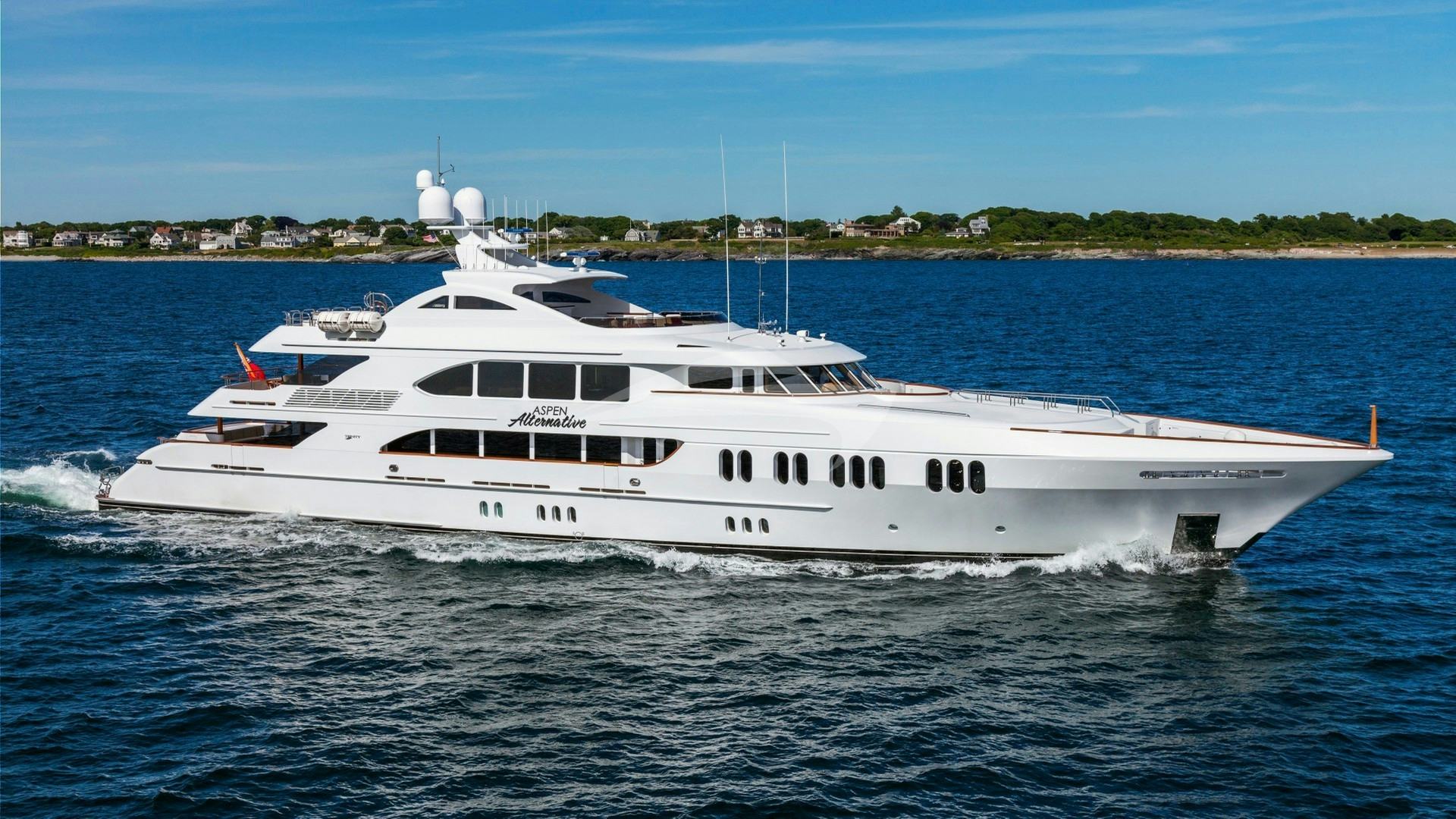
Navigating the waters between the Tuscan coast and Corsica presents a refined blend of historical harbour infrastructure and modern marina facilities. Comprising seven primary islands—Elba, Giglio, Capraia, Montecristo, Pianosa, Giannutri, and Gorgona—the chain forms the Parco Nazionale Arcipelago Toscano, Europe’s largest marine protected area. While the cruising distances between islands are modest, ranging from 10 to 35 nautical miles, the logistical landscape requires precise planning.
Executing a flawless Tuscan Archipelago Yacht Charter yacht charter itinerary requires navigating strict national park zoning, seasonal berth scarcity, and differing harbour capacities. Superyachts over 50 metres in length encounter distinct structural boundaries within historic ports like Portoferraio and Marciana Marina, necessitating a strategic combination of mainland staging hubs, deep-water anchorages, and pre-booked moorings.
Mainland Staging Hubs: Port Argentario to Marina di Scarlino
For larger vessels, or charters commencing with complex guests or crew transfers, the Tuscan mainland provides the necessary depth, berth dimensions, and technical services that the island ports sometimes lack. Positioning the vessel on the mainland prior to guest arrival simplifies guest transfers from regional airports and ensures full bunkering and provisioning without the operational friction of island supply chains.
Marina di Scarlino and the Northern Approaches
Situated in the Gulf of Follonica, directly opposite the northern tip of Elba, Marina di Scarlino (Etrusca Marina) serves as one of the primary mainland bases for yachts cruising the region. The marina features 960 berths and can accommodate vessels up to 36 metres within its inner basins, with draft limits ranging from 2.5 to 4.0 metres depending on the pontoon. Larger yachts up to 50 metres can be accommodated along the outer breakwater quay by prior arrangement with the harbourmaster.
The port is exceptionally well-sheltered from the prevailing westerly and south-westerly winds (the Maestrale and Libeccio) by the southern headland of Punta Ala. It features a full-service yard with a 320-tonne travel lift, high-flow marine diesel bunkering, and direct black- and greywater pump-out capabilities at the fuel quay. Logistically, Scarlino is ideal for guest embarkation, located an hour's drive from Pisa International Airport and offering direct motorway access for provisioning trucks coming from Florence or Livorno.
Monte Argentario: Porto Santo Stefano and Porto Ercole
At the southern extremity of the region, the rugged peninsula of Monte Argentario acts as the gateway to Giglio and Giannutri. Porto Santo Stefano, located on the northern shore of the promontory, offers deep-water commercial quays capable of handling large superyachts exceeding 80 metres in length with drafts up to 8.0 metres. The Banchina della Sanità and the commercial pier allow alongside berthing for mega-yachts, making it one of the few places in Southern Tuscany where ultra-large vessels can tie up directly to the town quay.
Across the peninsula, Porto Ercole offers a more picturesque, boutique setting. The main marina, Cala Galera, lies just north-east of the old town and provides 670 berths for vessels up to 50 metres with maximum drafts of 3.5 metres. Cala Galera is a private, secure facility offering full shipyard services, dedicated guest concierge logistics, and high-capacity electrical shore power connections (up to 250A, 400V). However, entry can become challenging during strong easterly (Scirocco) winds, which cause a notable surge across the outer fairway.
Isle of Elba: The Operational Engine of the Archipelago
Elba is the geographical and logistical core of the archipelago. Measuring 15 nautical miles from east to west, the island features several distinct harbour systems, each with unique draft limitations, exposure profiles, and booking requirements.
Portoferraio: Darsena Medicea and Commercial Bunkering
Portoferraio is the primary maritime port of entry for Elba and the only harbour on the island capable of accommodating large motor yachts and historic sailing yachts alongside historic quays. The harbour is naturally protected within a deep bay facing south-east, rendering it secure in almost all weather conditions except strong south-easterly gales.
The port is divided into three distinct operational zones:
- Darsena Medicea: The historic horseshoe basin constructed by Cosimo I de' Medici. It offers berthing for yachts up to 60 metres stern-to or alongside the quay beneath the fortress walls. Drafts inside the basin range from 3.0 to 6.5 metres. Demand is extreme from mid-June through August; berths must be secured months in advance through the local port authority or a port agent.
- Marina di Portoferraio (Molo Elba): Located just outside the historic basin, this commercial pontoon setup handles vessels up to 65 metres with drafts up to 7.0 metres. It is more exposed to ferry wash but offers robust electrical connections and immediate access to town services.
- Esaom Cesa Shipyard: Situated deeper in the bay, this facility provides technical support, haul-out capacity up to 260 tonnes, draft depth up to 5.0 metres, and extensive hardstanding. It operates a high-capacity fuel pontoon capable of delivering commercial marine gas oil at high flow rates.
Marciana Marina and Porto Azzurro
On Elba’s north-western coast lies Marciana Marina, a traditional fishing port converted into a refined yacht harbour. The port is sheltered by a prominent granite breakwater, accommodating approximately 115 guest vessels up to 30 metres in length with maximum drafts of 3.2 metres at the outer pontoon. Larger yachts must anchor outside in the bay in 12 to 18 metres of water over a sand and weed bottom. Marciana Marina is highly vulnerable to strong Libeccio (south-westerly) and Maestrale (north-westerly) swells, which can cause the harbour authority to close the entrance to incoming traffic.
On the east coast, Porto Azzurro sits within the protected waters of the Gulf of Mola. The town quay offers stern-to berthing for yachts up to 35 metres, while local pontoon operators manage floating berths for vessels up to 25 metres with drafts up to 3.0 metres. Porto Azzurro provides excellent protection from westerly and northerly winds. If berths are unavailable, the surrounding bay offers deep, secure anchoring in 8 to 15 metres over mud and sand, though captains must remain clear of the designated submarine cable zone spanning the outer gulf.
Outer Islands Logistics: Capraia, Giglio, and Protected Marine Reserves
Cruising beyond Elba requires strict adherence to seasonal restrictions, berth size limits, and national park directives. The outer islands offer exceptional natural environments but minimal maritime infrastructure for larger vessels.
Capraia and Giglio: Capacity and Weather Constraints
Capraia, located 23 nautical miles north-west of Elba and 17 nautical miles east of Corsica, features a single, compact harbour—Porto di Capraia. The port can accommodate yachts up to 30 metres along the main quay, with drafts up to 3.0 metres. During peak summer months, the harbour authority installs a managed mooring buoy field outside the breakwater, catering to vessels up to 40 metres LOA.
The port is completely open to the east; strong Libeccio winds blowing over the island's high ridges can create violent katabatic gusts (Garbino) across the harbour basin, making berthing hazardous. Provisions on Capraia are limited to basic island markets, and freshwater availability is restricted during drought conditions.
Giglio Porto, on the eastern coast of Giglio Island, is a tiny, highly congested harbour dominated by commercial ferry traffic connecting to Porto Santo Stefano. Yacht berths are strictly limited to vessels under 20 metres, with drafts rarely exceeding 2.5 metres inside the inner basin. Superyachts visiting Giglio must anchor off the coast. Preferred anchorages include:
- Cala delle Cannelle: Located south of the main port, offering protection from westerly winds in 10 to 15 metres over sand.
- Golfo di Campese: Situated on the west coast, providing excellent shelter from easterly and south-easterly breezes, though exposed to the open Maestrale.
Montecristo, Pianosa, Giannutri, and Gorgona: Regulatory Access
The remaining islands of the archipelago are subject to strict environmental protections enforced by the Parco Nazionale Arcipelago Toscano (PNAT) and the Italian Coast Guard (Guardia Costiera). Operational access is heavily restricted:
- Montecristo: Classified as a Zone A (Integral Reserve). Navigation, anchoring, mooring, and fishing are strictly prohibited within 3 nautical miles of the coastline. Access is restricted to scientific research and limited access permits granted by the Carabinieri Forestale.
- Pianosa: A former penal colony, surrounded by a 1-nautical-mile restricted zone. No vessel may anchor or navigate within this perimeter without an explicit permit from the park authority. Day access for commercial tenders is tightly regulated through designated corridors.
- Gorgona: An active agricultural penal colony. A 2-nautical-mile exclusion zone is strictly enforced around the island. Transiting through the passage requires prior clearance from the Ministry of Justice and the Livorno Harbourmaster.
- Giannutri: Divided into Zone A and Zone B. Anchoring is prohibited along most of the coastline to protect sensitive Posidonia oceanica meadows and coral formations. Vessels may use designated mooring buoys at Cala Spalmatoio or Cala Maestra, subject to size restrictions and advance booking through the park's online portal.
Permitting, Posidonia Protection, and Maritime Formalities
Operating a commercial or private charter yacht in the Tuscan Archipelago requires precise compliance with Italian maritime law and local environmental mandates.
The protection of Posidonia oceanica (seagrass) is strictly enforced throughout the region. The park authority utilizes aerial surveillance and Coast Guard patrols to fine vessels anchoring illegally over protected beds. Captains must utilize anchorages marked on modern electronic charts as sand or mud bottom, or connect exclusively to authorized mooring buoys.
To maintain compliance while chartering, captains must manage specific operational formalities:
- National Park Permits: Any commercial charter vessel planning to anchor within the managed zones (Zone B and C) of Capraia, Giannutri, or Elba must hold a valid PNAT entry permit. These permits are calculated based on overall length and engine horsepower and should be obtained by the broker or port agent prior to the charter's commencement.
- Coast Guard Clearance: Commercial charter vessels operating under non-EU flags must complete standard arrival declarations (Dichiarazione di Arrivo) at the first Italian port of entry (typically Livorno, Portoferraio, or Porto Santo Stefano).
- VAT and EU Charter Regulations: Italy applies standard Italian VAT rates to charter contracts starting in Italian waters. Captains must ensure that all official logbooks, crew lists (Ruolino Equipaggio or IMO Crew List), and charter agreements are fully executed and displayed upon request during routine inspections by the Guardia Costiera or Guardia di Finanza.
Bunkering, Freshwater Supply, and High-End Provisioning
Logistical efficiency in Tuscany relies on knowing where and when to secure essential yacht supplies. Bunkering and provisioning profiles vary significantly between the mainland and the off-lying islands.
Fuel supply points are strategically located, though high-flow commercial bunkering for large yachts requiring duty-free or tax-paid automotive-grade MGO is limited to specific locations. Portoferraio (Esaom Cesa and town quay), Marina di Scarlino, and Porto Santo Stefano offer the highest delivery flow rates, capable of delivering up to 30,000 litres per hour via road tanker or dedicated fuel quay. Bunkering on smaller islands like Capraia or Giglio is restricted to low-flow nozzles designed for local fishing boats and small recreational craft.
Freshwater management requires forethought. Island ports, particularly Capraia, Giglio, and Elba's smaller marinas, face seasonal municipal water restrictions. While berths generally provide shore water connections, flow rates can drop significantly during peak afternoon hours. Modern yachts should plan to run onboard reverse-osmosis watermakers while underway or at anchor off the coast, turning off units only when operating within enclosed bays or near major commercial ferry harbors like Portoferraio.
Provisioning in the Tuscan Archipelago is exceptionally high in quality, provided deliveries are coordinated with established regional suppliers. While Elba features well-stocked local markets in Portoferraio and Capoliveri, high-end guest requirements—such as prime dry-aged meats, specific imported spirits, fine caviar, or specialty international produce—are best ordered through marine provisioning agents based in Livorno, Viareggio, or Florence.
These suppliers run temperature-controlled refrigerated vans directly to the mainland marinas (Scarlino or Porto Santo Stefano) or ship via the daily commercial ferry services to Portoferraio. Local sourcing excels in regional delicacies: fresh line-caught wild bass, red mullet, Cacciucco (Tuscan fish stew), local pecorino cheeses from the Maremma hinterland, and top-tier Tuscan wines, including the iconic Super Tuscans from nearby Bolgheri and DOCG Aleatico dell'Elba dessert wines.
Aviation Links, Crew Logistics, and Transfer Times
Designing guest arrival and departure logistics requires balancing flight availability with ground and sea transit times. The region is serviced by several international and private aviation gateways.
Mainland commercial and private airports provide the primary access points for charter parties:
- Pisa International Airport (PSA / LIRP): The primary commercial and private aviation gateway for Northern Tuscany. Features dedicated general aviation handling facilities (FBOs) for private jets. Transfer time to Marina di Scarlino is approximately 1 hour 15 minutes by road; to Piombino (for ferry links) is 1 hour.
- Grosseto Airport (GRO / LIRQ): A joint military-civilian airport dedicated exclusively to private aviation and charter flights. Located just 30 minutes from Marina di Scarlino and 45 minutes from Porto Santo Stefano, Grosseto offers the fastest ground connection for guests boarding in Southern Tuscany.
- Rome Fiumicino Airport (FCO / LIRF): Located 1 hour 30 minutes south of Porto Santo Stefano via the A12/E80 highway. This is the optimal international entry point for guests embarking at Monte Argentario.
- Marina di Campo Airport (EBA / LIRJ): Located directly on the island of Elba. Featuring a short asphalt runway (1,197 metres), it is restricted to small turboprop aircraft, private twin-engine planes, and helicopters. Weather conditions, particularly crosswinds, frequently impact flight schedules here.
Helicopter transfers offer direct ship-to-shore or airport-to-yacht logistics. Helipads are available at Grosseto Airport, Marina di Scarlino, and several private estates on Elba. Yachts equipped with certified helidecks can conduct guest transfers in designated off-shore rendezvous zones coordinated with the Livorno Maritime Rescue Coordination Centre (MRCC).
Crew changes and technical maintenance transfers are best conducted at mainland staging ports. Marina di Scarlino and the yards around Livorno offer comprehensive technical support, marine chandleries, and straightforward logistical access for joining crew via direct train lines connecting Pisa Airport to Scarlino, Campiglia Marittima, and Orbetello. By conducting heavy maintenance and crew rotations on the mainland, the vessel remains fully operational and primed for guest arrival in the island chain.