
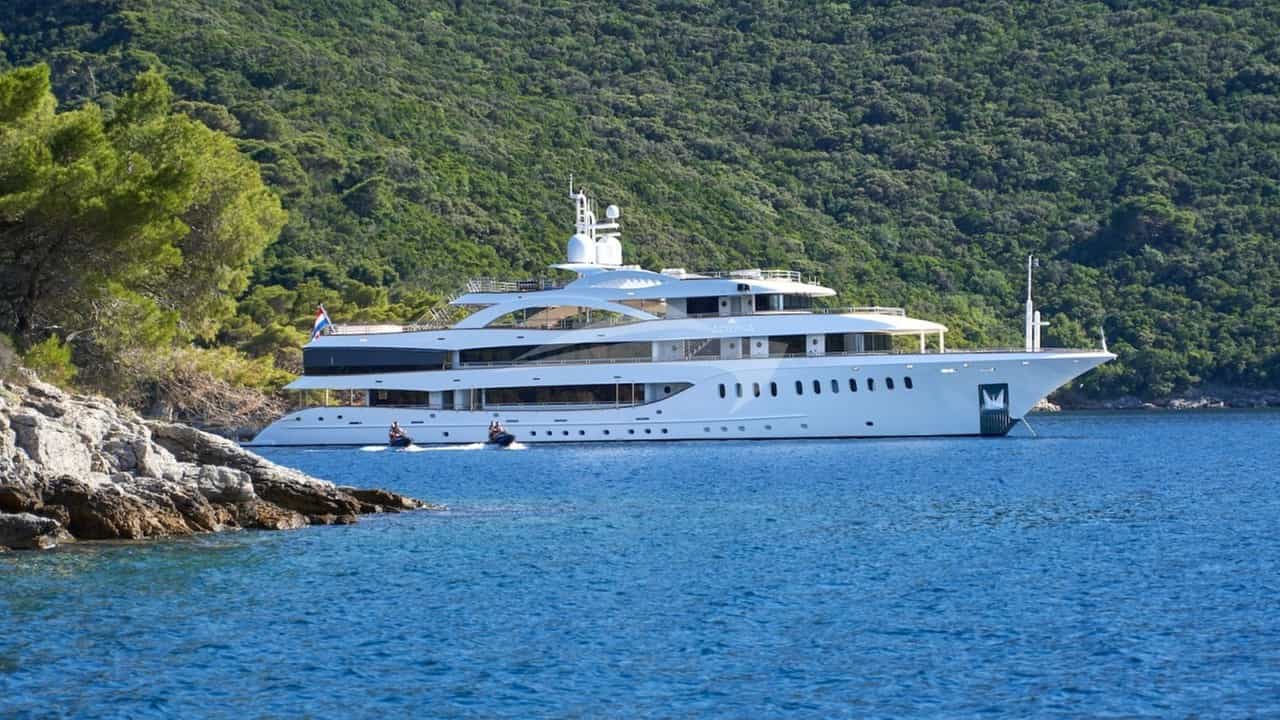
The port of Denia occupies one of the most strategic maritime positions on the Spanish Mediterranean coast. Situated on the northern limit of the Costa Blanca in the province of Alicante, Denia projects out into the Balearic Sea beneath the shadow of the Montgó massif, a 653-metre limestone mountain that dominates the local topography. This geographical prominence creates a natural bridge between mainland Europe and the Balearic Archipelago. From the outer pierhead of Port Dénia, it is precisely 55 nautical miles east-southeast to La Savina in Formentera, and 50 nautical miles to the towering silhouette of Es Vedrà off southwestern Ibiza.
For discerning charter clients, Denia offers two distinct operational advantages. It functions as an exceptional home port for exploring the dramatic limestone coastlines, sea caves, and Michelin-starred culinary enclaves of the Marina Alta district. Simultaneously, it serves as the most efficient mainland departure point for deep-water island passages, avoiding the congested commercial hubs of Barcelona or Valencia. Selecting the correct calendar window for a Denia Yacht Charter yacht charter requires an understanding of regional atmospheric patterns, water temperature curves, seasonal wind systems, and the local cultural calendar.
Oceanography, Winds, and Regional Microclimates
Cruising conditions off Denia are dictated by the interaction between the high inland terrain of the Cordilleras Béticas and the deep waters of the Iberian Basin. The Montgó mountain acts as a massive thermal wedge and windbreak, creating distinct microclimates immediately north and south of Cabo de San Antonio.
During the late spring and summer months, the prevailing wind pattern is driven by diurnal thermal forcing. The morning typically begins with light off-shore breezes from the west or south-west. By midday, as the interior plains heat up, the Garbí—a reliable south-westerly to south-easterly sea breeze—develops, building to a comfortable 12 to 18 knots by mid-afternoon before dying away rapidly toward sunset. This predictable pattern provides ideal sailing conditions in the Gulf of Valencia and along the coast down to Cabo de la Nao.
However, captains must remain mindful of the Levante—an easterly or north-easterly wind that can push a heavy swell into the anchorages along Les Rotes and Les Marines. While rare in mid-summer, a strong Levante demands secure holding or a shift to the lee side of Cabo de San Antonio or Cabo de la Nao. Water depths drop off rapidly once rounding the headlands, falling from 15 metres along the coastal shelf to over 1,000 metres in the channel between Denia and Ibiza, which can generate a short, steep seas state when strong winds oppose the surface currents.
The Seasonal Arc: Month-by-Month Breakdown
April and May: Early Spring and Regatta Season
Spring arrives early on the Costa Blanca, marked by lengthening days and the onset of the Mediterranean regatta circuit. Air temperatures in April average 19°C, rising to 23°C by late May. Sea temperatures remain brisk, ranging from 15°C to 18°C, making extended swimming less appealing without a wetsuit, though conditions for sailing are often superb.
Easter marks the official opening of the regional sailing calendar with the famous Ruta de la Sal regatta, where dozens of yachts race from Denia across the open channel to Sant Antoni de Portmany in Ibiza. During these spring months, the coastal waters are exceptionally quiet. Iconic anchorages such as Cala Granadella, Portitxol, and the sea-cave entrance at Cova Tallada can be enjoyed in total solitude.
From a charter perspective, April and May represent outstanding value for positioning charters or for guests focused on sailing performance, coastal hiking in the Montgó Natural Park, and cultural exploration rather than swimming. Berth availability at Marina de Dénia and Port Dénia is excellent, and charter rates remain at their lowest seasonal baselines.
June: The Golden Shoulder Window
June is considered by experienced charter brokers to be one of the finest months of the year to embark from Denia. The atmospheric conditions settle into a stable summer pattern, with average daily air temperatures of 26°C to 28°C and sea temperatures climbing rapidly from 21°C to 23°C.
- Daylight hours reach their peak, with twilight extending past 21:30, allowing for long afternoon passages or extended dinners at anchor.
- The sea channel between Denia and Formentera experiences consistent, predictable thermals with minimal swell, ideal for smooth open-water crossings.
- Coastal anchorages at Les Rotes and Moraira remain uncrowded, ensuring effortless anchoring over sand and clear water.
- Marine infrastructure operates at full capacity, yet berth reservations in local marinas do not require the extreme lead times seen in July and August.
Cruising south around Cabo de la Nao in June reveals pristine water clarity in the sheltered coves of Jávea and Moraira before the arrival of peak summer traffic.
July and August: Peak Summer and High Season
July and August represent the zenith of the Mediterranean summer charter season. Air temperatures regularly hover between 30°C and 34°C, tempered on the water by the daily sea breeze. The ocean reaches its thermal peak, averaging 26°C and occasionally touching 28°C in shallow, sheltered bays like Portitxol.
This is the season of total atmospheric stability and warm night sea dips. The waters around Denia fill with superyachts and large motor yachts taking advantage of the port's deep-water facilities. Port Dénia, equipped to handle superyachts up to 50 metres LOA across its high-specification berths, operates at full capacity.
The offshore cruising grounds of Ibiza and Formentera are within two hours’ high-speed cruise or a comfortable five-hour passage at 10 knots. However, the density of vessels increases significantly. Captains cruising the local coast must position early in the morning to secure preferred anchoring spots off Cala Moraig or the Peñón de Ifach in Calpe.
September: The Connoisseur’s Choice
As August turns to September, school holidays end and the high-season congestion evaporates, yet the marine environment remains prime. The sea retains its summer heat, averaging 25°C throughout the month, while air temperatures settle into a highly comfortable 27°C to 29°C range.
The Garbí breezes remain reliable, but the intensity of the midday heat subsides. September is widely regarded as the ultimate month for gastronomic cruising out of Denia. The town’s fishing fleet, operating out of the commercial port beside the historic Baix la Mar district, brings in prime catches of the prized Gamba Roja de Dénia (Denia red prawn). Shore excursions to world-renowned restaurants along the Les Marines strip or inside the port are effortlessly arranged without the extreme booking constraints of mid-summer.
Passages to Formentera in September are exceptionally peaceful, with the island returning to a tranquil rhythm while the sea remains warm enough for late-afternoon paddleboarding and diving.
October and November: Late Season Transitions
October introduces the transition to autumn. While early October often delivers glorious "Indian Summer" conditions with air temperatures around 24°C and sea temperatures lingering at 22°C, the stability of the weather diminishes.
By late October and November, the risk of a DANA (Depresión Aislada en Niveles Altos) or Gota Fría increases. These atmospheric events occur when cold polar air collides with the warm Mediterranean Sea, potentially generating intense, short-lived rainfall and heavy north-easterly swells. Charter activity shifts toward short coastal hops, vessel maintenance, and winter berth positioning.
MONTH-BY-MONTH CLIMATIC & CRUISING SUMMARY
Month      Avg Air Temp    Avg Sea Temp    Wind Regime          Charter Priority
April      19°C            16°C            Variable / NW-SW     Regattas & Performance
May        22°C            18°C            Moderate Thermals    Quiet Coastal Exploration
June       26°C            22°C            Reliable Garbí       Prime Shoulder / Passages
July       31°C            26°C            Light-Mod Thermals   Peak Summer / Nightlife
August     32°C            27°C            Light Thermals       Peak Summer / Island Hops
September  28°C            25°C            Moderate Garbí       Connoisseur / Gastronomy
October    24°C            22°C            Variable / E Swell   Late Season / Coastal Hops
Navigational Routes and Regional Extensions
Denia's position on the coastline makes it a versatile springboard for three distinct charter itineraries, depending on the duration of the voyage and weather conditions.
The Balearic Crossing: Formentera and Ibiza
The passage from Denia to the Balearic Islands is one of the most classic routes in Mediterranean yachting. Departing Port Dénia on an easterly heading of roughly 105 degrees, yachts clear Cabo de San Antonio and enter the deep channel.
- Denia to Es Vedrà (Ibiza): 50 nautical miles. A direct line to the striking 400-metre limestone islet off Ibiza's southwest coast, leading directly into anchorages like Cala d'Hort or Cala Carbó.
- Denia to La Savina (Formentera): 55 nautical miles. This passage brings you to the northern tip of Formentera, providing access to the translucent turquoise waters of Espalmador and Ses Illetes.
During a one-week charter, many guests opt to spend two days exploring the Costa Blanca headlands, make the three-to-four-hour crossing to Formentera for three days of island anchorages, and return to Denia via the quiet coves of southern Ibiza.
The Northern Extension: Gulf of Valencia
Heading north-northwest from Denia across the Gulf of Valencia offers a flat-water cruising experience ideal for guests who prefer calm seas and urban culture.
Clearing the long sand beaches of Les Marines, the route leads past the orange groves of the Ribera Baixa to the historic port of Valencia, located 45 nautical miles from Denia. Docking at the Marina Real Juan Carlos I provides access to Valencia's historic center, modern architecture, and acclaimed rice gastronomy. This route is exceptionally well-sheltered from southern swells and works brilliantly during early spring or late autumn charters.
The Southern Extension: Marina Alta and Alicante
Cruising south from Denia reveals the most dramatic coastal geology of the Costa Blanca. Rounding Cabo de San Antonio brings you into the sheltered Bay of Jávea. Continuing south around Cabo de La Nao—a massive cliff face plunging straight into 30 metres of water—you encounter a succession of deep coves and iconic landmarks.
- Cala de Portitxol & Cala Granadella: Sheltered inlets bounded by pine-forested cliffs, ideal for anchoring over sand and gravel bottoms in 8 to 12 metres of water.
- Peñón de Ifach (Calpe): A 332-metre limestone outcrop projecting into the sea 20 nautical miles south of Denia. The anchorage under its southern lee offers excellent shelter from northerly winds.
- Altea: Located 28 nautical miles south of Denia, Altea offers a whitewashed old town crowning a hilltop overlooking a modern marina with superyacht berthing capability.
- Alicante: Situated 40 nautical miles south of Denia, Alicante features the historic Marina Alicante beneath the Santa Bárbara Castle, providing an international airport connection for open-jaw charter itineraries.
Culture, Festivals, and Culinary Timing
Chartering from Denia is as much a terrestrial cultural experience as an offshore maritime one. Denia is recognized as a UNESCO Creative City of Gastronomy, a distinction held by only a handful of European towns. The culinary calendar changes dramatically across the season.
The town's gastronomic identity revolves around the daily arrival of the fishing fleet at 17:00. The local auction house (La Lonja) processes world-famous seafood, most notably the Gamba Roja de Dénia—harvested from the deep underwater trench between Denia and Ibiza—alongside langoustines, red mullet, and cuttlefish. Coastal restaurants serve traditional dishes such as Arròs a Banda (rice cooked in rich fish stock) and Fideuà (a noodle-based relative of paella born on this coast).
Aligning your charter dates with local festivals introduces a unique dynamic to your time in port:
1. Fallas (March 15–19): Massive artistic paper-mâché monuments are erected throughout the town before being burned on the night of La Cremà. A spectacle of fire and pyrotechnics easily viewed from yachts docked in the inner harbor. 2. Bous al Mar (July): Held during the Festa Major in early July, this historic festival takes place in a purpose-built arena at the harbor's edge, declared a festival of National Tourist Interest. 3. Moros y Christians (August 11–16): Dramatic costumed parades, historical re-enactments, and mock battles take place beneath the walls of the 11th-century Denia Castle to commemorate the town's medieval history.
Booking Lead Times, APA, and Brokerage Planning
To secure ideal yachts and berths in Denia, timing the booking process is critical. The regional fleet includes high-specification crewed motor yachts, displacement catamarans, and performance sailing yachts.
Lead Time Requirements
For peak season charters (July and August), lead times of 8 to 12 months are strongly recommended. This is particularly crucial for larger yachts requiring berths in excess of 30 metres at Port Dénia, where superyacht spaces are fiercely contested by vessels bound for the Balearics.
For shoulder season charters (June and September), a booking horizon of 4 to 6 months is typically sufficient to secure primary yacht choices and premium berth holdings. Early spring or late autumn charters can often be arranged with 1 to 2 months' lead time, offering ultimate flexibility for clients watching long-range weather forecasts.
Advance Provisioning Allowance (APA) and Fuel Planning
When structuring a Denia charter itinerary, the Advance Provisioning Allowance (APA) must factor in the intended passage profile.
A coastal itinerary focused on the Marina Alta headlands (Denia, Jávea, Moraira, Altea) incurs low fuel consumption, with short hops of 10 to 15 nautical miles between anchorages. In this scenario, an APA allocation of 30% of the base charter fee comfortably covers high-end local seafood provisioning, premium local wines such as Moscatel from the nearby Xaló Valley, and modest berth fees.
Conversely, an itinerary that incorporates open-water crossings to Formentera and Ibiza at high cruising speeds (20–25 knots) will burn significantly more fuel across the 110-nautical-mile round trip. Furthermore, if your captain needs to secure temporary holding berths in Balearic marinas during peak weeks, berth fees increase dramatically compared to mainland rates. In these instances, brokers advise an APA allocation of 35% to 40% to ensure smooth operational execution.
By understanding the subtle seasonal transitions, wind regimes, and geographic assets of the Costa Blanca, you can tailor your Denia Yacht Charter yacht charter to deliver an exceptional Mediterranean navigation experience.