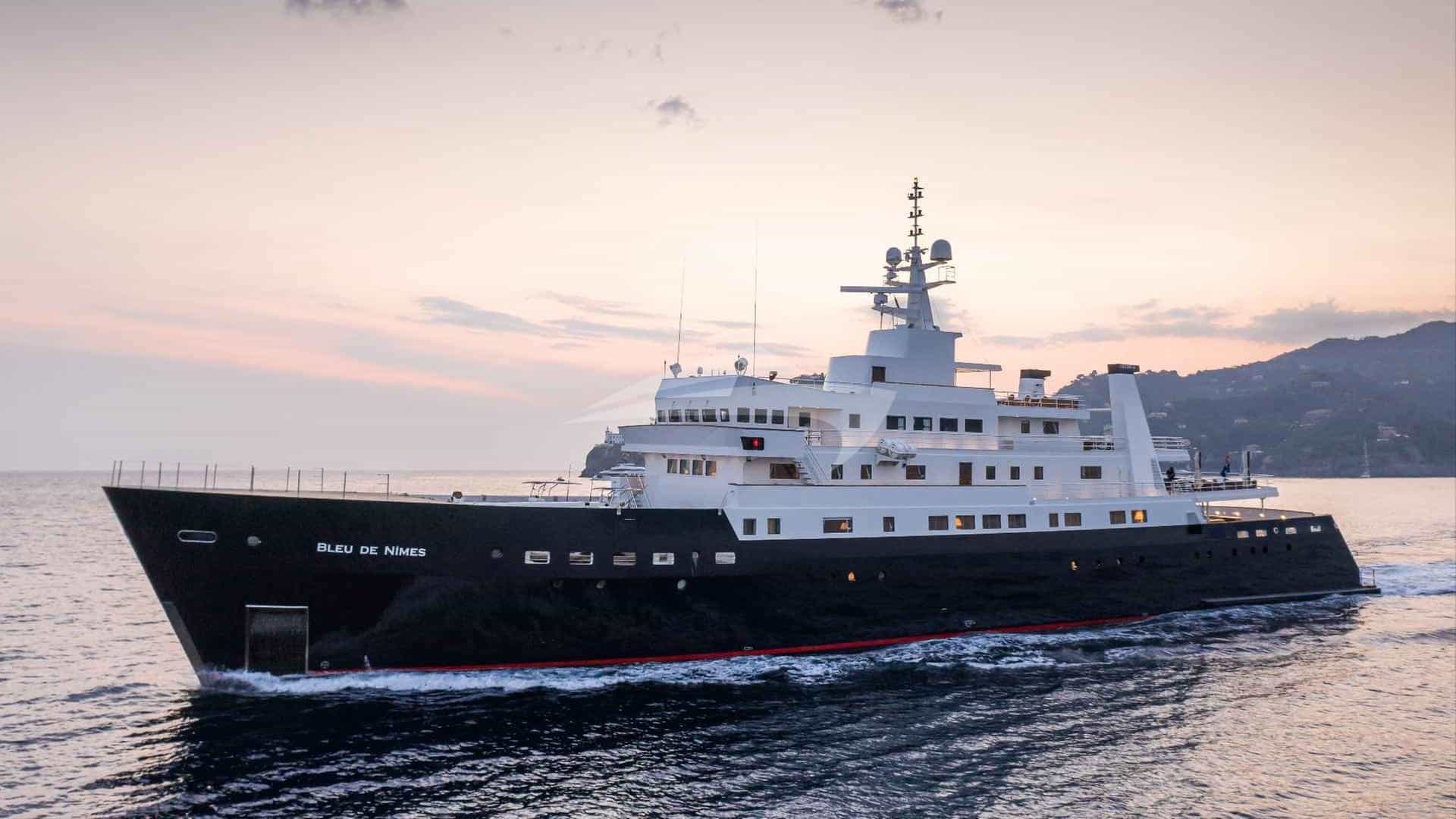
Navigating a Greece yacht charter requires a fundamental understanding that this vast maritime territory operates on two distinct operational planes. On one side is Attica, equipped with purpose-built, full-service superyacht marinas that rival the finest facilities in Monaco or Antibes. On the other is the island archipelago—comprising the Cyclades, Dodecanese, Ionian, Sporades, and Saronic islands—where infrastructure shifts dramatically toward ancient, municipal town quays, deep-water anchorages, and remote coves.
For captains, charterers, and yacht managers, mastering Greek shore logistics is less about finding a berth and more about managing local conditions, regulatory frameworks, and seasonal constraints. The Aegean summer is dominated by the Meltemi, a powerful northerly wind that blows from May through September, often reaching Force 7 or 8 across the Cyclades. Conversely, the Ionian Sea experiences the gentler afternoon Maistro, creating vastly different requirements for anchoring, stern-to mooring, and berth reservation strategy. Navigating these waters smoothly demands meticulous advance planning, precise knowledge of draft limitations, and an active relationship with local port agents.
Primary Superyacht Hubs: Attica and the Saronic Gulf
The starting point for the majority of large-scale charters in Greece is the coast of Attica, commonly referred to as the Athens Riviera. Here, modern infrastructure, high-capacity shore power, and deep-water berths accommodate vessels well over 100 metres in length.
### Flisvos Marina Located just six kilometres south of central Athens in Palaio Faliro, Flisvos Marina is Greece’s premier mega-yacht facility. Operating under strict ISPS security protocols, Flisvos offers 303 berths, with more than half designated for vessels exceeding 30 metres. The marina can handle superyachts up to 140 metres in length with maximum drafts reaching 10 metres at the outer breakwater. Flisvos operates on VHF Channel 09 and provides 3-phase high-voltage electrical connections (up to 400A), fuel bunkering via pipeline at dedicated berths or truck, and grey/blackwater suction facilities. Reservations for the peak months of June through August should be secured six to nine months in advance, particularly for berths accommodating yachts over 60 metres.
### Astir Marina Vouliagmeni Following a comprehensive multi-million-euro redevelopment, Astir Marina in Vouliagmeni represents the apex of exclusive berthing in the Eastern Mediterranean. Situated adjacent to the Four Seasons Astir Palace Resort, this boutique facility offers 59 berths designed primarily for yachts between 40 and 70 metres, with draft capacities up to 5.5 metres. The marina features state-of-the-art security, underground parking, private helicopter transfer services, and direct access to high-end luxury retail. Availability is exceptionally tight, with priority given to seasonal contract holders; casual berths during July and August require booking months ahead and carry premium rates.
### Marina Zeas and Alimos Marina Marina Zeas, situated in Piraeus, provides 670 berths for yachts up to 150 metres with drafts up to 8 metres. Its location places it in the commercial heart of Greek shipping, offering immediate access to technical contractors, ship chandlers, and heavy machinery support. Alimos Marina, further east, is one of the largest marinas in the Mediterranean with 1,400 berths, though it serves predominantly as the main hub for bareboat and skippered charter fleets up to 25 metres. A major modernization project is currently upgrading its quay infrastructure, power pedestals, and guest facilities.
### Olympic Marine (Lavrio) Positioned near Cape Sounion at the southeastern tip of Attica, Olympic Marine provides a strategic alternative to the main Athens marinas. With 520 berths catering to yachts up to 40 metres (and draft depths up to 5 metres), Lavrio allows captains to bypass the long run out of the Saronic Gulf and immediately enter the Cyclades. The distance from Lavrio to Kea is a mere 14 nautical miles, saving valuable fuel and charter transit time.
Island Infrastructure: Cyclades, Dodecanese, and Ionian Realities
Once clear of the mainland, the berthing dynamic changes. Large-scale, fully serviced marinas are rare in the Aegean islands, where yachts predominantly rely on municipal quays (limani), Mediterranean mooring (dropping anchor off the bow and taking lines back to the quay), or stern-to/bow-to ties off rocks in secluded bays.
### The Cyclades The Cycladic islands present specific berthing challenges created by steep sea beds, surge, and the relentless Meltemi.
- Mykonos: The main commercial port at Tourlos (New Port) handles superyachts on its southern quay. It accommodates yachts up to 100 metres-plus along the concrete commercial wall, though it is exposed to strong northerly winds and heavy swell from high-speed ferries. The Old Port in Mykonos Town is restricted to smaller vessels, tenders, and local craft. Dropping anchor in southern coves like Psarou, Ornos, or Kalafati is common, though heavy anchor watch protocols are essential due to poor holding over rocky bottoms mixed with thin sand.
- Santorini: Santorini lacks a commercial marina capable of securing superyachts. Vessels must anchor off the caldera in depths often exceeding 40 to 60 metres or secure one of the few heavy-duty mooring buoys managed by the local port authority below Fira or Ammoudi Bay. The southern harbour of Vlychada has a narrow, constantly silting entrance channel with a depth limit of roughly 1.8 to 2.2 metres, rendering it unnavigable for deep-draft motor and sailing yachts.
- Syros (Ermoupoli): As the administrative capital of the Cyclades, Syros offers an all-weather harbour with deep-water quay space along the waterfront for yachts up to 70 metres. It serves as a vital logistics, fueling, and technical repair hub, anchored by the historic Neorion Shipyard.
### The Dodecanese Bordering the Turkish coast, the Dodecanese features deeper waters, excellent shelter from northern Aegean swells, and modern marina developments.
- Rhodes Marina: Located adjacent to the historic town, Rhodes Marina is a modern facility with 460 berths capable of accommodating superyachts up to 120 metres in length with drafts up to 6.5 metres. It provides full technical support, fuel bunkering, customs clearance services, and high-speed fiber-optic connectivity.
- Kos Marina: Situated one nautical mile south of Kos main harbour, Kos Marina offers 250 berths for vessels up to 50 metres with a maximum draft of 5 metres. It is widely regarded as one of the best-managed island marinas in Greece, featuring 24/7 security, an active pilot boat service, and immediate proximity to an international airport.
- Symi: A classic stopover, Symi’s main harbour (Gialos) requires stern-to berthing along a steep, amphitheatrical town quay. Holding is generally good in deep mud, but crossing anchors with neighboring vessels is common during peak afternoon arrivals in July and August.
### The Ionian The Ionian Sea offers gentler cruising conditions, landlocked basins, and lush vegetation, though summer dock space in key towns remains at a absolute premium.
- Gouvia Marina (Corfu): The main superyacht gateway to the northern Ionian, Gouvia Marina offers 1,235 berths for vessels up to 80 metres with a maximum draft of 5.5 metres. It features comprehensive shipyard capabilities, dry dock facilities, a 150-tonne travelift, and a dedicated customs office for non-EU entry and exit.
- Lefkas Marina: Set within a protected canal system, Lefkas Marina provides 620 berths for yachts up to 45 metres with drafts up to 4 metres. Approach requires careful navigation through the narrow Lefkada dredged channel (depth approximately 4.5 metres).
- Fiskardo (Kefalonia) and Port Gaios (Paxi): These postcard harbours are iconic charter stops that lack formal marina booking systems. Vessels must arrive by mid-day to secure space on the municipal quays or send a high-speed tender ahead to deploy long shore-lines to the rocks on the outer perimeter of the bays.
Formalities, Cruising Taxes, and Regulations
Cruising in Greek waters under a commercial or private charter requires strict adherence to national maritime laws and European Union regulations. The Hellenic Coast Guard (Limenarcheio) actively monitors commercial yacht movements, and non-compliance results in immediate heavy fines or vessel detention.
### TEPAI (Telos Ploion Anapsychis) All recreation and charter vessels over 7 metres operating in Greek territorial waters—regardless of flag—must pay the TEPAI (Cruising Duty). The tax is calculated based on the overall length (LOA) of the vessel and must be paid electronically via the e-TEPAI portal prior to entry or movement within Greek waters. For yachts over 12 metres, the fee is calculated at a monthly rate (€8 per metre for vessels 12m+). Proof of payment must be carried onboard and presented to the Port Authority upon request or during mandatory arrival clearances.
### Plus-e-Charter Permission (Law 4926/2022) Under Greek maritime legislation (Law 4926/2022), foreign-flagged commercial yachts (both EU and non-EU) exceeding 35 metres in length (if constructed of steel or aluminum) are permitted to embark and disembark charter guests within Greek territory by obtaining a specific "+e-Charter Permission" licence.
Key conditions for foreign-flagged commercial charters include: * Submitting vessel details, safety certificates, and registry documentation through the online e-Charter Permission platform. * Paying a special duty calculated per day of cruising based on the yacht's size and passenger capacity. * Demonstrating that the yacht meets all international safety management standards (ISM/ISPS codes) applicable to commercial vessels. * Paying Greek VAT (standard rate 24%, with applicable reductions to 13% or 5.2% depending on whether the vessel operates in open international waters or performs specific multi-island itineraries).
### Port Authority Clearances (Limenarcheio) Private and commercial yachts must present their ship's papers—including the crew list, passenger manifest, insurance certificate, registry, and radio licence—to the local Limenarcheio upon arrival at major official ports of entry. For non-EU flagged vessels, an Outward/Inward Traffic Logbook (DEPAL or SARD) is issued and must be stamped at designated ports.
Official Schengen Ports of Entry in Greece include: Attica:* Piraeus, Zea, Flisvos, Lavrio Cyclades:* Syros, Mykonos, Santorini Dodecanese:* Rhodes, Kos, Symi, Samos, Kalymnos Ionian:* Corfu, Lefkada, Argostoli (Kefalonia), Zakynthos
Bunkering, Fresh Water, and Provisioning Logistics
Shore logistics in Greece require adaptive management, as supply lines across the islands vary significantly from the main supply centers in Athens.
### Fuel Bunkering Dedicated fuel pontoons with high-speed pumps capable of delivering 150 to 300 litres per minute are primarily found in major mainland marinas (Flisvos, Zeas, Olympic Marine) and select island facilities (Gouvia, Kos, Rhodes). Outside these hubs, fuel delivery on island town quays is executed via licensed road tankers (minios).
Port agents must coordinate tanker access with the Limenarcheio to ensure safety protocols are enforced during transfers. Quality control is paramount: captains should insist on taking fuel samples prior to bunkering on smaller islands to check for water content or sediment. Duty-free fuel is strictly regulated and only available to validly registered commercial yachts undertaking international voyages or specific transit charters with open customs documentation.
### Fresh Water Supply Water availability is a critical operational consideration, particularly in the Cyclades, where natural freshwater resources are minimal and islands rely on municipal desalination plants. Mainland Marinas:* Provide direct shore power connections to pressurized, potable municipal water lines. Island Quays:* Water is often supplied via municipal water meters (activated by keycards) or local water delivery trucks. Flow rates can be low, and mineral content can be high. Watermakers:* Large yachts must maintain fully operational onboard Reverse Osmosis (RO) watermakers and water filtration systems. Relying solely on shore-side water supply in places like Paros, Naxos, or Santorini during peak summer months is a risk; water trucks prioritize domestic island needs during drought conditions.
### Provisioning Provisioning a luxury yacht in Greece is seamlessly handled through specialized luxury marine chandlers based in Athens, Corfu, and Rhodes, who coordinate refrigerated transport to island ports via daily express ferry networks.
Athens Central Markets (Varvakios) / Specialized Marine Agents
                      │
        Refrigerated Ferry Freight
                      │
   ┌──────────────────┼──────────────────┐
   ▼                  ▼                  ▼
Mykonos          Santorini            Paros
(Distribution)  (Distribution)    (Distribution)
Local sourcing on the islands yields world-class fresh produce. In the Cyclades, local markets offer wild oregano, capers, fresh goat cheeses like Xynomyzithra, and line-caught red mullet (morphea) or dentex (synagrida). In the Ionian, local olive oil, kumquat liqueurs, and fresh beef for local specialties like Sofrito are readily sourced. For specialized import delicacies (Caviar, Wagyu beef, specific Grand Cru vintages), provisioners require 48 to 72 hours' advance notice to arrange air/ferry freight from mainland hubs to remote islands.
Airports, Transfers, and Crew Logistics
Smooth charter turnarounds rely on efficient guest transfers and seamless crew changeover logistics across regional aviation networks.
### Main Aviation Gateways Athens International Airport (ATH - Eleftherios Venizelos):* Located east of Athens, ATH features dedicated private jet handling terminals (FBOs) such as Universal Aviation and Signature Flight Support. Transfer time from ATH to the Athens Riviera marinas (Flisvos, Zeas, Vouliagmeni) is 25 to 40 minutes via the Attiki Odos highway. Corfu International Airport (CFU):* Situated just 10 minutes from Gouvia Marina, making it one of the most efficient turnaround ports in the Ionian. Rhodes International Airport (RHO):* Located 20 minutes from Rhodes Marina, offering direct long-haul charter flights and private aviation services. Mykonos (JMK) & Santorini (JTR):* Both island airports handle heavy seasonal private jet traffic. Slot allocation for non-scheduled private flights is extremely restricted in July and August; aircraft repositioning to Athens or Kos is frequently required after passenger offloading. Aktion Airport (PVK):* Located near Preveza, PVK serves as the primary gateway for charters embarking in Lefkada, accessible via a 25-minute drive across the swing bridge.
### Heli-Transfers and Tender Operations Because island road infrastructure can be narrow and congested during high summer, helicopter transfers are widely utilized. Helicopter landing pads are operational on Mykonos, Santorini, Paros, Antiparos, Kea, and Ios, as well as on major yachts equipped with certified helidecks.
When anchored off locations without suitable quay space, high-speed chase tenders (10 to 15 metres) equipped with twin or triple outboard engines become the primary vehicle for guest transfers, shore excursions, and dinner runs. Captains must ensure tender operators monitor wind shifts closely when landing guests at exposed concrete jetties in the Aegean.
### Technical Support and Winter Berthing Greece possesses extensive maritime industrial capabilities centered around the Saronic Gulf. For technical breakdowns, engine overhauls, or emergency hauling, the Perama and Salamina shipyards near Piraeus host specialized marine engineers, technicians, and paint specialists.
Winter lay-up and haul-out options for superyachts include: Olympic Marine (Lavrio):* Features a 200-tonne travelift and secure hardstand space. Basimakopouli Shipyard (Kilada, Peloponnese):* A historic yard catering to large sailing yachts and classic vessels. Gouvia Marina (Corfu):* Broad dry-dock space with comprehensive winterization packages for vessels up to 50 metres.
Navigating a Greece yacht charter successfully requires balancing the country's ancient geography with contemporary maritime procedures. By securing marina space early, maintaining flawless compliance with e-Charter permissions, and coordinating shore logistics with seasoned local agents, captains and charterers ensure a seamless voyage across these historic waters.