
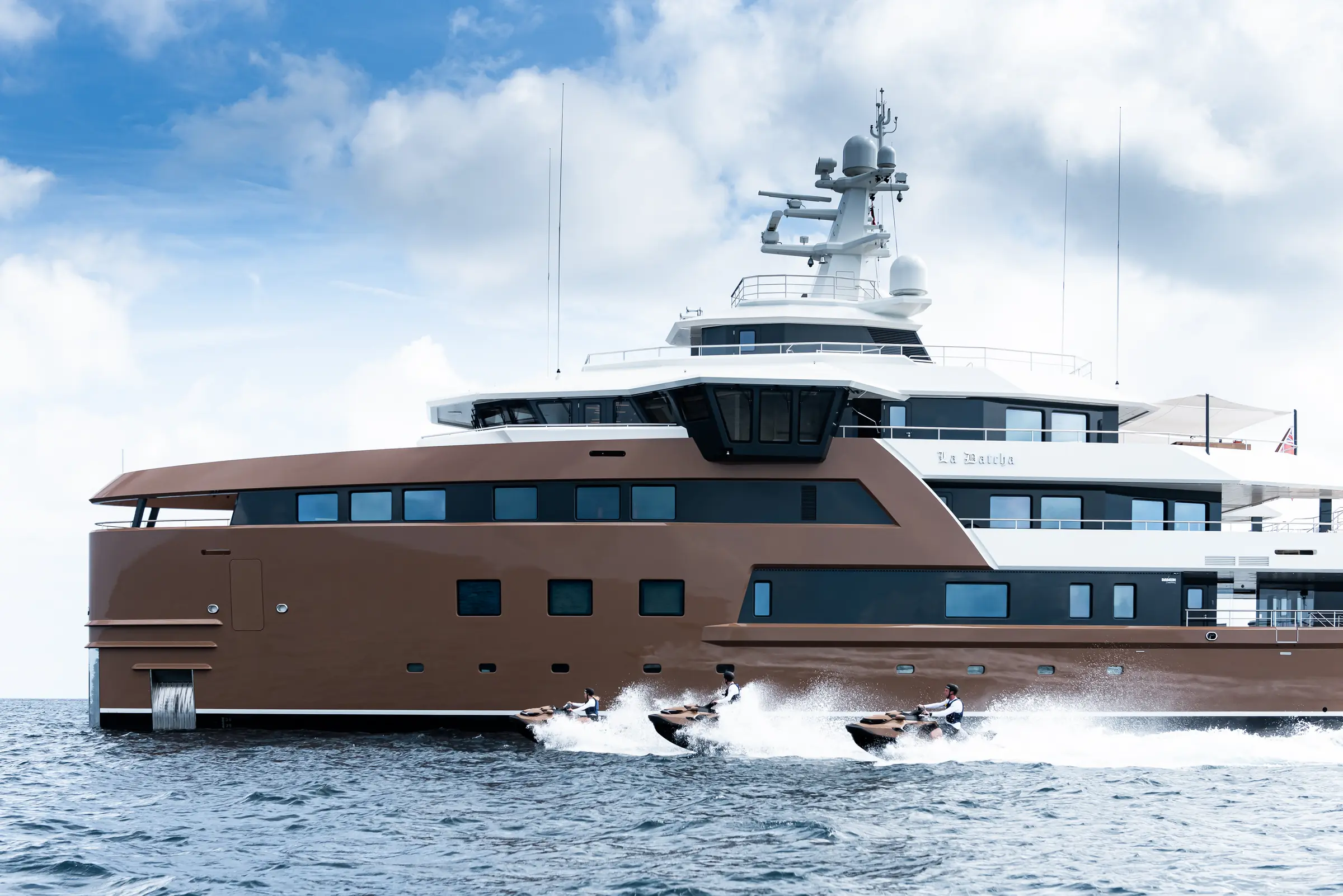
The vertical topography that makes Positano one of the world's most recognisable maritime backdrops presents a distinct set of operational realities for superyacht captains and charter brokers. Unlike the sheltered deep-water calas of the Balearics or the expansive marina developments of the French Riviera, Positano is essentially an open roadstead carved into the sheer limestone cliffs of the Amalfi Coast. There are no breakwaters enclosing the sea immediately off Spiaggia Grande, nor is there a commercial marina capable of berthing a 40-metre motor yacht at the foot of the town. Successfully executing a Positano Yacht Charter yacht charter demands an intricate understanding of swell windows, tender transfers, regional buoy concessions, and the strategic alternative quays scattered along the Sorrentine Peninsula and the Gulf of Salerno.
To navigate Positano smoothly, one must look beyond the visual allure of its pastel-tinted terraces and focus on the mechanics of shore support, fuel supply, marine protected area restrictions, and local quay politics. For captains, managing guest expectations while maintaining vessel safety requires balancing the desire to anchor close off the beach with the physical reality of the region’s volatile wind patterns and steep seabed drop-offs.
The Positano Roadstead: Tender Operations, Buoys, and Holding
The primary anchorage off Positano spans the waters between Spiaggia del Fornillo to the west and Spiaggia Grande to the east. The seabed drops away rapidly from the shoreline, transitioning from coarse sand and gravel to rocky shelves within a few cables of the beach. Vessels dropping anchor in 25 to 40 metres of water must deploy generous scope, yet must remain vigilant: the holding can be patchy, particularly where loose shale overlays bedded limestone.
### Managing Swell and Weather Exposure The roadstead is entirely open to the south, south-east, and south-west. A mild Libeccio (south-westerly) or Scirocco (south-easterly) wind, which might barely register in the sheltered waters of the Bay of Naples, can send an uncomfortable, energy-dense rolling swell straight into the Positano bay. Under these conditions, remaining at anchor becomes impractical for guest comfort and potentially hazardous for tender operations. Captains must monitor three-day weather models closely and maintain a clear exit strategy toward the northern side of the Sorrentine Peninsula or protected harbours to the east.
### Buoy Fields and Local Jetty Management During peak summer months—from June through September—local concessionaires lay seasonal mooring buoy fields off Positano. These buoys accommodate yachts up to approximately 30 to 35 metres in length, subject to tonnage and displacement limits set by the Capitaneria di Porto. Securing a buoy reduces the risk of dragging anchor in deep water, but space is tightly controlled and subject to intense demand.
Tender landings at Positano require precise coordination. The small commercial pontoon at Spiaggia Grande is strictly regulated. It serves as an active drop-off and pick-up zone for local water taxis, ferry services, and charter tenders, with a maximum stay usually restricted to five or ten minutes. Leaving a ship’s tender tied unattended to the primary wooden pier is prohibited. Vessels operating large, high-value custom tenders often choose to utilise licensed local water taxi services (barcaioli) for guest transfers during peak hours. These local captains navigate the crowded jetty area with seasoned efficiency and possess private moorings just off the beach where tenders can be held if necessary.
Alternative Berthing and Safe Havens Along the Peninsula
When sea conditions off Positano deteriorate, or when guests require secure, alongside berthing for technical reasons, crew rotations, or land excursions to Ravello and Pompeii, captains must rely on a network of surrounding ports. Each harbour along this stretch of coast serves a specific operational purpose based on vessel length, draft, and intended onshore logistics.
 Sorrento Peninsula & Amalfi Coast Distances (Nautical Miles)
 Positano to Li Galli Islands: 2.5 nm
 Positano to Capri (Marina Grande): 12 nm
 Positano to Amalfi Port: 8 nm
 Positano to Marina di Cassano (Piano di Sorrento): 10 nm
 Positano to Marina di Stabia (Castellammare): 18 nm
 Positano to Marina d'Arechi (Salerno): 22 nm
### Marina di Cassano and Piano di Sorrento Situated on the northern side of the peninsula, approximately ten nautical miles around Punta Campanella from Positano, lies Marina di Cassano in Piano di Sorrento. Nestled beneath tufa cliffs, this harbour provides critical shelter when southerly swells render the Positano roadstead unusable.
Marina di Cassano features a commercial quay and floating pontoons suitable for vessels with drafts up to 4 metres, though length limits generally top out around 30 to 35 metres inside the inner basin. For larger superyachts, the outer mole offers temporary alongside berthing or secure holding. The harbour is strategically invaluable: it provides a quick, 20-minute land transfer across the narrow ridge of the peninsula back to Positano via the SS163 or Via Meta-Metropolis, allowing guests to maintain land itineraries even when the yacht must shift to the lee side of the landmass.
### Amalfi Port (Molo Pennello and Marina Coppola) Eight nautical miles east-south-east of Positano lies the historical port of Amalfi. While still exposed to strong southerly gales, Amalfi’s outer breakwater (Molo Pennello) offers significantly more physical protection than the open bay of Positano.
- Molo Pennello: The outer face of the commercial pier can accommodate yachts up to 50–60 metres in length, subject to draft constraints (typically 5 to 6 metres along the outer section). Stern-to berthing with lazy lines is standard.
- Pontoon Concessions: Private operators run seasonal pontoon slips inside the harbour basin (such as Marina Coppola). These cater primarily to motor yachts up to 25–30 metres with drafts under 3.5 metres.
- Availability: Space on Molo Pennello is extraordinarily scarce during July and August. Berths are often spoken for months in advance by returning vessels or managed via local port agents who navigate the daily municipal allocation process.
### Deep-Water Superyacht Hubs: Marina di Stabia and Marina d'Arechi For superyachts exceeding 50 metres, or those requiring heavy technical support, extensive bunkering, or guaranteed safe haven during severe weather, two modern facilities mark the boundaries of the cruising area:
- Marina di Stabia (Castellammare di Stabia): Located inside the Bay of Naples, 18 nautical miles from Positano. Features over 800 berths, dedicated superyacht quays capable of accommodating vessels up to 100 metres with drafts up to 6 metres, high-capacity shore power, heliport access, and direct motorways to Naples Airport.
- Marina d'Arechi (Salerno): Situated 22 nautical miles east of Positano, past the city of Salerno. A purpose-built, state-of-the-art superyacht facility with an outer breakwater offering total protection. It handles mega yachts up to 100 metres+ with drafts up to 8 metres, offering total privacy, high-volume fuel delivery, and streamlined customs clearance.
Marine Protected Areas and Navigation Regulations
Navigating the waters surrounding Positano requires strict compliance with Italian maritime law and local environmental regulations, particularly regarding the Area Marina Protetta (AMP) Punta Campanella and the rules governing the Li Galli archipelago.
### AMP Punta Campanella stretching from the outer tip of the Sorrento peninsula to the borders of Positano, the Punta Campanella marine reserve is divided into distinct protection zones (Zone A, B, and C): Zone A (No Entry):* Absolute reserve, strictly forbidden to all private and commercial navigation. Zone B & C: Restricted navigation, speed limits (typically 5 to 10 knots within 300 metres of the coast), and specific anchorage controls. Anchoring on seagrass (Posidonia oceanica*) beds is heavily penalised. Captains must use designated anchor zones or licensed mooring buoys.
### The Li Galli Archipelago (Isola Lunga, Castelluccia, Rotonda) Positioned just 2.5 nautical miles off Positano, the Li Galli islands are a favourite day-anchorage for an Amalfi Coast yacht charter. However, the islands are privately owned and surrounded by strict environmental protections. Anchoring Limits:* Anchoring is restricted within designated buffer zones around the islets to protect the marine ecosystem. Vessels must anchor in deep water clear of the shoals or secure a temporary buoy if available through local concessionaires. Tender Restrictions:* Landing on the islands is strictly forbidden without express written permission from the private island management. Tenders may cruise the perimeter, but guests cannot go ashore on the beaches or use the private dock.
Technical Logistics: Bunkering, Provisioning, and Shore Power
Provisioning and fueling along the Amalfi Coast require foresight. The geographic isolation of Positano's coastline means that heavy utility services cannot be executed directly at the town's edge.
### Fueling Logistics There are no duty-free fuel lines or high-capacity fuel trucks that can access the Positano shorefront due to the narrow, winding nature of the SS163 cliffside road. Bunkering must be planned at major regional fuel stations: Capri:* A small fuel dock exists at Marina Grande, but space and flow rates are limited; large superyachts often face depth and length restrictions. Salerno (Main Commercial Port or Marina d'Arechi):* The most reliable location for commercial and duty-free fuel delivery via high-flow pumps or tank trucks alongside deep-water quays. Castellammare di Stabia / Marina di Stabia:* Excellent for rapid, high-volume bunkering before or after embarking guests.
### Fresh Water and Shore Power Vessels staying on buoys or at anchor off Positano must rely entirely on their onboard watermakers and generator sets. Local water barge services in the open roadstead are virtually non-existent or prohibitively expensive due to transit times from Naples or Salerno. Ensure watermakers are fully operational and filters are clean before entering the roadstead, as coastal plankton blooms in warm summer months can clog fine intake filters rapidly.
### Provisioning While Positano itself offers exceptional artisan bakeries, wine merchants, and small produce vendors, large-scale luxury provisioning orders should be arranged through established marine agents operating out of Naples, Sorrento, or Salerno. Seafood: Local fishermen bring daily catches of squid (totani*), red mullet, and wild sea bass into the ports of Salerno, Amalfi, and Marina di Cassano. Specialty suppliers can deliver directly to the tender pontoon by prior arrangement. Specialty Produce: Vesuvian tomatoes, Sorrento lemons, fresh mozzarella di bufala* from Battipaglia, and regional wines (such as Furore Fiorduva) can be requisitioned via shore agents and delivered by temperature-controlled vans to accessible meeting points along the coast, such as Piano di Sorrento or Amalfi port.
Formalities, Customs, and APA Management
Managing the Advance Provisioning Allowance (APA) effectively during a Positano itinerary requires anticipating high transactional costs associated with buoy rentals, water taxi services, port taxes, and luxury shore logistics.
### Customs and Schengen Formalities Positano is not an official port of entry. Non-EU flagged vessels, or yachts carrying non-Schengen passengers requiring border control clearance (passport stamping), must complete formalities at an official Port of Entry before anchoring off Positano. Primary Clearance Ports:* Naples (Stazione Marittima / Mergellina), Salerno, or Capri. Cruising Declarations: Ensure the vessel's logbook, charter contract, guest list, and safety certificates are up to date. The Capitaneria di Porto and Guardia di Finanza conduct regular boarding checks along the coast to verify commercial compliance, charter licences, and VAT documentation (Costituzione di Sanzioni* compliance for non-EU charter yachts).
### APA Transparency and Local Fees Local port services, buoy fees, and tender transfers in Positano carry premium pricing, particularly during July and August. A single night on a commercial buoy off Spiaggia Grande for a 30-metre yacht can range from €500 to over €1,500 depending on the service provider, inclusive of tender shuttle support. Captains should maintain detailed receipts for all cash payments made to local barcaioli and buoy tenders, ensuring full transparency in the APA accounting presented to the charterer at the end of the trip.
Airports, Transfers, and Aviation Logistics
Executing smooth guest arrivals and crew rotations requires navigating the logistical bottlenecks of Campania’s regional transport infrastructure.
 Regional Airport to Positano Transfer Options
 Naples Capodichino (NAP): 1h 30m to 2h 15m (Road) | 20m (Helicopter to Sorrento/Ravello)
 Salerno Costa d'Amalfi (QSR): 1h 15m to 1h 45m (Road) | 45m (Tender from Salerno Port)
 Private Helipads: Le Agavi (Positano), Bellevue Syrene (Sorrento), Ravello, Marina di Stabia
### Airport Options 1. Naples Capodichino International Airport (NAP): The primary hub for commercial international flights and private aviation (FBO services provided by Sky Services and Signature Flight Support). Located approximately 60 kilometres north of Positano. Road transfer times via the SS163 can exceed two and a half hours during summer peak hours due to coastal traffic jams. 2. Salerno Costa d'Amalfi Airport (QSR): Rapidly expanding its commercial and private jet capacity. Located south-east of the coast, it offers an efficient alternative for guests joining yachts docked at Marina d'Arechi or embarking via tender from the eastern end of the coast.
### Helicopter Transfers and Helipads To bypass the heavily congested SS163 road, private helicopter charters are frequently utilised for guest transfers. Hotel Le Agavi (Positano):* Features a private helipad on the upper cliffs overlooking the bay, suitable for light single- and twin-engine helicopters by prior arrangement. Ravello Helipad:* Located above Amalfi, providing rapid access for guests visiting Ravello or embarking on yachts anchored off Amalfi. Sorrento / Bellevue Syrene Helipad:* Positioned on the Sorrento cliffside, ideal for transfers connecting to tenders waiting at Marina di Cassano or Sorrento harbour. Marina di Stabia:* Offers a fully certified, high-capacity helipad capable of handling larger twin-engine aircraft directly alongside the superyacht docks.
### Managing Crew Rotations Crew changes should avoid Positano proper due to the physical difficulty of moving heavy luggage and technical equipment down the steep stairs of the town to the tender dock. The most efficient location for crew swaps, technician visits, and heavy spares delivery is Marina di Cassano (Piano di Sorrento) or Marina di Stabia. Both offer direct road access for transport vans right alongside the quay, allowing seamless transfers without disturbing guests or navigating public pedestrian zones.
By pairing meticulous weather monitoring with an operational strategy that leverages the entire Sorrento peninsula, captains and brokers can deliver a flawless Positano Yacht Charter yacht charter experience—turning the logistical challenges of this dramatic vertical landscape into an effortless sea-borne journey.