
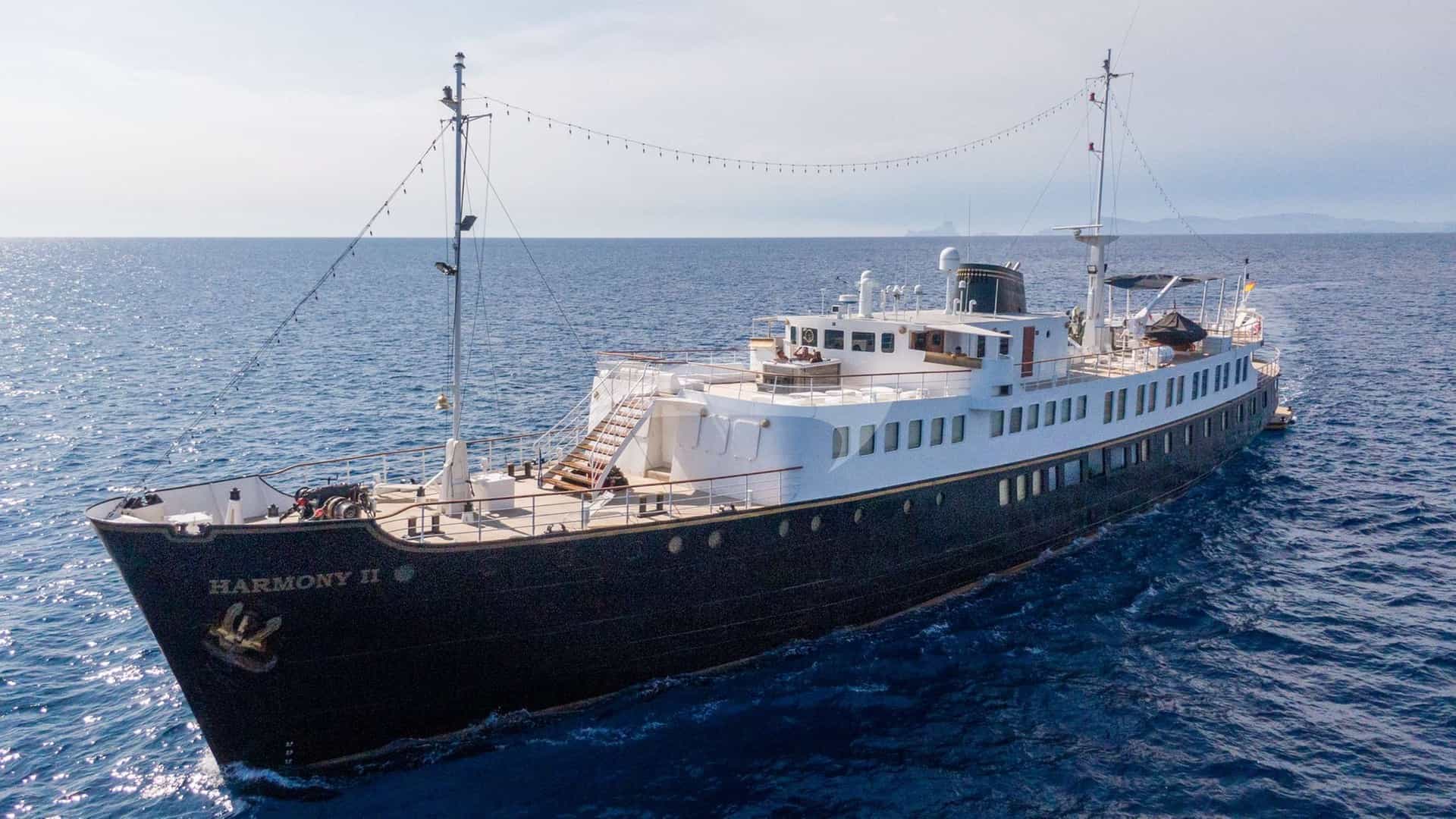
Positioned in the north-eastern pocket of Catalonia where the Pyrenees drop into the Mediterranean, the Gulf of Roses (Golfe de Roses) represents one of the northernmost strategic hub ports for superyachts operating along the Spanish mainland. Extending from the rugged headland of Cap de Creus southwards to the limestone cliffs of the Montgrí Massif, this expansive crescent bay offers deep-water shelter, direct access to the marine parks of northern Spain, and a gateway to the French Riviera just 25 nautical miles to the north. Executing a successful itinerary in this region demands a thorough grasp of localized maritime weather patterns, precise berthing capabilities, strict environmental regulations, and the unique supply chains of the Alt Empordà hinterland.
Cruising the waters of a Roses Yacht Charter requires a heightened operational awareness of regional wind regimes. The northern sector of the gulf is dominated by the Tramuntana, a fierce, dry northerly and north-northwesterly wind that funnels down the Pyrenean river valleys, frequently accelerating through the mountain passes to reach gale force within a short timeframe. While summer Tramuntana events are generally shorter in duration—typically lasting between 24 and 72 hours—they generate steep, short-period seas along the exposed outer cliffs of Cap de Creus. Conversely, the Gulf of Roses itself provides exceptional natural protection from these northerly blows, provided vessels anchor or berth close under the lee of the northern shore. Afternoon sea breezes, known locally as the Garbí, regularly build from the south-west to 15–20 knots between May and September, producing a moderate chop that subsides rapidly after sunset. Easterly Llevant winds, though less frequent in mid-summer, push heavy swells directly into the bay, making secure berth allocations and deep-water anchorage planning paramount for any commercial or private operation.
Primary Infrastructure: Port de Roses and Local Marine Terminals
The main operational focus for larger vessels in the region is Port Esportiu de Roses (42°15.3'N, 03°10.5'E). Managed under the umbrella of Ports de la Generalitat alongside municipal oversight, this harbour provides a combination of commercial, fishing, and leisure infrastructure. The marina features an entrance channel dredged to approximately 6.0 metres, though silt accumulation near the river mouth to the west can occasionally reduce depths to 5.0 metres after heavy winter storms. Captains should request current depth soundings from the harbour master prior to arrival if drawing more than 4.5 metres.
Inside the outer breakwater, the primary commercial and superyacht quay offers stern-to and alongside berthing for vessels up to 45 metres in length overall (LOA). Draft alongside the main outer breakwater ranges from 4.0 to 5.5 metres. For motor yachts exceeding 50 metres LOA or drawing more than 5.0 metres, interior berthing inside the marina basin is unavailable. Vessels of this scale typically anchor in the lee of the breakwater in depths of 10 to 14 metres over a bottom of mud and fine sand, providing excellent holding ground during a Tramuntana, though remaining exposed to any southerly or easterly swell.
Nautical Distances from Port de Roses:
- Cadaqués (Cala Guillola / Port Lligat): 8.5 NM
- Port-Vendres (France): 26 NM
- Illes Medes (Estartit): 14 NM
- Palamós: 28 NM
- Barcelona (Marina Port Vell): 72 NM
- Marseille (Marseille Vieux Port): 138 NM
- Palma de Mallorca: 215 NM
Berth availability at Port de Roses varies dramatically by season. During the peak Mediterranean charter period of July and August, the marina’s limited number of 30-plus-metre berths are in high demand from vessels transiting between the French Côte d’Azur and the Balearic Islands. Securing a berth for a vessel over 30 metres during these months requires reservation lead times of six to nine months through a broker or harbour agent. Shoulder months—specifically late May, June, and September—offer greater flexibility, with reservations generally achievable three to four weeks in advance.
Communication with the port office is conducted via VHF Channel 9. Docking assistance from marineros is mandatory for vessels over 20 metres, as crosswinds generated by the afternoon Garbí can complicate stern-to maneuvering into tight berth configurations. The harbour operates 24-hour security, gated access to the superyacht quays, and dedicated waste handling compliance under MARPOL regulations.
Auxiliary Marinas and Moorings in the Cap de Creus Sector
Beyond the main facility at Port de Roses, the surrounding coastline features several auxiliary harbours and specialized anchorage systems, each with strict dimensional and environmental constraints.
- Empuriabrava: Located three nautical miles south-west of Roses, Empuriabrava is one of the world's largest residential canal systems. However, its utility for superyachts is strictly limited. The approach channel has a maximum depth of 2.8 metres, and fixed bridges across the canal network restrict air draft to 4.5 metres. While unsuitable as a primary berth for luxury charter yachts, Empuriabrava is an essential support hub for housing high-speed tenders, chase boats, and jet skis, offering multiple haul-out yards and specialized marine mechanics.
- Santa Margarida: Situated between Roses and Empuriabrava, this marina network is similarly limited by a shallow entrance bar (2.5 metres draft maximum) and residential bridge heights, making it suitable only for shallow-draft tender operations or small support craft.
- Cadaqués & Port Lligat: Lying 8.5 nautical miles north-east of Roses, the iconic bay of Cadaqués offers no commercial superyacht quays. Anchorages are heavily regulated to protect extensive beds of Posidonia oceanica (seagrass). A seasonal buoy field operates from June to September, managed by the local municipality and maritime authorities. The largest buoys can accommodate vessels up to 35 metres LOA, subject to prior booking through the central reservation system. Vessels larger than 35 metres must anchor outside the buoy line in 15 to 25 metres of water over sand and rock. Tender transfers into Cadaqués town pier can be uncomfortable in easterly winds, requiring large, deep-V tenders with covered seating for guest comfort.
- Cala Jóncols and Cala Montjoi: Located along the southern edge of the Cap de Creus peninsula, these deep coves offer excellent daytime anchorage for vessels taking shelter from northerly winds. Depths drop rapidly from 20 metres down to 5 metres close to shore. Dynamic positioning or stern-to lines tied to shore rocks (where permitted) are frequently deployed to prevent swinging in narrow coves.
Technical Shore Support: Fuel, Water, Power, and Refit Infrastructure
Executing a Roses Yacht Charter requires detailed planning regarding shore-side utilities and fuel bunkering. While Roses offers solid operational foundations, high-capacity technical requirements often require coordination with regional hub ports nearby.
Key Shore Infrastructure Parameters - Port de Roses:
- Maximum Vessel LOA (Inside Marina): 45 metres
- Maximum Draft (Outer Breakwater): 5.5 metres
- Fuel Station Flow Rate: Up to 120 litres/minute (Truck bunkering available up to 800 litres/minute)
- Shore Power Supply: 32A, 63A, 125A (Three-phase, 400V)
- Primary Water Supply: Potable municipal supply via quay hydrants
Bunkering facilities at Port de Roses include a dedicated fuel pontoon near the harbour entrance, stocking marine gasoil (AGO) and premium diesel. However, the high-flow pumps at the fuel dock max out at approximately 120 litres per minute, which can make direct fueling of large motor yachts time-consuming. For vessels requiring fuel volumes in excess of 10,000 litres, bonded tanker truck delivery directly to the main commercial breakwater can be arranged via local shipping agents. Commercial vessels holding tax-exempt fuel licenses must provide full vessel documentation, charter contracts, and crew declarations to the Aduanas (Spanish Customs) office in advance to clear duty-free bunkering operations.
Freshwater is supplied directly to the quays via standard hose connections connected to the local municipal water grid. While the water is potable and safe, the high mineral content characteristic of coastal Catalonia warrants the use of onboard water softening and filtration systems prior to filling domestic tanks or washing down painted superyacht surfaces. Electrical infrastructure at the main superyacht quay includes three-phase 400V power connections ranging from 32A up to 125A. Vessels with higher power draws or non-standard frequencies (such as 60Hz US-spec systems) will need to run onboard generators, as local frequency converters are not permanently installed on the quay.
For emergency maintenance, haul-out, and technical repairs, Port de Roses maintains a 150-tonne travelift suitable for smaller yachts and tenders. For major superyacht engineering, dry-docking, or specialized paint work, vessels operating in this region rely on larger shipyards nearby. Palamós (28 nautical miles south) features a 300-tonne travelift and extensive metalwork facilities, while Barcelona (72 nautical miles south) serves as the primary regional hub for full refit, dry-docking, and class survey operations.
High-End Provisioning and Culinary Sourcing in the Alt Empordà
The Alt Empordà region is world-renowned for its gastronomy, driven by its unique combination of sea and mountain landscapes (Mar i Muntanya). Charter chefs operating out of Roses have access to exceptional fresh ingredients, provided they navigate local market schedules and supply channels effectively.
The central supply point for fresh seafood is the Llotja de Roses (Fish Auction), situated within the commercial port. Operating every afternoon from Monday to Friday, the auction processes catches directly from the local trawl and purse-seine fleet. Charter crews can arrange direct access through specialized local maritime provisioning agents to secure top-tier catches prior to general distribution. Key regional species include:
- *Red Shrimp (Aristeus antennatus):* Caught in the deep-sea trenches off Cap de Creus and Palamós, prized for their sweet flavour and high head fat content.
- Wild Sea Bass and Gilthead Seabream: Sourced daily from local artisanal line fishermen operating around the rocky reefs of the Cap de Creus reserve.
- *Cuttlefish and Squid (Sèpia de las Badies): Essential for traditional Catalan Suquet de Peix* (a rich, saffron-infused fisherman's stew) and black rice dishes.
- Anchoas de L'Escala: Salt-cured anchovies from the southern end of the gulf, processed using traditional methods dating back to Roman times.
Dry goods, imported luxury items, Japanese ingredients, and fine aged meats can be delivered directly to the vessel’s gangway via provisioning specialists based in Girona or Barcelona. Delivery lead times for specialized international items are typically 24 to 48 hours.
The Empordà Designation of Origin (DO Empordà) wine region surrounds Roses, offering exceptional options for stocking shipboard wine cellars with distinct local vintages. Chefs and chief stews should source old-vine Carinyena (Carignan) and Garnatxa (Grenache) reds, as well as crisp white Garnatxa Blanca and mineral-driven Picapoll, which pair exceptionally well with local seafood. Given the close proximity to the French border, top-tier Champagne, Bordeaux, and Burgundy estates can be sourced and delivered to the vessel within 24 hours via distributors in Perpignan and Figueres.
Entry Formalities, Customs, and Maritime Regulations
Operating a commercial or private vessel during a Roses Yacht Charter requires strict adherence to Spanish maritime law and regional environmental mandates. The main administrative oversight is conducted by the Capitanía Marítima, based in Palamós, with a local delegation office operating within Port de Roses.
For commercial charter yachts operating in Spanish waters, the vessel must hold a valid Spanish Charter License (Matriculación Turística or charter authorization) issued by the Directorate-General for Merchant Marine (Marina Mercante). Foreign-flagged vessels operating under commercial registration must submit their charter license paperwork, passenger manifests, crew qualification certificates, and proof of insurance payment to local maritime authorities prior to embarking guests in Roses. Vessels transiting from non-Schengen territory (such as Gibraltar or the UK) must execute official border control procedures. While Roses has a local Guardia Civil and Policía Nacional presence, official passport stamping for non-Schengen crew and guests arriving directly by sea should be pre-arranged through a local port agent, or conducted at the port of entry in Palamós or Barcelona.
Port taxes in Spain are divided into specific tariffs that apply to both private and charter vessels:
- T0 Tariff: Navigation hazard and maritime rescue tax, calculated based on the vessel’s length, beam, and gross tonnage.
- T5 Tariff: Berth and sports port tax, levied on vessels staying within public port facilities or concessions.
Environmental enforcement is exceptionally strict around the Cap de Creus Natural Park and the nearby Medes Islands Marine Reserve. Anchorages in these areas are monitored by environmental patrol craft (Agents Rurals and Guardia Civil del Mar). Key regulatory points include:
- Posidonia Protection: Dropping anchor in designated Posidonia oceanica grass beds is illegal throughout Catalonia. Fines for damaging seagrass meadows exceed €10,000. Vessels must anchor exclusively in clear sand patches, verifiable via visual inspection or official digital mapping applications provided by the Catalan government.
- Diving and Water Sports: Scuba diving inside the marine reserves requires specific permits issued well in advance. Jet-ski operation is strictly prohibited within 200 metres of beaches and inside designated marine reserve boundary zones. High-speed watersports must be conducted at least two nautical miles offshore.
Crew Transfers, Aviation, and Land Transport Logistics
Managing guest arrivals, crew rotations, and land transfers for a Roses Yacht Charter benefits from a well-developed regional transportation network spanning both sides of the Spanish-French border.
Airport Options for Roses Charter Logistics:
- Girona-Costa Brava Airport (GRO): 70 km / 50 minutes drive time (Private jets and regional flights)
- Perpignan-Rivesaltes Airport (PGF): 80 km / 60 minutes drive time (Regional and private aviation)
- Barcelona-El Prat Airport (BCN): 170 km / 1 hour 45 minutes drive time (International long-haul hub)
For private jet charters, Girona-Costa Brava Airport (GRO) is the primary option. Located 70 kilometres south-west of Roses via the AP-7 motorway, GRO features dedicated Fixed-Base Operator (FBO) handling facilities, private customs clearance, and helicopter transfer services. Drive time from Girona airport to the gangway at Port de Roses is approximately 50 minutes under normal traffic conditions. Alternatively, Perpignan-Rivesaltes Airport (PGF) across the French border offers an efficient private aviation alternative, located 80 kilometres north with a drive time of roughly one hour via the border crossing at La Jonquera.
Commercial charter guests flying in on international long-haul flights will generally arrive at Barcelona-El Prat Airport (BCN). Barcelona offers comprehensive long-haul connections to the US, Middle East, and Asia, alongside dedicated executive terminals (General Aviation Terminal 1 and 2). Private luxury van transfers from Barcelona Airport to Port de Roses take approximately 1 hour and 45 minutes via the AP-7 motorway and the C-31/N-260 regional routes.
Direct helicopter transfers to the Roses area can be coordinated through local helipads. While Port de Roses does not have a certified helipad directly on the quay, designated landing zones are available at nearby private estates, high-end hotel helipads, and the nearby Peralada Golf Resort (15 kilometres inland). From Peralada, a ground transfer to the vessel takes under 20 minutes.
For crew rotations, the high-speed AVE train network connects Figueres-Vilafant station (located 22 kilometres west of Roses) directly to Barcelona (55 minutes), Madrid (3 hours 30 minutes), and Paris (5 hours 30 minutes). This rail link provides a highly efficient and cost-effective method for rotating crew members, transporting marine technicians, or moving minor spares quickly between regional hubs.
By mastering the operational nuances of the Gulf of Roses—from Tramuntana shelter strategies and berth reservations to environmental compliance and localized supply chains—captains and brokers can deliver an exceptionally smooth, highly refined charter experience along this unique stretch of the Spanish Mediterranean coast.