
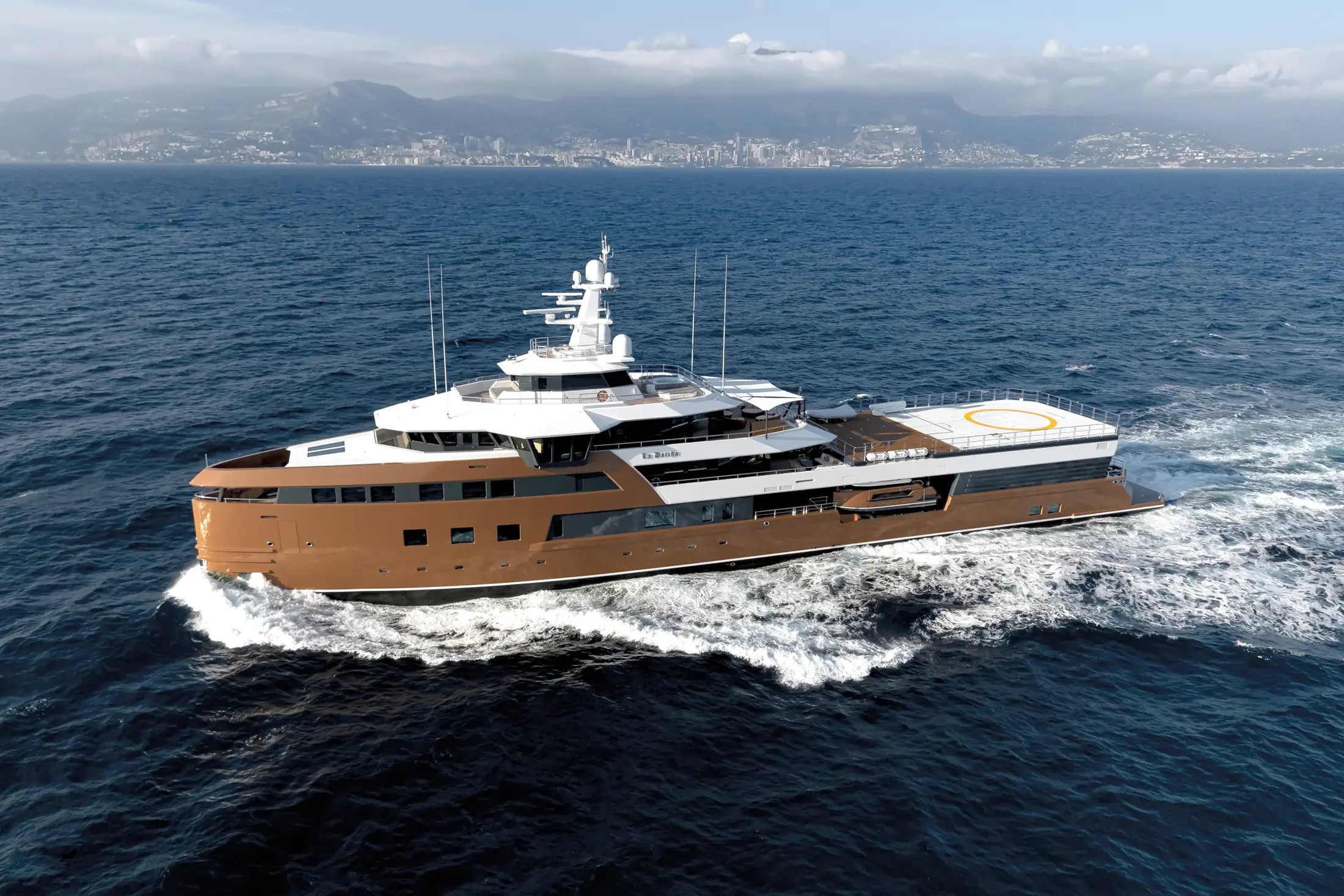
Saint Barthélemy, a 21-square-kilometre French volcanic outcrop positioned at 17°55'N in the Leeward Islands, represents one of the world's most concentrated centers for luxury yachting. While the island’s steep green hills, manicured harbour of Gustavia, and white-sand coves remain constant, the cruising experience shifts dramatically from month to month. Understanding the nuances of weather systems, Atlantic ground swells, trade-wind strength, local regattas, and seasonal venue closures is crucial for planning an itinerary that aligns with your client's exact expectations.
Whether your priority is securing a stern-to berth along the quay in Gustavia during peak festive weeks or dropping anchor in complete solitude off Île Fourchue during the calm late-spring months, timing governs every operational detail. This guide provides a month-by-month breakdown of the weather dynamics, ocean conditions, lead times, and tactical advantages across the St Barts cruising calendar.
The Microclimate and Ocean Dynamics of St Barts
St Barts lies within the path of the North-East Trade Winds (les alizés), which dominate the regional climate from late November through April. These winds, blown off the Atlantic high-pressure system, deliver comfortable air temperatures averaging 26°C to 29°C and low relative humidity throughout the winter cruising season. Ocean water temperatures remain remarkably stable, ranging from a low of 26°C in February to a peak of 29°C in September.
Cruising around St Barts requires an understanding of the island's marine environment. The northern and western anchorages—such as Anse de Colombier and Baie de St-Jean—are highly protected from prevailing south-easterly and easterly winds. However, between December and March, heavy North Atlantic depressions thousands of miles to the north can push long-period swells (la houle du nord) into these exposed bays. A 2-metre north-westerly swell can turn an otherwise tranquil anchorage like Colombier into a rolling roadstead, making beach landings by tender challenging.
Conversely, the southern coastline, encompassing Anse de Grande Saline and Anse de Toiny, faces the open Atlantic. These bays are subject to wind waves and oceanic currents, making them viable almost exclusively as day anchorages during periods of light, settled southerly or easterly breezes.
Navigating the St Barth Canal—the 15-nautical-mile open-water passage separating Gustavia from the southern coast of St Martin—demands respect. During mid-winter, trade winds compress between the landmasses, generating 2- to 3-metre seas that make a beam reach under sail or a comfortable displacement passage on a motor yacht an exercise in timing.
December to January: The Festive Season and The Christmas Winds
The Caribbean charter year reaches its peak between mid-December and early January. Saint Barthélemy becomes the international epicenter of superyachting during this period, with the waters surrounding Gustavia transformed into an extraordinary display of maritime architecture.
### Weather and Sea State December marks the arrival of the vent des fêtes—the Christmas Winds. These easterly to north-easterly trade winds blow consistently at 20 to 28 knots, occasionally gusting higher during brief squalls. Air temperatures hover at a comfortable 27°C, while sea temperatures average 27°C. The ocean state across the open passages is lively, with moderate to rough seas. Northern ground swells are common during this time, requiring captains to monitor swell charts carefully when selecting overnight berths at anchor.
### Atmospheric and Social Dynamics During the two-week Festive Period (20 December to 5 January), Gustavia Harbour operates at maximum capacity. The inner harbour (la capitainerie) offers roughly 40 stern-to berths for yachts up to 60 metres, reserved years in advance or allocated to returning high-profile vessels. The majority of the fleet, including mega-yachts exceeding 100 metres, drops anchor in the outer roadstead (la rade).
Onshore, the island operates at a furious pace. The boutiques along Rue de la République, waterfront bistros around the harbour basin, and open-air beach clubs along Baie de St-Jean run at full capacity. New Year’s Eve in Gustavia is world-famous: the outer harbour fills with lit hulls, and a synchronized midnight fireworks display over Fort Oscar signals the start of the new year.
### Charter Logistics and Lead Times This is the most competitive booking window of the calendar year. To secure a high-specification vessel for a Christmas or New Year St Barts Yacht Charter yacht charter, contracts are typically executed 10 to 14 months in advance. Minimum charter periods during the festive fortnight are strictly enforced, with most owners requiring a 10- to 14-night minimum at elevated holiday charter rates, often subject to a 15% to 25% premium over standard high-season pricing.
February to April: Prime Trades, Regattas, and High Society
As the festive crowds disperse in early January, February opens what many captains and seasoned charterers consider the finest window for cruising the Leeward Islands. The trade winds settle into a predictable pattern, the northern swells become less frequent, and the island settles into a sophisticated, unhurried rhythm.
### February: The Cruising Sweet Spot February delivers textbook Caribbean conditions. Trade winds ease to a steady 15 to 20 knots from the east, providing optimal conditions for both motor yacht passages and high-performance sailing. Air temperatures average 27°C, humidity remains low, and rainfall is minimal, limited to short, early-morning showers that clear within minutes. Anchorages like Anse de Colombier—located within the Réserve Naturelle Marine de Saint-Barthélemy—offer clear, calm waters ideal for diving, paddleboarding, and swimming off the stern platform.
### March: The St Barth Bucket Regatta In mid-March, St Barts hosts the world’s premier superyacht sailing event: the St Barth Bucket Regatta. Over four days, dozens of sailing yachts ranging from 30 to over 70 metres gather to race around the island and its offshore rocks, such as Pain de Sucre and Île Coco.
For charter guests, March offers a double-edged experience: - Pros: The sight of historic J-Class yachts and modern carbon-composite superyachts flying spinnakers off Point Épée is unmatched. The energy in Gustavia is celebratory, elevated, and focused entirely on seamanship. - Cons: Berth availability in Gustavia inner harbour is non-existent unless participating in or directly supporting the regatta. High-end dining venues require reservations weeks in advance.
### April: Les Voiles de St Barth and Spring Sailing April brings slightly warmer temperatures (28°C) and water temperatures rising to 27°C. The trade winds begin their subtle seasonal shift, easing to 12–16 knots from the east-southeast. Mid-April sees the running of Les Voiles de St Barth, an event tailored toward Maxi yachts, TP52s, and multihulls. April is an exceptionally versatile month; the calm seas make passages to nearby islands—such as the 30-nautical-mile run to Road Bay in Anguilla or the 26-nautical-mile passage south to Saba—smooth and efficient.
May to July: Shoulder-Season Value and Tranquil Waters
For knowledgeable charterers seeking space, privacy, and exceptional value, the late spring and early summer shoulder season represents an outstanding opportunity. The island’s natural beauty takes center stage as visitor numbers drop, yet virtually all major dining establishments, luxury boutiques, and beach clubs remain open through mid-August.
### Weather Dynamics and Water Temperatures By May, the trade winds ease to 10–15 knots, blowing predominantly from the east-southeast. The North Atlantic depressions fade entirely, eliminating the northern swells that occasionally disrupt winter anchorages. Ocean surface conditions become glassy and calm. Water temperatures rise to 28°C in May and 29°C by July, creating ideal conditions for extended water sports, seabobbing, and snorkeling along the coral formations off Île Fourchue.
### Tactical Advantages for the Charterer Chartering between May and July offers distinct operational advantages: - Anchorage Selection: Anchorages that are congested in January—such as Anse de Colombier—are largely vacant. Securing one of the 15 public mooring buoys in the marine reserve is straightforward. - Berthing Flexibility: Gustavia’s Capitainerie has open capacity, allowing motor yachts to step onto the quay without month-long advance requests. - Charter Term Flexibility: Owners are far more receptive to 5-night or 7-night itineraries that do not strictly align with weekend-to-weekend turnovers, and charter rates drop to low-season figures (typically 15% to 20% below high-season base rates). - Short Lead Times: Charters can comfortably be booked 1 to 3 months in advance.
August to November: Low Season, Tropical Waves, and Rebirth
The late summer and autumn months mark the low season across the northern Caribbean. While this period requires careful navigation due to regional weather patterns, late autumn holds unique appeal for experienced regional travelers.
### August to October: The Tropical Window During August, September, and October, the trade winds weaken substantially, resulting in light, variable breezes punctuated by occasional tropical waves. Air temperatures peak at 31°C with high humidity. Water temperatures reach their annual high of 29°C.
This window coincides with the peak of the Atlantic hurricane season. While modern weather forecasting provides ample warning to reroute vessels safely, many yachts enter dry dock or relocate to the Southern Caribbean (such as the Grenadines or ABC Islands) or the Mediterranean during these months. Furthermore, a substantial majority of St Barts' hotels, restaurants, and retail establishments close down between mid-August and late October for annual maintenance and staff leave.
### November: The Island Awakens In early November, Saint Barthélemy reopens. Hotels finish renovations, boutique doors reopen, and the island’s culinary scene revives ahead of the annual St Barth Gourmet Festival in mid-November.
By late November, the trade winds re-establish themselves from the east-northeast at 15 to 20 knots. Air temperatures drop back to a comfortable 27°C, and the sea temperature stabilizes around 28°C. Early November charters offer an opportunity to experience a freshly prepared island with immaculate service standards, crisp operational focus, and empty anchorages just weeks before the festive surge.
Key Seasonal Parameters at a Glance
- Peak Festive Season (Mid-Dec to Early Jan): Trades 20–28 knots; water 27°C; max crowds; 10–14 month lead time required.
- High Season (Jan to April): Trades 15–22 knots; water 26–27°C; high activity; regattas in Mar/Apr; 4–8 month lead time required.
- Shoulder Season (May to July): Trades 10–15 knots; water 28–29°C; calm seas; low crowds; 1–3 month lead time required.
- Low Season (August to October): Variable winds; water 29°C; elevated rain risk; island venues largely closed; limited charter operations.
- Late Autumn / Reopening (November): Trades return (15–20 knots); water 28°C; island re-energized; 2–4 month lead time required.
Essential St Barts Anchorages and Passage Dynamics
A well-planned St Barts itinerary balances time tied up in Gustavia with time spent at anchor in the island’s protected bays and surrounding uninhabited islets.
### Gustavia Harbour Gustavia offers two distinct operational zones. The inner harbour provides stern-to berthing along the main quay or the commercial dock, putting guests steps from the town's French bakeries, duty-free shopping, and dining. Vessels drawing up to 5 metres can be accommodated alongside, though space is limited. The outer roadstead provides expansive anchorage in 5 to 15 metres over sand and grass, offering excellent holding ground. Tenders run guests from the outer anchorage to the Capitainerie tender dock in 3 to 7 minutes.
### Anse de Colombier Located at the north-western tip of St Barts, Colombier is accessible only by boat or via a 20-minute coastal hike. Enclosed by steep, scrub-covered hills, this bay is part of the marine reserve. Anchoring directly on the seabed is prohibited to protect seagrass beds; vessels must grab one of the color-coded mooring buoys (rated for vessels up to specified tonnage limits) or anchor in designated sand zones outside the reserve boundary. The bay offers exceptional protection from easterly trade winds, crystal-clear water for swimming, and sunset views over the Atlantic horizon.
### Île Fourchue Positioned 5 nautical miles north-west of Gustavia, Île Fourchue is a stark, uninhabited volcanic island featuring a horseshoe-shaped bay open to the south-west. Protected from the prevailing easterly trades, it is one of the Leeward Islands’ premier day-anchorages. The drop-offs along the outer cliffs provide deep-water snorkeling and scuba diving, where reef sharks, spotted eagle rays, and sea turtles are frequently encountered.
### Baie de St-Jean Famous for its vibrant beach scene and striking coral reef barrier, Baie de St-Jean is divided into two basins by a rocky promontory topped by an iconic luxury hotel. Due to the outer barrier reef, large yachts must anchor outside the reef in 6 to 8 metres of water over sand. Tenders must navigate the marked reef passages carefully to land guests directly on the beach. It is an exceptional day anchorage during light to moderate trade-wind conditions, offering direct access to the island's most dynamic daytime beach scene.
Crafting the Optimal Itinerary
When planning an itinerary around St Barts, experienced brokers often blend Saint Barthélemy’s refined onshore offering with the raw, natural cruising grounds of nearby islands.
A classic 7-day Leeward Islands routing begins with a short passage from St Martin’s Simpson Bay or Grand Case, crossing the St Barth Canal to drop anchor at Île Fourchue for afternoon water sports. The vessel then shifts to Gustavia for two days of harbour access, dining, and retail before spending two tranquil days at anchor in Anse de Colombier. The final legs of the itinerary frequently head north across the 30-nautical-mile stretch to Anguilla, taking advantage of the flat, protected anchorages of Road Bay, Crocus Bay, and the offshore coves of Prickly Pear Cays.
By selecting the right month and matching your charterer's priorities to the natural rhythm of the Caribbean calendar, a St Barts charter delivers a seamless blend of French West Indian sophistication, world-class seamanship, and unforgettable days on the water.