
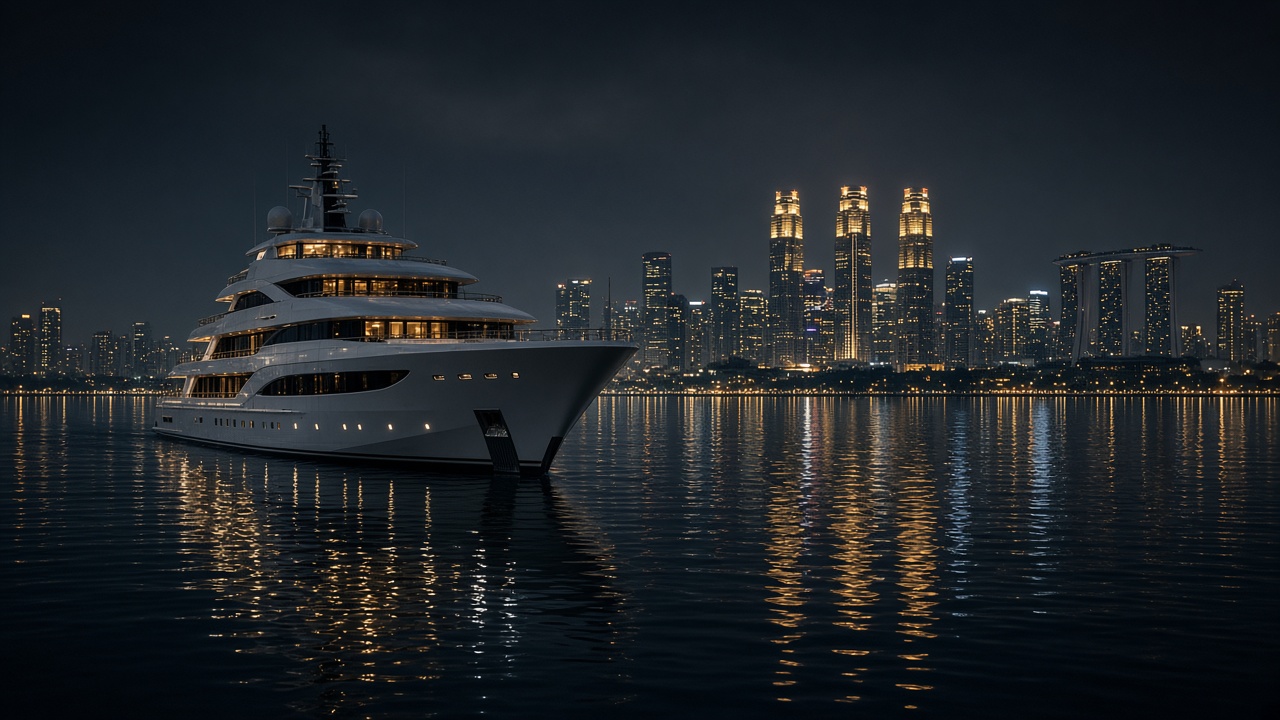
Cruising the archipelagos of French Polynesia represents one of the most rewarding oceanic voyages available to private and commercial yachts. Spanning an ocean area as vast as Western Europe, the five island groups—led by the Windward and Leeward Society Islands—offer spectacular cruising grounds characterized by high volcanic peaks, surrounding barrier reefs, and protected inner lagoons. However, operating a vessel efficiently in these remote South Pacific waters demands precise planning, robust technical foresight, and an authoritative grasp of regional maritime infrastructure. Executing a seamless Yacht Charter Tahiti yacht charter requires comprehensive familiarity with the territory’s marine infrastructure, from the deep-water quays of Papeete to the delicate mooring regulations of Bora Bora.
While the natural environment is pristine, the shore-side support system relies on a concentrated network of key ports, commercial docks, and specialized maritime agencies. Understanding how to navigate local clearance formalities, secure restricted berth space during peak trade-wind months, manage high-volume bunkering, and organize complex airport transfers is essential for captains, charter managers, and brokers alike.
Entry Protocols, Port Formalities, and Charter Regulations
All foreign-flagged yachts entering French Polynesian territorial waters must make their initial landfall at a designated port of entry, with Papeete Harbour on the island of Tahiti serving as the primary commercial and administrative gateway. Maritime customs, immigration, and biosecurity regulations are strictly enforced by French territorial authorities.
Upon arrival in Papeete, the vessel’s command must liaise directly with three main administrative bodies: the Police aux Frontières (PAF) for crew and passenger passport control, the Direction Régionale des Douanes for customs declarations, and the Direction des Affaires Maritimes (DPAM) for vessel safety oversight and maritime security compliance. Standard clearance documentation demands valid vessel registration, international safety management certificates, complete crew lists with STCW qualifications, passenger manifests, and proof of comprehensive marine insurance including third-party liability and wreck removal coverage.
Commercial charter operations in French Polynesia are subject to local fiscal regulations and operational licensing. Vessels engaged in commercial charter contracts must secure an official charter permit from the DPAM prior to embarking guests. This involves registering with the local tax authority and paying the Taxe sur les Entreprises de Transport Maritime (TEP), calculated as a percentage of the charter contract value, or operating under specific commercial exemptions depending on the vessel’s flag and gross tonnage.
To navigate these formalities without delay, appointing a local maritime agent based in Papeete—such as Tahiti Nui Ocean Interfaces or Seal Superyachts Tahiti—is standard operational practice. A dedicated agent manages advance passenger declarations, processes duty-free clearance status, arranges pilotage when required, and facilitates expedited customs processing for incoming spare parts and high-value provisions.
Key Marinas and Superyacht Berthing Infrastructure
Berthing options in French Polynesia reflect a contrast between urban, fully serviced marine facilities on Tahiti and Raiatea, and natural anchorages or regulated buoy fields in the outer Leeward Islands. Advance planning is vital, as high-capacity berth infrastructure is limited compared to Mediterranean or Caribbean hubs.
Tahiti and Mo'orea Marine Facilities
Tahiti serves as the core logistics hub for the entire region. The island features two primary berthing locations capable of handling large sailing yachts and motor vessels:
- Marina Papeete (Downtown Port Area): Situated directly along Boulevard Pomare in the center of Papeete, this facility places yachts within walking distance of government offices, commercial banks, and local supply markets. The inner marina features modern pontoon berths for vessels up to 50 metres in length with draughts up to 4.5 metres, offering 230V/380V shore power and direct freshwater hookups. Larger superyachts and megayachts exceeding 60 metres to over 100 metres berth alongside the main commercial quay wall or the cruise ship terminal quays, subject to commercial harbor master allocation and pilotage requirements.
- Marina Taina (Punaauia): Located 5 nautical miles southwest of the main Papeete channel entrance, Marina Taina is the primary dedicated superyacht marina in French Polynesia. The facility provides fixed pontoon slipways accommodating vessels up to 60 metres, supplemented by heavy-duty mooring buoys inside the sheltered lagoon capable of securing megayachts up to 120 metres in length with draughts exceeding 8 metres. Shore power capabilities range up to 380V/125A three-phase, supported by high-volume freshwater delivery, a dedicated bunkering station, 24-hour security, and direct tender access to shore-side dining and concierge services.
Directly across the Sea of Moon (Tapiroa), 15 nautical miles west of Tahiti, lies Mo'orea. Mo'orea lacks a dedicated superyacht marina, but offers deep, protected anchorages in Cook's Bay (Baie de Pao Pao) and Opunohu Bay. Both bays feature steep mud bottoms providing excellent holding in 15 to 30 metres of water. Care must be taken near bay entrances where deep water quickly gives way to coral shelves.
Leeward Islands Infrastructure: Raiatea, Taha'a, and Bora Bora
Moving 90 nautical miles northwest from Mo'orea to the Leeward Islands (Îles sous le Vent), the logistical landscape shifts toward island bases and natural marine reserves.
Raiatea acts as the nautical engine room of the Leeward group. Uturoa Harbour, the administrative center of Raiatea, offers a public town quay with depths from 4 to 6 metres, allowing stern-to or alongside berthing for vessels up to 45 metres. Uturoa is ideal for brief operational stops, crew changes, and bulk provisioning. Marina Apooiti, located 4 nautical miles west of Uturoa, serves as the main base for regional charter fleets, though its inner slips are restricted to vessels with draughts under 2.5 metres.
Taha'a shares a vast, continuous lagoon with Raiatea. While Taha'a offers no formal marina quays, its sheltered bays—such as Haamene and Apu Bay—provide safe, deep-water anchorages in 20 to 35 metres. Several high-end luxury resorts in Taha'a maintain deep-water mooring buoys specifically calibrated for visiting charter yachts up to 40 metres.
Bora Bora, situated 22 nautical miles northwest of Taha'a, enforces strict environmental protections over its delicate marine environment. There are no commercial superyacht marinas in Bora Bora. Vessels visiting the island must utilize heavy-duty mooring buoys managed by the Bora Bora Mooring Association or anchor strictly within designated sandy-bottom anchorages near Motu To'opua and Vaitape.
Anchoring directly on coral heads (patates de corail) is strictly prohibited under territorial environmental statutes, with severe fines for non-compliance. Mooring buoys in Bora Bora are rated for vessels up to 60 metres; superyachts drawing over 4 metres or exceeding 60 metres must anchor in deep sand pockets in the western lagoon or remain at anchor outside the pass if conditions require.
Lagoon Navigation, Pass Dynamics, and Draught Constraints
Navigating the waters of French Polynesia requires precise visual pilotage and a clear understanding of reef pass (passe) dynamics. The Society Islands are encircled by coral reefs pierced by narrow, deep channels formed by fresh runoff from mountain rivers. Transiting these passes safely demands adherence to strict hydrographic and meteorological protocols.
Major passes, such as Passe de Papeete (Tahiti) and Passe Teavanui (Bora Bora), are wide, well-marked, and maintained to minimum controlling depths exceeding 9.5 metres, allowing access for large motor yachts day and night. Conversely, smaller passes—such as Passe Taapuna on Tahiti's west coast or Passe Paipai on Taha'a—are narrower, subject to strong cross-currents, and require daytime visual navigation.
Pass mechanics are heavily influenced by ocean swells and lagoon drainage. Strong south-easterly trade winds (Mara’amu) generate large ocean swells that drive immense volumes of water over the barrier reef into the inner lagoon. This water must escape back into the open ocean through the passes, creating outgoing currents that can reach speeds of 6 to 9 knots.
When a strong outgoing current meets incoming ocean swells, severe standing waves and heavy breaking seas form within the pass throat. Captains must calculate tide cycles carefully, scheduling pass transits to coincide with slack water or flood tide whenever possible.
Inside the lagoons, navigation relies on a combination of digital charting, echo sounders, and visual watchkeeping. Isolated coral heads rise abruptly from lagoon floors of 30 metres depth to within less than 1 metre of the surface. Visual navigation requires the sun to be high overhead—ideally between 10:00 and 14:00—to render underwater coral formations clearly visible in varying shades of brown and yellow against the deep blue and turquoise waters.
Vessels with draughts under 2.0 metres (such as large cruising catamarans) enjoy exceptional freedom within inner lagoon channels, whereas deep-draught motor yachts drawing 3.5 metres or more must remain strictly within buoyed shipping lanes and designated deep-water basins.
Bunkering, Freshwater Supply, and Technical Support
Maintaining technical readiness across extended South Pacific itineraries requires meticulous management of fuel, potable water, and engineering spares.
Marine Fuel (MGO) and Duty-Free Clearance
High-grade, low-sulfur Marine Gasoil (MGO) is widely available in Tahiti, but bunkering logistics vary by vessel size and location:
- *Duty-Free Fuel Card Scheme (Détaxe): Foreign-flagged commercial charter yachts and vessels holding valid outbound international clearance are eligible for the French Polynesian duty-free fuel concession. This concession waives local import taxes, resulting in significant cost savings per litre. The application for détaxe* status must be submitted through a local port agent at least 10 working days prior to fueling.
- Bunkering Locations: High-speed bunkering is available directly at the Marina Taina fuel dock for vessels up to 60 metres. Larger vessels requiring high-volume bunkering (exceeding 30,000 litres) typically take fuel via dedicated road tankers alongside the commercial berths at Papeete Harbour. Advance notification of 48 to 72 hours is required to align tanker deliveries with harbor master allocations.
- Outer Island Fuel Availability: Fuel availability drops dramatically outside Tahiti. Uturoa in Raiatea offers MGO via commercial dock or truck, but flow rates are lower and stocks are limited. Vessels planning extended itineraries through the Tuamotu Archipelago or Marquesas Islands must complete full bunkering in Papeete prior to departure.
Freshwater Production and Treatment
While shore water is available at Marina Papeete, Marina Taina, and Uturoa Quay, reliance on municipal shore supplies for high-volume consumption is discouraged due to fluctuating water pressure and high local utility costs. Charter yachts must operate onboard reverse-osmosis desalination units (watermakers) continuously.
Watermakers drawing sea water from inner lagoons must be monitored carefully. High water temperatures and organic matter inside lagoons can fouling reverse-osmosis membranes. Captains are advised to run watermakers while transiting open ocean channels between islands to ensure high water quality and protect filtration equipment. Onboard holding tanks should undergo secondary filtration and UV sterilization prior to feeding guest quarters.
Technical Support and Drydocking Capabilities
Tahiti and Raiatea possess the most developed marine engineering services in the South Pacific south of Auckland:
- Engine and Systems Maintenance: Papeete hosts authorized service agents and marine technicians for major propulsion and generator brands (including Caterpillar, MTU, Cummins, and Northern Lights). Skilled marine electricians, refrigeration specialists, and certified divers are readily available for underwater hull cleans and propeller inspections.
- Shipyard Infrastructure: Raiatea is home to Chantiers Navals d’Uturoa (CNI), which operates marine slipways capable of hauling vessels up to 300 tonnes. For larger vessel drydocking, refit work, or complex structural repairs, vessels must utilize the commercial marine slipways in Papeete Harbour or transit to major refit yards in New Zealand or Australia.
- Spares Freight and Logistics: Engine parts, specialized electronics, or emergency mechanical spares must typically be air-freighted from supplier hubs in Europe, the United States, or New Zealand. Importing marine spares requires customs bonded clearance through Faa'a International Airport, taking between 3 to 5 business days from dispatch to vessel delivery when managed by a local maritime agent.
Shore Logistics: Air Transport, Crew Transfers, and Provisioning
Flawless shore logistics ensure that guest transfers, crew rotations, and culinary management proceed without interruption across disparate island groups.
Aviation Infrastructure and Guest Transfers
Faa'a International Airport (PPT), located on the main island of Tahiti, serves as the sole international aviation gateway for French Polynesia. Situated just 5 kilometres from Marina Papeete and 8 kilometres from Marina Taina, PPT handles direct long-haul flights from Paris, Los Angeles, San Francisco, Tokyo, Auckland, and Honolulu via carriers including Air Tahiti Nui, Air France, French Bee, United Airlines, and Hawaiian Airlines.
For private aviation, Faa'a International Airport features a dedicated General Aviation FBO terminal operated by Tahiti Air Charter and local handling partners. The airport accommodates large long-range business jets (such as Gulfstream G650, Bombardier Global 7500, and Dassault Falcon 8X). Ground handling arrangements include direct tarmac access for VIP vehicle escorts from aircraft steps to private terminal lounges or direct road transport to waiting tenders at Marina Taina.
Inter-island guest transfers rely on a combination of regional air services and helicopter charters:
- Regional Airlines: Air Tahiti and Air Moana operate regular scheduled turboprop services (ATR 72/42 aircraft) connecting Tahiti (PPT) to Raiatea (RFP, 45-minute flight time) and Bora Bora (BOB, 50-minute flight time).
- Bora Bora Airport Transfers: Bora Bora’s airport is located on Motu Mute, an isolated islet on the northern barrier reef. Guests arriving via commercial or private flights step directly from the airport terminal onto luxury resort launches or yacht tenders at the adjacent deep-water motu quay, bypassing the main island entirely.
- Helicopter Operations: Tahiti Nui Helicopters operates VIP transfer services between Tahiti, Mo'orea, Raiatea, Taha'a, and Bora Bora. Direct helideck landings on superyachts are permitted provided the vessel holds a compliant helideck certification and local civil aviation authority clearance.
High-End Provisioning and Cold-Chain Logistics
Delivering international culinary experiences in the South Pacific requires a sophisticated supply chain combining local fresh sourcing with imported air-freight logistics.
Supply Chain Architecture:
[Paris / Los Angeles] --> Air Freight (Cold-Chain) --> Faa'a Cargo Hub (PPT) --> Bonded Dispatch --> Yacht Galley
                                                                           --> Regional Flights --> Outer Island Tenders
Local food production is rich in high-quality tropical ingredients. The Marché de Papeete is the central clearinghouse for fresh local produce, including tropical fruits, root vegetables, vanilla beans from Taha'a, and daily catches of yellowfin tuna, mahi-mahi, wahoo, and deep-water snapper landed by local longline fishing fleets.
To supplement local availability, high-end imported delicacies—including European truffles, Wagyu beef, French artisanal cheeses, caviar, fresh berries, and fine European wines—are air-freighted twice weekly via direct commercial flights from Paris and Los Angeles.
Specialized provisioning agents based in Papeete manage the entire cold-chain logistics process. Goods pass through airport customs control directly into temperature-controlled vehicles before being delivered directly to the yacht's refrigeration store rooms at Marina Taina or packaged into insulated air-freight containers for onward connection to Raiatea or Bora Bora airports.
Crew Logistics and Administrative Clearance
Crew changes in French Polynesia are subject to strict immigration controls. Non-EU/EEA crew members must possess valid merchant mariner credentials, STCW certificates, and valid passports with at least 6 months remaining validity. Depending on nationality, specific crew visas (visa long séjour) or advance immigration entry clearances must be secured prior to arrival in the territory.
Upon arrival at Faa'a International Airport, crew members joining a vessel must present a formal Letter of Guarantee issued by the vessel’s local maritime agent confirming their employment status and joining details. Crew members signing off a vessel must show confirmed outbound flight tickets before immigration authorities release the vessel's crew list update.
Reservation Timelines and Seasonality Strategy
Operating a successful charter season in French Polynesia requires aligning vessel schedules with local climate patterns and high-demand booking windows.
The primary cruising season coincides with the dry season (matari’i i nia), running from May through October. This period delivers lower humidity, reduced rainfall, and stable south-easterly trade winds (Mara’amu) averaging 15 to 25 knots. High charter demand peaks during the European and North American summer months of June, July, and August.
The shoulder seasons of April and November offer lighter winds and calm seas, ideal for combined motor yacht itineraries involving long open-ocean passages. The wet season (matari’i i raro), from December through March, brings higher ambient temperatures, increased humidity, heavier rainfall, and occasional tropical depressions, resulting in lower overall charter demand and increased maintenance availability at local shipyards.
To secure optimal operational arrangements, captains and charter managers should adhere to the following advance logistics planning schedule:
1. 12 to 9 Months Prior: Submit charter permit applications to the DPAM; reserve peak-season berths at Marina Taina (Tahiti); secure luxury mooring buoys in Bora Bora. 2. 6 Months Prior: Submit duty-free fuel concession (détaxe) paperwork; confirm FBO landing slots and private jet handling at Faa'a International Airport. 3. 60 Days Prior: Finalize local maritime agent representation contracts; establish accounts with Papeete provisioning houses; submit preliminary crew and passenger manifest data. 4. 14 Days Prior: Confirm cold-chain air-freight schedules for specialized gourmet provisions; re-confirm pass conditions and buoy availability in the Leeward Islands.
By maintaining strict adherence to these operational protocols, superyacht commanders and charter organizers can successfully master the logistical complexities of French Polynesia, delivering an exceptional cruising standard across one of the world's most captivating maritime environments.