
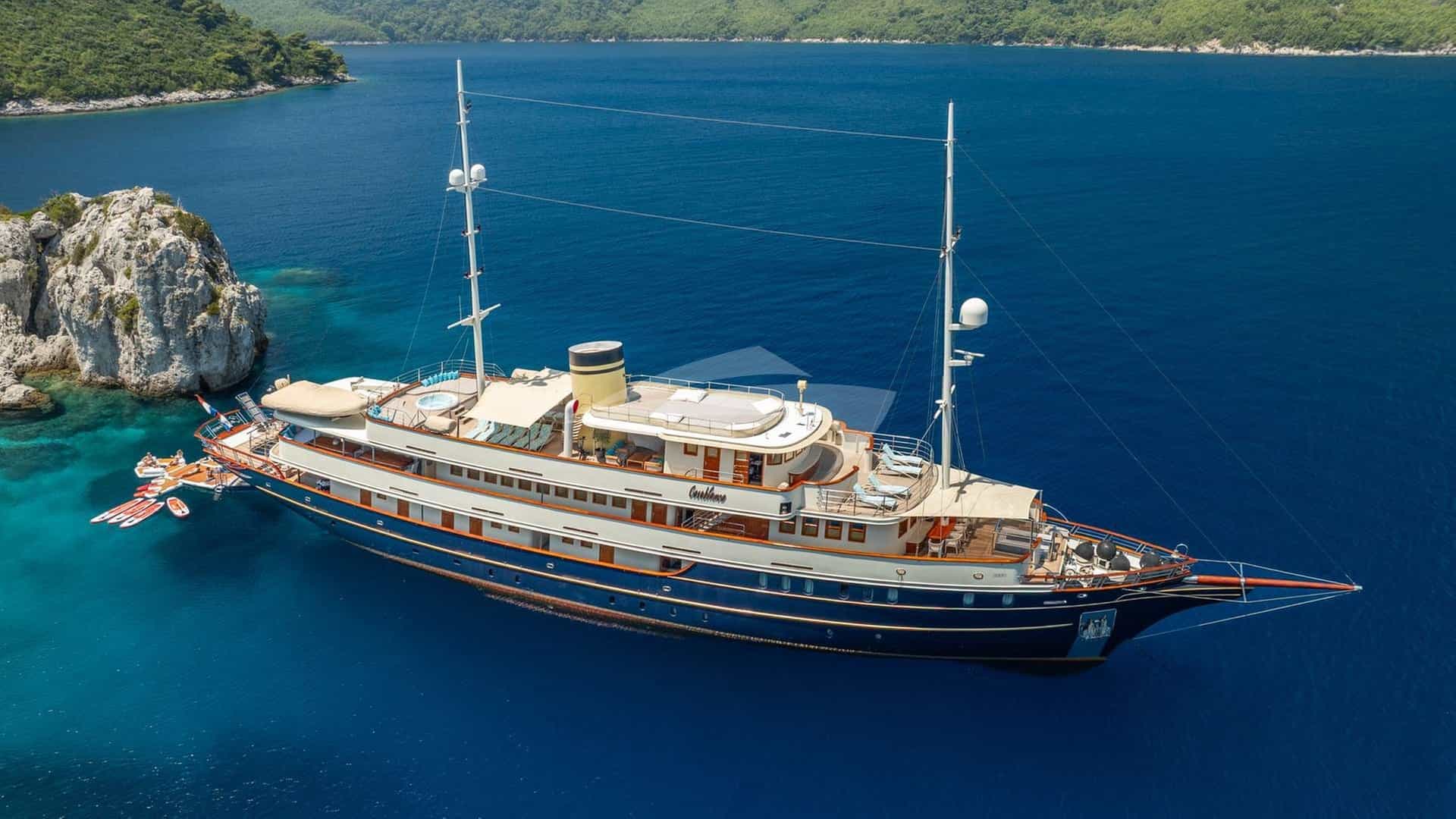
Cruising the northern reach of Dalmatia demands an understanding of timing that goes far beyond simply checking temperature averages. The Zadar archipelago, anchored by a 3,000-year-old peninsular city, serves as the primary gateway to over 300 islands, islets, and reefs. This dense maritime network includes the stark, limestone labyrinth of the Kornati National Park, the dramatic seaward cliffs of Dugi Otok, and the quieter, low-lying northern islands of Molat, Silba, and Olib. While the southern Dalmatian coast around Split and Dubrovnik draws heavy commercial traffic and mega-yacht volume, Zadar remains the preferred choice for yachtsmen seeking technical sailing, pristine national park anchorages, and authentic island culture.
To secure the ideal private voyage, timing is the single most critical decision you will make. The weather patterns across the Zadar Channel and the outer islands transition dramatically between May and October. Local microclimates are heavily influenced by the Velebit mountain range, which towers over the mainland shore. Understanding how thermal winds, water temperatures, seasonal restaurant operations, and crowd densities evolve across these six months allows you to tailor your itinerary to your exact cruising preferences. Whether your priority is blue-water performance sailing in brisk afternoon breezes or drop-anchor tranquility in empty turquoise coves, this month-by-month guide provides the operational insight required to plan an impeccable itinerary.
Meteorological Drivers: Wind, Sea, and Microclimates
The sailing conditions in northern Dalmatia are defined by three primary wind systems, each dictating the rhythm of life on the water. Recognizing these patterns is essential for itinerary planning, especially when navigating narrow passages like the Mali Ždrelac strait between Ugljan and Pašman or crossing the exposed open stretches towards Dugi Otok.
The summer thermal breeze is the Maestral. Emerging from the north-west around mid-morning as the mainland heats up, it steadily builds to a reliable 12 to 20 knots by mid-afternoon before dissipating gently toward sunset. The Maestral is the wind that powers ideal summer sailing across the Zadar Channel, creating flat water inside the lee of Ugljan and consistent pressure for vessels making passage down to the Kornati cluster.
Conversely, the Bura is a cold, dry katabatic wind descending off the Velebit mountains. While less frequent in mid-summer, a strong Bura can sweep across the Velebit Channel and the northern Zadar islands with sudden, severe gusts exceeding 40 knots. When a Bura is forecast, experienced captains shift itineraries to the protected western coastlines of the outer islands or seek shelter within deep, enclosed bays like Pantera on Dugi Otok or Telascica Bay.
The Jugo is a warm, humid south-easterly wind driven by low-pressure systems over the Mediterranean. It builds gradually over several days, accompanied by heavy cloud cover and a distinct south-easterly swell. While the Jugo creates uncomfortable roll in south-facing anchorages, it offers clear advance warning, allowing crew to reposition the yacht into secure north-facing coves such as Lučina on Molat or the well-protected berths at ACI Marina Žut.
Sea temperatures lag behind air temperatures by roughly three weeks. The shallow waters within protected bays like Sakarun heat quickly in late spring, whereas the deep blue waters off the outer drops of the Kornati Islands retain early-season chill well into June. Understanding these thermal characteristics helps set realistic expectations for swimming, diving, and water sports throughout the season.
Month-by-Month Zadar Charter Calendar
May: The Spring Awakening and Uncrowded Passages
May marks the official opening of the northern Dalmatian yachting season. Air temperatures average a comfortable 21°C to 23°C, though evenings remain crisp on the water, requiring light outerwear on deck. Sea temperatures hover around 18°C to 19°C, which may prove brisk for casual swimming but remains suitable for active water sports and tender exploration.
For discerning charterers, May offers exceptional privacy. The iconic sights of the region—such as the dramatic white cliffs of Telašćica Nature Park or the turquoise shallows off Sakarun Beach—are completely devoid of the commercial excursion boats that arrive later in the summer. You can drop anchor in popular coves like Lojena on the island of Levrnaka and hold the entire bay to yourself.
The wind regime in May is dynamic. The Maestral is not yet fully established, meaning itineraries are governed by broader synoptic systems that produce alternating periods of moderate Bura and Jugo. This variability makes May a favourite month for experienced sailors looking to maximize sea time under sail rather than relying on motor propulsion.
Logistically, May presents lower charter rates and high fleet availability, though seasonal island konobas (family-run taverns) are just beginning to open. While fine dining establishments in Zadar Old Town operate year-round, rustic seafood spots in the Kornati National Park—such as Konoba Opat or Konoba Soša—may require advance confirmation to ensure their kitchens and private moorings are fully operational.
June: The Sweet Spot for Active Sailing
June is widely considered by experienced charter brokers to be one of the finest months for a Zadar Yacht Charter yacht charter. Day length reaches its maximum around the summer solstice, providing nearly 15 hours of daylight to explore complex island itineraries. Air temperatures rise to an ideal 26°C to 28°C, while sea temperatures climb comfortably to 22°C–23°C.
The Maestral becomes predictable and stable in June, setting in like clockwork by 11:00 AM and filling the channels with consistent 15-knot winds. Sailing conditions between the mainland base of D-Marin Dalmacija in Sukošan—the largest marina on the Adriatic, located just six nautical miles south of Zadar—and the outer perimeter of Dugi Otok are superb.
Crowd levels in June remain moderate. While private yachts and flotillas begin to fill key transit hubs like ACI Marina Piškera in the heart of the Kornati archipelago, anchorage fields are rarely saturated. It is easy to secure buoy moorings in spots like Mir Bay or the sheltered coves of Ist and Silba without rigorous advance planning.
All island restaurants, beach clubs, and national park visitor stations are fully staffed and operational by early June. Produce is exceptionally fresh, with early-summer vegetables pairing alongside locally caught dentex, sea bream, and the renowned salt-marsh lamb from the neighbouring island of Pag.
July: High Summer, Energy, and Long Evenings
July brings high summer to the Adriatic. Air temperatures regularly reach 30°C to 34°C, accompanied by dry, sunny skies and sea temperatures of 25°C to 26°C. Swimming, paddleboarding, and Seabob diving become the central daily activities, with charter guests spending long afternoons in the crystal-clear waters of the archipelago.
The wind pattern in July is dominated by light to moderate thermal breezes. Morning conditions are routinely glassy, ideal for smooth motor yacht passages at cruise speed. By mid-afternoon, a gentle 10 to 14-knot Maestral offers welcome cooling relief and pleasant, low-heel sailing conditions.
With peak summer arrives a significant increase in maritime traffic. Key spots like the Veli Rat lighthouse anchorage at the northern tip of Dugi Otok, the submarine pens near Božava, and the popular mooring fields in Kornati see steady arrivals by early afternoon. To secure preferred berthing at sought-after island docks or top-tier restaurants like Konoba Core on Vrulje Bay, your captain will need to coordinate reservations well in advance or plan shorter morning hops.
In Zadar itself, July is vibrant. The city’s historic Roman Forum and waterfront promenade (Riva) come alive with cultural events. Late July often features the Night of the Full Moon (Noć Punog Mitesa), a traditional festival where the city waterfront is dimmed, illuminated only by torches and candlelight, as boat-bound market stalls sell regional cheeses, Maraschino liqueur, cured meats, and fresh seafood directly to pedestrians.
August: Peak Luxury and Social Energy
August is the height of the Mediterranean summer charter season. High temperatures consistently hover between 31°C and 35°C, while the water reaches its warmest point at 26°C to 27°C. The sea is exceptionally calm, with light afternoon Maestrals providing subtle breezes across open decks.
This is the month for luxury motor yacht charters focused on outdoor living, water sports, fine dining, and social atmosphere. The waters around the island of Ugljan, directly opposite Zadar, offer quick access to stylish beach clubs and waterfront dining, while the deep anchorages of the Kornati offer warm, star-lit nights offshore away from light pollution.
Given the density of vessels cruising the Dalmatian coast in August, strategic itinerary design is critical. Experienced captains often reverse standard routes to avoid peak traffic flows. Instead of heading straight into the central Kornati, an August itinerary might explore the pristine, quiet islands north of Zadar—such as Molat, Zapuntel, and the car-free island of Silba—where space remains available even during the busiest weeks of the year.
Booking lead times for August are the most demanding of the year. High-spec crewed catamarans and motor yachts are fully optioned months in advance, and prime berths at town quays like Zadar, Preko, or Sali require early arrangement through your charter broker.
September: The Broker’s Choice
For seasoned charterers, September is the undisputed golden month in the Zadar region. The intense heat of August softens into pleasant, reliable warmth, with daytime air temperatures averaging 25°C to 27°C. Crucially, the sea retains its summer heat, staying at a comfortable 23°C to 25°C throughout the month.
The seasonal crowds vanish rapidly during the first week of September as European schools reconvene. Mooring buoy fields that were saturated three weeks earlier suddenly have ample space. You can sail into iconic locations like Sakarun or the island of Žut at 3:00 PM and easily secure a prime berth or buoy.
The meteorological balance in September is ideal for cruising. The Maestral remains functional though slightly softer, while early autumn high-pressure systems bring clear, crisp skies and exceptionally stable atmospheric conditions. The risk of sustained Bura events remains low until late October, making long passages between the outer islands seamless and comfortable.
Island life slows to an authentic pace in September. Local fishermen have more time to interact with visiting yachts, and island konobas dish up late-season delicacies, including wild Adriatic squid, figs, and fresh olive oils from early harvests. Service is refined, relaxed, and highly attentive.
October: Autumn Light, Regattas, and Solitude
October brings a dramatic change of atmosphere to Northern Dalmatia. Air temperatures settle between 18°C and 21°C, while water temperatures drop to around 20°C. While casual swimming requires a cooler disposition, the light across the limestone landscapes of the Kornati turns golden, creating an extraordinary visual environment for hiking, photography, and coastal exploration.
October is the domain of pure sailing enthusiasts and sea lovers. The autumn wind systems return, bringing stronger, more sustained winds that test technical sailing skills. Local sailing clubs host several prestigious regional regattas in the Zadar Channel during this month, utilizing the excellent natural stadium formed by the surrounding islands.
Many seasonal restaurants in the Kornati National Park close by mid-to-late October, and water-taxi services cease operation. Charter itineraries in October focus more heavily on mainland ports, large island towns like Sali and Preko, and self-contained onboard culinary experiences prepared by your yacht’s private chef using fresh ingredients sourced from Zadar’s famous central market (Pazar).
Charter pricing in October drops to its lowest tier, offering phenomenal value for guests prioritizing vessel performance, dramatic scenery, and absolute peace over high-summer swimming and beach club culture.
Key Seasonal Data Summary
To assist in matching your preferences with the ideal cruising window, consider the following seasonal operational characteristics:
- Peak Conditions for Pure Sailing: June and September offer the ideal combination of consistent 12–18 knot Maestral winds, warm water, and manageable marine traffic.
- Optimal Window for Swimming and Water Sports: July and August provide the highest water temperatures (25°C–27°C) and the calmest morning seas, ideal for towables, jet skis, and foil boards.
- Best Window for Avoiding Crowds: May, late September, and October deliver quiet anchorages, vacant mooring buoys, and relaxed dining availability across all island groups.
Booking Lead Times and Charter Planning Logistics
Securing the right vessel and itinerary out of Zadar requires an understanding of how the regional charter market operates. Zadar is home to some of the finest commercial marina infrastructures in the Mediterranean, primarily centered around D-Marin Dalmacija in Sukošan, D-Marin Borik, and Marina Zadar right in the city centre.
May - June: Moderate Demand | Ideal Lead Time: 4-6 Months
July - August: Peak Demand | Ideal Lead Time: 8-12 Months
September - October: Moderate Demand | Ideal Lead Time: 3-5 Months
For peak-season charters occurring in July or August, booking lead times are extensive. High-specification crewed motor yachts and luxury catamarans above 20 metres are frequently fully booked by November or December of the preceding year. If your schedule requires specific peak weeks—particularly those aligning with late July or early August—you should initiate discussions with your charter broker 8 to 12 months in advance.
For shoulder-season dates in May, June, or September, the lead-time requirement relaxes slightly. Booking 4 to 6 months in advance generally yields a strong selection of premier yachts and allows ample time to customize preference sheets, arrange private airfield transfers via Zadar Airport (ZAD), and secure preferred itineraries.
When planning your charter, consider the following structural logistics that vary by season:
- National Park Entry Fees: Cruising the Kornati National Park and Telašćica Nature Park requires entry tickets. Ships’ captains typically purchase these online prior to entering to secure discounted rates compared to paying park ranger boats in the bay.
- Fuel Dock Dynamics: The primary fuel quays in the region are located at Gazenica (Zadar commercial port), Preko (Ugljan), and Zaglav (Dugi Otok). In July and August, Friday afternoon queues at these stations can be long; experienced crews often fuel early on Friday morning or late Thursday evening to preserve guest relaxation time.
- Draft and Passages: Cruising between Ugljan and Pašman via the Mali Ždrelac passage saves significant transit time when heading south toward the Kornati. However, the bridge clearance is strictly 16.5 metres, and depth is dredged to 4 metres. Large sailing yachts and high-displacement motor yachts must route around the outer northern tip of Ugljan or through the wider southern channels, an itinerary consideration your captain will adjust based on vessel specifications.
Culinary Rhythms Across the Season
A central element of any Zadar yacht charter is the local gastronomy, which evolves noticeably across the charter months. Northern Dalmatian cuisine relies heavily on hyper-seasonal, zero-kilometre ingredients sourced directly from the islands and the hinterland of Ravni Kotari.
In spring and early summer (May and June), menus across island konobas feature wild asparagus gathered from the island hillsides, paired with hand-rolled pasta or cooked into risottos alongside scampi from the Velebit Channel. This is also the prime season for Pag lamb (Paška janjetina), rendered tender and distinctively fragrant due to the lambs grazing on wild, salt-dusted herbs swept over Pag Island by winter Bura storms.
As high summer arrives in July and August, the focus shifts to cold preparations, raw crudo, and line-caught pelagic fish. Tomatoes, figs, and stone fruits from the mainland reach their peak sweetness, accompanying dishes like crni rižot (cuttlefish ink risotto) and octopus baked slowly under an iron bell (peka). Dining on the open aft deck while moored in an uninhabited cove off the island of Žut, with chilled local white wines like Maraština or Pošip, represents the quintessential Dalmatian summer dining experience.
By September, the olive harvest begins across the older groves of Ugljan and Dugi Otok. Early-press extra virgin olive oils—peppery, vibrant, and rich in polyphenols—are served drizzled over freshly grilled bluefish, dentex, or aged Paški sir (Pag cheese). Autumn charters also coincide with the harvest of local vineyards, offering guests exclusive access to limited-production small-batch wines directly at island cellars.
Crafting Your Optimal Zadar Itinerary
The strength of Zadar as a yacht charter base lies in its geographic versatility. Unlike regions with long, open ocean transits between destinations, the Zadar archipelago offers protected waters, immediate island access, and flexible routing options regardless of the season.
During early or late-season charters, when wind patterns require quick adaptation, an itinerary can seamlessly shift to the sheltered inner waters between the mainland, Ugljan, and Pašman, combining short 5-to-10 nautical mile hops with historical exploration of Zadar’s UNESCO-protected Venetian defense systems, Roman ruins, and modern acoustic installations like the Sea Organ (Morske Orgulje).
During the height of summer, an itinerary can stretch effortlessly out to the perimeter of the archipelago. A typical 7-day voyage might take you from Sukošan through the Passage of Proversa into the stark, lunar expanse of the Kornati National Park, northward along the outer, cliff-lined western shore of Dugi Otok to Sakarun, onward to the pine-scented anchorage of Pantera, and returning via the tranquil, low-profile northern islands of Molat and Ugljan.
By matching your personal cruising priorities—whether performance sailing, warm-water swimming, gourmet dining, or total solitude—with the distinct characteristics of each month, a Zadar charter delivers an unmatched custom yachting experience in the heart of the Adriatic.