
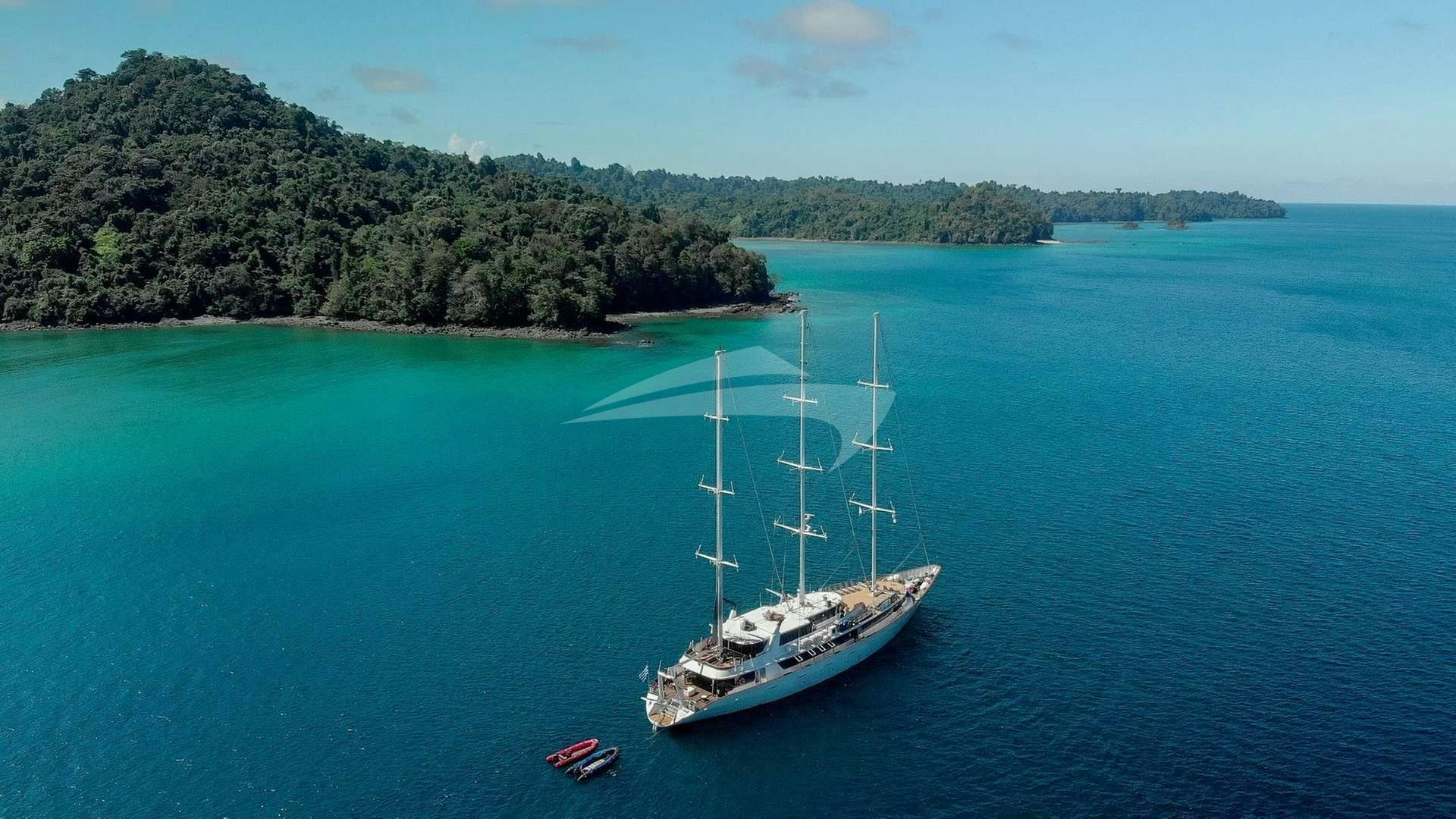
Navigating the 1,244 islands, islets, and reefs that form the Croatian archipelago requires a operational framework quite distinct from the Western Mediterranean. Stretching over 300 nautical miles from the Istrian peninsula down to the border of Montenegro, the Dalmatian coast presents a dense navigational tapestry. Island hopping here involves short, scenic runs—rarely more than 15 to 20 nautical miles between viable anchorages—but the onshore infrastructure demands strict planning. High season congestion, historic town quays with varying draughts, and specific regional environmental regulations mean that executing a seamless Croatia yacht charter relies entirely on mastering local berthing logistics, bunkering procedures, and port formalities.
For captains and charter brokers alike, understanding the operational differences between the major administrative regions—Istria, Northern Dalmatia (Zadar and Šibenik), Central Dalmatia (Split), and Southern Dalmatia (Dubrovnik)—is essential. While the installation of modern marina facilities has accelerated rapidly over the last decade, space for vessels exceeding 50 metres length overall (LOA) remains concentrated in specific deep-water hubs. Strategic planning around transfer times, fuel stops, and quay reservations is necessary to maintain an effortless itinerary for guests onboard.
Border Formalities, Schengen, and Maritime Regulations
Croatia’s accession to the Schengen Area on 1 January 2023 significantly streamlined entry procedures for vessels cruising between Italy, Greece, and the Adriatic coast. Border checks at sea between Croatia and other Schengen member states have been eliminated, allowing yachts to transit freely across the Adriatic without clearing outward and inward with border police, provided all crew and guests hold appropriate Schengen documentation.
However, for yachts entering Croatian territorial waters from non-Schengen countries—most commonly Montenegro (clearing out of Tivat or Kotor)—strict port-of-entry formalities remain enforced. The primary year-round ports of entry in Southern Dalmatia are Dubrovnik (Gruž) and Korčula, with Cavtat operating as an official seasonal border crossing from May through October. Cavtat is typically the first available port of call when northbound from Montenegro; vessels must proceed directly to the seasonal customs quay located at the outer pier before setting anchor or disembarking guests.
Cruising Permits and Vessel Documentation
Commercial and private yachts flying non-Croatian flags must comply with national maritime regulations regarding navigation safety fees and light dues, locally referred to as the vignette. This fee is calculated based on vessel length and engine power, and must be obtained from the local Harbour Master’s Office (Lučka kapetanija) upon first entry or prior to commencing a charter season within Croatian waters.
Key administrative requirements for foreign-flagged charter vessels include:
- Valid certificate of registry, international classification certificates, and minimum safe manning documentation.
- Proof of public liability insurance with adequate third-party cover as mandated by Croatian maritime law.
- Endorsed crew list and guest manifest, updated and stamped by the Harbour Master prior to departure from the port of embarkation.
- Commercial charter licenses or official cabotage approvals if embarking or disembarking charter guests within Croatian territory.
Non-EU crew members on foreign flagged vessels must pay strict attention to passport stamping rules. While Schengen integration eases maritime transit, crew embarkation and disembarkation changes must be reported to the local maritime police to ensure sea-time days and visa limits are correctly logged.
Key Operational Hubs and Airport Transfers
An efficient itinerary depends heavily on matching embarkation and disembarkation ports with international flight schedules and ground transport logistics. Croatia’s primary coastal airports—Pula, Zadar, Split, and Dubrovnik—provide direct access to the main marine infrastructure, but transfer times vary depending on local road conditions during the peak summer months of July and August.
+-------------------------------------------------------------------------+
| AIRPORT TO MARINA TRANSFER OVERVIEW                                     |
|                                                                         |
| Dubrovnik Airport (DBV)  --->  Gruž Commercial Port      [22km / 35min] |
| Dubrovnik Airport (DBV)  --->  ACI Marina Komolac        [28km / 45min] |
| Split Airport (SPU)      --->  Marina Kaštela            [ 7km / 10min] |
| Split Airport (SPU)      --->  ACI Marina Split          [25km / 45min] |
| Split Airport (SPU)      --->  Trogir Quays              [ 5km / 10min] |
| Zadar Airport (ZAD)      --->  D-Marin Dalmacija (Sukošan)[10km / 15min]|
| Pula Airport (PUY)       --->  ACI Marina Rovinj         [38km / 40min] |
+-------------------------------------------------------------------------+
Dubrovnik and the Far South
Dubrovnik Airport (DBV), located near Čilipi, sits 22 kilometres southeast of the historic city centre. Ground transfers to the commercial port of Gruž take approximately 35 to 45 minutes by road. Gruž is the principal berthing area for large superyachts exceeding 60 metres, offering deep-water quays and straightforward vehicle access for provisioning trucks and VIP transfers.
Further up the Ombla River estuary lies ACI Marina Dubrovnik at Komolac. While offering comprehensive service facilities, the river channel restricts access: air draught is limited by the Dr. Franjo Tuđman Bridge (50 metres clearance), and the riverbed depths vary between 3.0 and 5.0 metres, making it unsuitable for deep-draught sailing yachts or mega yachts.
Split and the Trogir Cluster
Split Airport (SPU) at Resnik is arguably the most strategically located aviation hub for Dalmatian cruising, situated directly between Trogir and Split. Transfers to the historic town quay of Trogir or the repair and marina yards of SCT Trogir take under 10 minutes. Trogir serves as a primary turnaround base due to its close proximity to the runway and immediate access to the Drvenik and Šolta channels.
Transferring from Split Airport to Split city centre, including ACI Marina Split and the Zapadna Obala (West Coast Promenade), requires a 25-kilometre drive that can take upwards of 45 to 60 minutes during peak summer traffic. Zapadna Obala provides prime stern-to berthing for yachts up to 80 metres right on the city's waterfront, with direct access to fine dining and high-capacity electrical connections.
Central and Northern Dalmatia: Šibenik and Zadar
Šibenik serves as the premier deep-water superyacht hub in Central Dalmatia. Located inland along the protected Krka River estuary, it is accessed via the deep St. Anthony Channel (Kanal Sv. Ante). D-Marin Mandalina in Šibenik is specifically engineered to accommodate superyachts up to 140 metres LOA with draughts exceeding 5.5 metres. Transfers to Šibenik can be conducted via either Split Airport (60 km) or Zadar Airport (75 km), both taking under an hour via the A1 motorway.
Zadar Airport (ZAD) serves the northern Dalmatian islands and the Kornati archipelago. D-Marin Dalmacija, located in Sukošan just 10 kilometres from Zadar Airport, is the largest marina complex in Croatia, providing extensive berthing for vessels up to 80 metres.
Istria: Pula and Rovinj
Pula Airport (PUY) services the northernmost cruising grounds. It lies just 15 minutes from the historic Port of Pula, which features deep-water commercial berths and dedicated superyacht facilities like ACI Marina Pula. For luxury itineraries focusing on Istria, ACI Marina Rovinj—located 38 kilometres north of Pula Airport—offers premier five-anchor facilities, capable of taking yachts up to 100 metres LOA alongside its outer breakwater.
Marinas, Town Quays, and Superyacht Berthing Infrastructure
Berthing options in Croatia generally fall into three distinct categories: modern marina complexes (predominantly the state-owned ACI Marina network and private groups such as D-Marin), municipal town quays (obala), and private restaurant piers or buoy fields.
The ACI Marina Network and Private Marinas
The Adriatic Croatia International (ACI) network operates 22 marinas across the coastline. Historically designed for small to mid-sized leisure craft, selected key sites have undergone major redevelopments to cater to larger displacement hulls.
- ACI Marina Rovinj: Rebuilt to ultra-modern standards, offering exceptional shore power infrastructure, high-flow fuel, and berthing for yachts up to 100 metres LOA.
- ACI Marina Split: Positioned on the southwestern corner of Split harbour, protected by a long breakwater. Accommodates yachts up to 60 metres, though space for vessels over 40 metres is restricted to the outer T-head and head piers. Draughts range from 3.0 to 8.5 metres.
- ACI Marina Palmižana: Situated on the island of Sv. Klement within the Pakleni archipelago opposite Hvar Town. Capable of taking vessels up to 30 metres with a draught of 2.5 to 7.0 metres. Palmižana serves as the primary safe haven when Hvar Town harbour is untenable due to southwesterly swells.
- ACI Marina Korčula: Positioned adjacent to the medieval walled town of Korčula. Handles vessels up to 40 metres, though exposure to the strong Bora (northeasterly) wind requires heavy mooring lines and careful maneuvering.
Private developments such as D-Marin Mandalina (Šibenik), Martinis Marchi (Maslinica, Šolta), and Marina Marina Baotić (Seget Donji) offer high-end amenities, deep draughts, and secure berthing tailored specifically to luxury charter operations.
Town Quays (*Obala*)
Town quays provide quintessential Dalmatian charm, placing guests directly alongside historical promenades. However, berthing on an obala demands heightened situational awareness from the bridge team. Town quays are generally managed by local port authorities (Lučka uprava), and berths are allocated on a first-come, first-served basis unless secured in advance through a local maritime agent.
- Hvar Town: One of the most sought-after berths in the Mediterranean, yet logistically challenging. The harbour is small, exposed to the Jugo (southeasterly) and Libeccio (southwesterly) winds, and offers fewer than 15 dedicated berths for large yachts on the main waterfront (Riva). Vessels over 40 metres often must anchor off in the Hvar Channel or near the Pakleni Islands and shuttle guests via tender.
- Vis Town (Luka and Kut): Vis harbour provides deep water along the waterfront quay in Luka and the eastern village of Kut. Stern-to berthing with ground tackle or lazy lines (muringi) is standard. The harbour is well protected from most winds except a strong, straight-in Bora.
- Korčula Town Waterfront: Large yachts can berth stern-to or alongside the western shore quay (Zapadna Obala) when winds allow, placing guests steps from the Venetian town gates.
- Skradin: Located 10 nautical miles up the Krka River from Šibenik, passing under two bridges with a minimum air draught clearance of 28 metres. Skradin town quay provides freshwater berthing for yachts up to 45 metres, serving as the gateway to the Krka National Park waterfalls.
Reservation Lead Times, Anchorages, and Park Permits
Securing berthing during the peak charter season (mid-June through early September) requires clear lead times. Unlike the French Riviera, where large commercial ports can accommodate high volumes of transient traffic, Croatian town quays and high-demand island marinas have limited physical footprint.
Advance Booking Logistics
For key locations such as Hvar Town quay, Skradin, ACI Palmižana, and Korčula Town, reservations should be initiated three to six months in advance through local port agents or online reservation portals like MySea and the official ACI booking app. Unreserved arrivals at popular islands during July and August routinely face rejection by harbour masters and are directed to offshore anchorages.
Shoulder season months—May, late September, and October—present significantly higher spontaneity, allowing captains to adjust routes daily based on guest preferences and localized weather patterns.
Anchorages and Concession Buoy Fields
Croatia enforces strict rules regarding anchoring to protect marine ecosystems, specifically the endangered Posidonia oceanica seagrass beds.
- Concession Buoy Fields: Managed by private operators under state concessions, these designated buoy fields are found in high-density bays across Šolta, Brač, Hvar, Vis, and the Pakleni islands. Using a concession buoy incurs a fee based on vessel LOA, but includes waste collection services. When a concession buoy field is operational, anchoring within 150 metres of the field’s outer boundary is strictly prohibited by law.
- National Parks and Nature Parks: Navigating within designated protected areas—such as Kornati National Park, Mljet National Park, Brijuni National Park, and the Lastovo Archipelago Nature Park—requires official entry tickets. Tickets should be purchased online in advance (via the Parkovi Hrvatske portal) at significantly lower rates than those collected by park rangers on the water. Anchoring within National Parks is restricted exclusively to designated bays using prescribed mooring buoys or sand-bottom anchor zones.
Bunkering, Shore Power, and Utilities
Ensuring continuity of utilities—marine gas oil (MGO), fresh potable water, and high-amperage electrical power—is fundamental to smooth operations along the Dalmatian coast.
Marine Fuel (MGO) Logistics
Fuel stations in Croatia range from small seasonal retail pumps designed for dayboats to high-capacity commercial bunkering terminals suitable for mega yachts. High-flow fuel delivery for vessels requiring over 10,000 litres should be coordinated at least 48 hours in advance through a local bunkering agent to guarantee fuel availability and dedicated berth time.
Primary commercial bunkering ports for superyachts include:
- Dubrovnik (Gruž): Commercial quay fuel terminal offering duty-paid MGO with high-speed pumps. Ideal for vessels entering or exiting Croatian waters.
- Split (Solin / North Port): The industrial port of Split provides commercial bunkering options for large volume deliveries via tanker barge or direct truck-to-ship connections.
- Šibenik: Fuel is available near the town quay and via truck delivery at D-Marin Mandalina.
- Zadar (Gaženica): Deep-water commercial port capable of servicing large displacement vessels requiring high-volume duty-paid or duty-free MGO prior to international transits.
- Rijeka and Pula: Major fuel hubs servicing the northern Adriatic and Istrian charter fleet.
Duty-free fuel is strictly regulated under Croatian tax law and is generally available only to non-EU flagged commercial yachts holding a valid charter license, clearing directly out of Croatian territorial waters to a non-Schengen destination (e.g., Montenegro) within a mandatory timeframe post-bunkering.
Shore Power and Fresh Water Supply
Shore power standards vary dramatically between modern superyacht marinas and historic island town quays.
- Superyacht Marinas (D-Marin Mandalina, ACI Marina Rovinj): Offer industrial-grade power connections ranging from 63A to 400A three-phase, allowing full generator shutdown overnight.
- Standard Marinas and Town Quays: Typically provide 16A, 32A, or single-phase 63A connections. Large superyachts berthing at municipal quays in Hvar, Vis, or Korčula should expect to run ship’s generators continuously to cover high HVAC and galley electrical loads.
Potable water is readily available across almost all marinas and municipal quays. However, on remote offshore islands like Vis, Lastovo, and the Pakleni archipelago, water reserves are supplied via naval water tankers during peak summer. As a result, harbour masters may enforce strict limits on water supply to visiting vessels. Yacht captains should aim to top up freshwater tanks or run onboard reverse-osmosis desalination units (watermakers) while underway in open sea areas with high water clarity.
Fresh Provisioning and Shore Support Services
Provisioning along the Croatian coast has evolved into a sophisticated network, supported by specialized marine agents capable of delivering fine international ingredients, specialized galley supplies, and premium local produce directly to the vessel's passarelle.
Local Markets and Speciality Produce
While specialized provisioning agents handle imported delicacies (such as French cheeses, Wagyu beef, and specific caviar brands) delivered via refrigerated transport from hubs in Split or Zagreb, utilizing local markets enhances the culinary experience onboard.
- *Split Green Market (Pazar) and Fish Market (Ribarnica): Located adjacent to Diocletian’s Palace, the Split fish market is one of the premier seafood hubs in the Adriatic, receiving daily catches of wild Adriatic sea bass, sea bream, langoustines (škampi*), bluefin tuna, and squid directly from local fishermen.
- Dubrovnik Gruž Market: Conveniently situated right next to the superyacht berth in Gruž, offering direct access to fresh organic produce from the Konavle valley.
- Regional Specialties: Direct sourcing options include fresh white and black truffles from Istria, artisanal sheep's milk cheese from the island of Pag (Paški sir), native oysters from the Bay of Mali Ston, and top-tier local olive oils from Brač and Šolta.
Crew Logistics, Repairs, and Technical Support
For unexpected technical issues, major marine engine manufacturers and systems vendors have certified service partners located in key shipbuilding hubs:
- Split and Trogir: SCT Trogir and the Shipyard Trogir facility provide extensive hauling capacity, floating docks, and specialized marine engineering workshops capable of handling complex mechanical, electrical, and hydraulic repairs.
- Šibenik: NCP & mare shipyard located near D-Marin Mandalina specializes in superyacht maintenance, refit services, and technical support.
- Pula: Tehnomont Shipyard and the historic Uljanik grounds offer heavy marine engineering capabilities for large displacement craft.
Waste management is tightly monitored by local maritime authorities. Marinas provide dedicated facilities for black and greywater pump-out, oil disposal, and sorted recycling. Discharging blackwater within 3 nautical miles of the mainland or any island is strictly prohibited and subject to heavy fines by the Harbour Master’s riverine and coastal patrols.
By combining meticulous route planning with an understanding of local port rules, wind dynamics like the summer Maestral and katabatic Bora, and regional berthing constraints, captains and charter managers can deliver an immaculate, world-class cruising experience throughout Croatia's island realm.