
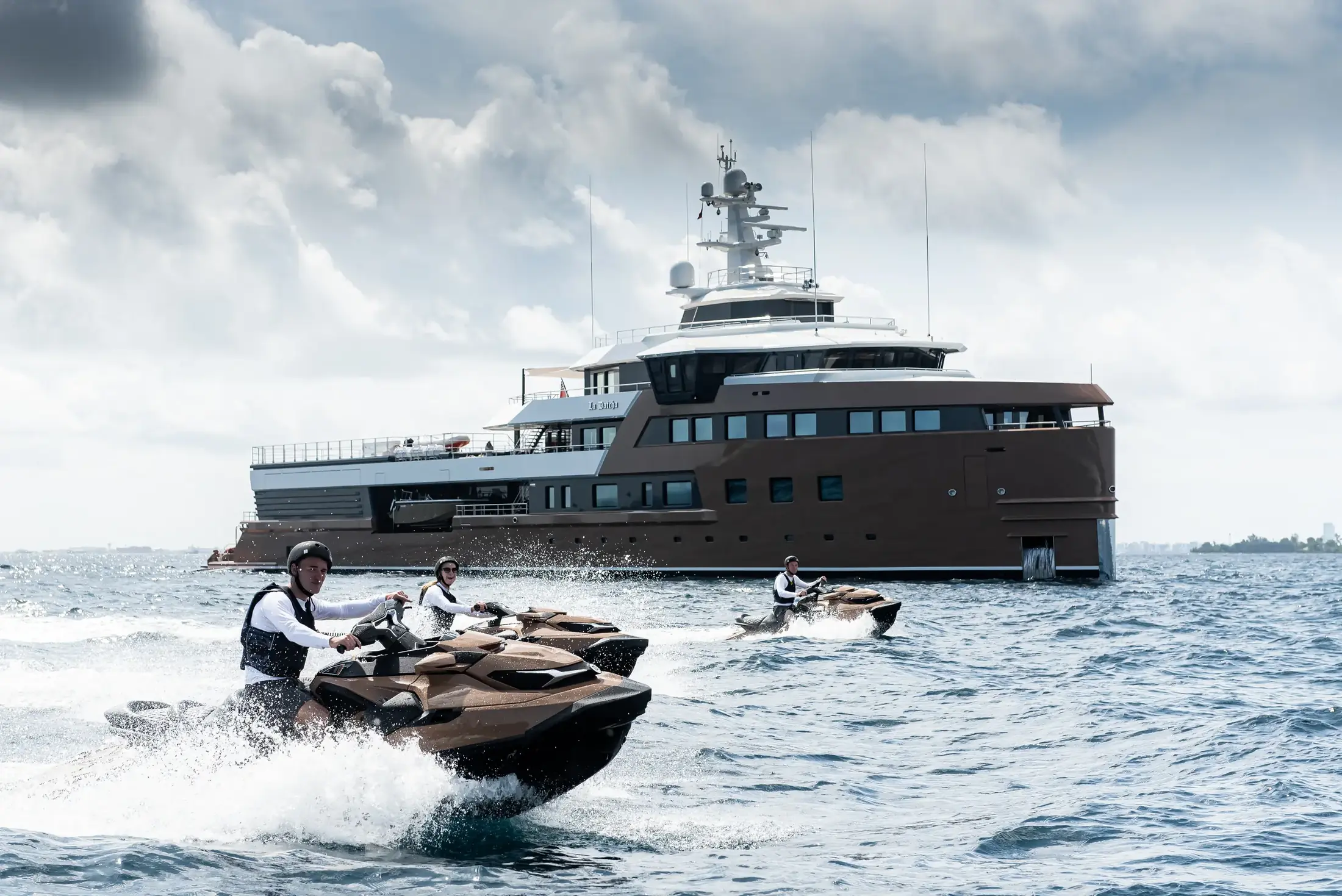
Positioned at the northernmost recess of the Adriatic Sea where the Italian peninsula meets the Istrian landmass, Trieste presents a maritime profile distinct from any other port in the Western Mediterranean. Defined by grand Neoclassical waterfront architecture from its era as the chief maritime outlet of the Habsburg Monarchy, the city combines industrial port infrastructure with specialized superyacht facilities. For captains, charter brokers, and management companies arranging a Trieste Yacht Charter yacht charter, understanding the spatial layout, wind conditions, quay depths, and cross-border formalities is essential for seamless operation.
The Gulf of Trieste is bounded by the limestone cliffs of the Karst plateau to the north and east and the low-lying wetlands of the Grado and Marano lagoons to the west. While deep water extends close inshore along much of the urban coastline, berthing options vary significantly between historic city-centre quays, purpose-built luxury marinas, and specialized repair yards. Navigating this gateway requires exact planning around berth dimensions, local weather dynamics—specifically the katabatic Bora wind—and the logistical interplay between Italian, Slovenian, and Croatian territorial waters.
Principal Marinas and Berthing Infrastructure
Berthing in Trieste divides into four distinct geographic hubs: the urban core surrounding the historic Sacchetta and city quays, the dedicated full-service marina at Porto San Rocco in Muggia, the exclusive resort marina of Portopiccolo to the north, and the heavy engineering and shipyard complex around Monfalcone.
Marina San Giusto and the Urban Quays
Located directly in the commercial and cultural heart of the city, Marina San Giusto sits adjacent to the historic Sacchetta basin, within immediate sight of Piazza Unità d'Italia. This facility provides the most prestigious urban berthing in the northern Adriatic, allowing guests to step off the gangway directly onto the city’s stone quays.
- Berth Capacity: Accommodates vessels up to 60 metres in length along its main outer pontoons, with dedicated mega-yacht moorings along Molo Sartorio and the adjacent Riva Traiana.
- Draft Tolerances: Depths inside the inner basin range from 3.0 to 4.5 metres, whereas the outer berths and commercial quays maintain drafts between 6.0 and 8.5 metres.
- Moorings & Services: Fixed concrete quays complemented by heavy-duty floating pontoons. High-capacity power connections (up to 250A, 400V 3-phase), fresh water, blackwater pump-out, and 24-hour security access controls.
For vessels exceeding 60 metres LOA, commercial berths along Molo IV or Riva Novembre III can be secured through local shipping agents with authorization from the Capitaneria di Porto di Trieste. These commercial walls offer drafts up to 9.0 metres and unlimited air draft, though they lack the residential privacy of dedicated marina berths and require heavy fendering against industrial quay structures.
Porto San Rocco (Muggia)
Situated across the bay in Muggia, roughly 5 nautical miles south of Trieste city centre, Porto San Rocco is a purpose-built marine facility designed by architect Luigi Vietti. It is engineered specifically to cater to high-tonnage private and commercial yachts seeking comprehensive shore services in a protected basin.
- Berth Capacity: Features 525 berths for vessels up to 60 metres LOA, with broad fairways allowing straightforward maneuvering for heavy displacement motor yachts.
- Draft Tolerances: Depths at the harbor entrance reach 15 metres, while berth depths within the main superyacht basin range from 4.5 to 5.5 metres, accommodating deep-draft sailing yachts and large displacement vessels.
- Technical Facilities: Features an expansive technical area with a 160-tonne travelift, marine engineers, electronics specialists, sailmakers, and hull repair workshops. The outer breakwater provides absolute protection from all Adriatic wave directions, including severe southerly swells.
Marina Portopiccolo (Sistiana)
Positioned 12 nautical miles northwest of Trieste's city center, Marina Portopiccolo is integrated into a luxury residential development constructed within a former limestone quarry at Sistiana. This location appeals to charter clients seeking high privacy, fine dining, and direct access to coastal beach clubs away from the urban commercial port.
- Berth Capacity: Provides 121 berths primarily catering to vessels between 12 and 24 metres, with select outer berths capable of accepting vessels up to 30 metres LOA by prior arrangement with the harbour master.
- Draft Tolerances: Depths within the marina basin range from 3.5 to 5.0 metres over a clean gravel and rock seabed.
- Amenities: Offers high-end shore infrastructure including a spa resort, private beach clubs, boutique shopping, underground parking directly beneath the quays, and secure crew facilities.
Monfalcone Yard Complex
Located 15 nautical miles west-northwest of Trieste at the head of the Gulf of Panzano, Monfalcone acts as the primary heavy technical and refit base for the regional charter fleet. Facilities such as Ocean Quality Systems and local shipyards offer deep-water access, large-scale haul-out infrastructure, and specialized marine craft trades. It serves primarily as a logistical, maintenance, and emergency repair staging ground rather than a guest embarkation port.
Technical Tolerances: Draft, Length, and Meteorological Considerations
Navigating and berthing in the Gulf of Trieste demands attention to local geographic and atmospheric phenomena. While the gulf is deep and generally free of hazardous offshore shoals, localized bathymetry and weather patterns dictate strict operational limits.
Gulf of Trieste Operational Depths & Limits
- City Center Urban Quays (Riva Traiana): LOA 60m+ | Draft 6.0m - 8.5m
- Marina San Giusto (Outer Pontoon): LOA up to 60m | Draft 4.5m - 5.0m
- Porto San Rocco (Superyacht Basin): LOA up to 60m | Draft 4.5m - 5.5m
- Marina Portopiccolo: LOA up to 30m | Draft 3.5m - 5.0m
- Sacchetta Basin (Inner Yacht Clubs): LOA up to 22m | Draft 2.2m - 3.2m
The principal meteorological factor in the region is the Bora (Bura), a powerful katabatic wind that cascades down from the Karst plateau through geographic gaps near Villa Opicina and the Vipava Valley. The wind accelerates rapidly, producing localized offshore gusts that can exceed 50 to 60 knots during autumn, winter, and spring, and occasionally during sudden summer thunderstorms (borino).
- Mooring Integrity: When the Bora is forecast, vessels berthed at Marina San Giusto or along the city quays experience strong katabatic offshore or cross-winds. Mooring lines must be doubled, snubbers deployed, and heavy spring lines set.
- Basin Protection: Porto San Rocco and Marina Portopiccolo offer superior physical shelter from the Bora due to elevated surrounding topography and substantial stone breakwaters.
- Anchorage Caution: Open anchorages off Miramare Castle or Sistiana offer good holding in mud and sand (depths 10 to 18 metres), but provide zero protection against a northeastern Bora event. Captains must be prepared to get underway immediately if the barometer drops and wind shifts to the northeast.
Berth Reservations and Seasonal Availability
Demand for superyacht berths in the Gulf of Trieste fluctuates significantly based on seasonal tourism and regional maritime events. Planning lead times must be adjusted according to the charter calendar.
Peak Season (July to August)
During the high summer months, demand for berths in Marina San Giusto and Portopiccolo is elevated. While not experiencing the severe congestion of the French Riviera or Amalfi Coast, primary superyacht berths must be reserved 2 to 3 months in advance to guarantee placement along the main outer pontoons or executive quays.
Shoulder Seasons (May–June and September)
These months offer optimal cruising conditions with moderate ambient temperatures and consistent sea breezes. Berth availability is higher, requiring 2 to 4 weeks advance notice for standard bookings. However, late September sees an influx of vessels preparing for regional autumn nautical events.
The Barcolana Regatta Period (Early October)
The annual Barcolana regatta, held on the second Sunday of October, is the world's largest sailing race by participant vessel count, bringing over 2,000 boats into the Gulf of Trieste. During the first two weeks of October, berthing throughout the entire region—from Monfalcone down to Muggia—is entirely committed.
- Lead Time: Berths for the Barcolana week must be secured 6 to 12 months in advance.
- Logistics: City center quays are closed to non-participating commercial transport, marine traffic in the main roadstead is strictly regulated by the Coast Guard, and premium berth rates apply across all local marinas.
Fuel Bunkering, Utilities, and Provisioning Logistics
Trieste’s status as a major international energy terminal and commercial port ensures exceptional fuel quality, rapid bunkering logistics, and deep marine supply chains for provisioning crew and guests.
Bunkering Operations
Marine Gas Oil (MGO) and Automotive Gas Oil (AGO) are widely available. Duty-free fuel (gasolio agevolato) can be arranged for commercially registered charter yachts operating under an active charter contract, provided clearance is coordinated through an established Italian maritime agent.
- Porto San Rocco Fuel Dock: Features a high-capacity fuel station at the harbour entrance capable of delivering high-flow diesel directly to vessels up to 45 metres LOA. Draft alongside the fuel dock is 4.8 metres.
- Commercial Tanker Delivery: For superyachts berthed along Riva Traiana, Molo IV, or Marina San Giusto taking volumes exceeding 10,000 litres, bunkering is typically executed via road tanker (autobotte). Prior approval from the Capitaneria di Porto and the Customs Office (Agenzia delle Dogane) is mandatory, requiring a minimum of 48 hours notice.
Fresh Water and Power Infrastructure
Municipal water supplied across Trieste’s ports originates from subterranean Karst aquifers and alpine catchments, offering high-purity water directly from shore connections. Shore power distribution across Marina San Giusto and Porto San Rocco meets international superyacht standards, delivering 32A, 63A, 125A, and 250A single- and three-phase power at 400V/50Hz.
Provisioning Channels
Provisioning for a luxury charter departing from Trieste is supported by high-end local food producers and specialized maritime supply agents. The regional culinary tradition blends Friulian, Austrian, and Istrian influences, offering distinct options for onboard chefs.
- Fresh Seafood: The Trieste Fish Market (Pescheria) and direct wholesale suppliers at Muggia provide daily catches of Adriatic sea bass (branzino), sea bream (orata), wild turbot, and local Norwegian lobster (scampi del Quarnero).
- Waterfront Gourmet Hubs: Located directly on the quayside at Riva Tommaso Gulli, Eataly Trieste occupies a restored historic wine warehouse (Magazzino VINO). It provides immediate access to high-grade Italian cured meats (such as Prosciutto di San Daniele and Cormòns), artisanal cheeses, white truffles from nearby Istria, and estate olive oils.
- Wine Cellars: The nearby Collio Goriziano and Carso DOC wine regions supply world-class whites including Friulano, Malvasia Istriana, and Vitovska, alongside robust reds like Terrano. Local wine merchants deliver directly to the yacht's passelle.
Customs, Border Logistics, and Cross-Border Navigation
Trieste's geographic location near the Slovenian border (4 nautical miles south) and the Croatian border (20 nautical miles south) makes cross-border navigation a routine part of any charter itinerary. Understanding the regulatory environment ensures smooth transit when entering foreign territorial waters.
Schengen Area Protocols
Italy, Slovenia, and Croatia are full members of the Schengen Agreement. Border checks between these nations by sea have been streamlined; however, maritime administrative compliance remains active:
- Crew & Passenger Manifests: Captains of commercial charter vessels must maintain updated crew lists and passenger manifests (Lista Equipaggio e Passeggeri).
- Sailing Declarations: When departing Italian waters for Slovenian ports (Koper, Izola, Portorož) or Croatian destinations (Umag, Novigrad, Rovinj), the vessel must submit an electronic arrival declaration via the national maritime single window system or present ship's papers to the local Port Captain (Lučica Kapetanija in Croatia) upon entering the first port of entry.
- Cruising Permits & Taxes: Vessels entering Croatian waters must pay the Croatian Navigation Safety Fee and the Tourist Tax online via the Croatian Maritime Ministry portal (eNautika) prior to entry.
Port Authority Formalities
The primary administrative authority in the region is the Capitaneria di Porto di Trieste - Guardia Costiera. Commercial charter vessels entering Trieste from international waters or changing passengers in port must submit standard maritime declarations via their appointed shipping agent, including safety equipment certificates, charter agreements, registry documentation, and proof of P&I insurance coverage.
Aviation Access, Transfers, and Crew Operations
Logistical connections to Trieste support simple guest transfers and efficient crew rotations via nearby regional and international airports.
Regional Airport Infrastructure
- Trieste Airport (TRS - Ronchi dei Legionari): Located 35 kilometres northwest of Trieste city center (approximately 30 to 40 minutes by private highway transfer via the A4). The airport features a private aviation terminal (General Aviation Centre) handling executive jets and private charter flights, with direct ramp access for VIP transfer vehicles.
- Venice Marco Polo Airport (VCE): Situated 140 kilometres west (1 hour 30 minutes by private road transfer). Marco Polo is a major international hub offering non-stop long-haul flights from North America and the Middle East, making it the primary gateway for international charter guests.
- Ljubljana Airport (LJU - Slovenia): Located 115 kilometres northeast (1 hour 15 minutes via the H4/A1 motorway). Serves as an excellent alternative for private arrivals or European feeder flights.
Helicopter Transfers and Helipads
For high-speed transfers, commercial helipads are located at Trieste Airport and within the industrial port zone. Porto San Rocco can facilitate coordinated helicopter transfers by utilizing designated commercial zones nearby, permitting direct transfers between Venice Airport, private estates in the Collio wine region, and the yacht.
Crew Support and Logistics
Crew operations in Trieste benefit from excellent land transport links. The city’s primary railway terminal, Trieste Centrale, is situated within walking distance of Marina San Giusto and Molo IV, offering direct high-speed rail connections (Frecciarossa) to Venice, Milan, and Rome.
Ship chandlery services, technical marine hardware, engine spare parts provisioning (MWM, CAT, MTU, Volvo Penta), and life raft servicing facilities are fully established within the greater Trieste and Monfalcone industrial corridor. Crew off-duty amenities in Trieste are exceptional, offering high-speed rail connections across Europe, diverse dining, and cultural infrastructure within a compact urban setting.
By pairing meticulous berth selection with a sound understanding of local katabatic weather patterns and international border protocols, captains and charter brokers can execute precise operations throughout the Gulf of Trieste, establishing this historical port as a premier Northern Adriatic yachting hub.