
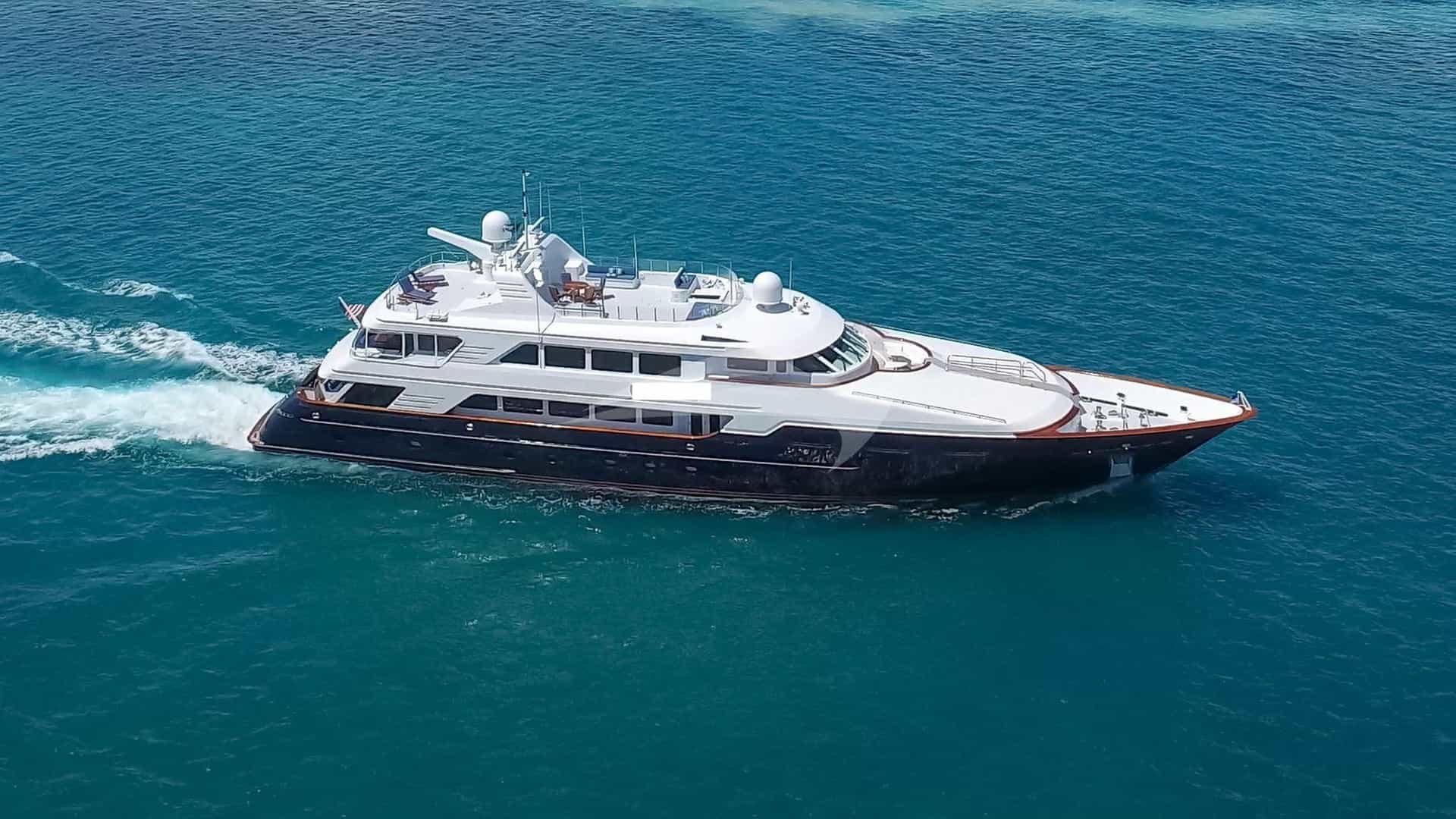
To glide into the Bay of Palma on a June morning is to witness the Mediterranean’s grand theatre of naval architecture. The sheer concentration of white hulls, from athletic 30-metre chase boats to leviathans of over 90 metres, is a spectacle in itself. Yet this is no mere anchorage; it is the epicentre of the Western Mediterranean’s superyachting industry. The view from the water or the battlements of Bellver Castle prompts a recurring question among observers and prospective charter clients alike: precisely how many superyachts visit Mallorca each summer?
The answer is not a simple integer but a complex metric of movements, moorings, and maintenance that defines the island as the region’s indispensable hub. Publicly reported figures and port authority data coalesce to paint a picture of staggering volume: upwards of 2,000 individual superyacht 'visits' are logged between May and October each year. This figure, however, is simply the headline. To understand its significance, one must look deeper into the infrastructure and ecosystem that make such numbers possible.
Palma's Unrivalled Berth Capacity
A yacht is only as free as its ability to find a secure berth. Mallorca, and Palma specifically, has invested more heavily and intelligently in superyacht-specific infrastructure than any other single location in the Mediterranean. Where other ports may offer a handful of berths for vessels over 24 metres, Palma provides a comprehensive network of dedicated marinas capable of accommodating the global fleet’s full spectrum of sizes.
The combined capacity is formidable. The city’s primary facilities—STP (Servicios Técnicos Portuarios), Club de Mar, Marina Port de Mallorca, and the nearby Port Adriano—collectively offer secure berthage for well over 600 superyachts at any one time. STP alone, renowned more for its refit capabilities, provides 150 berths for yachts from 25 to 120 metres. Club de Mar, currently undergoing a landmark redevelopment scheduled for completion in 2025, will offer berths for yachts up to 135 metres. Port Adriano, designed by Philippe Starck, adds another 87 moorings for superyachts up to 100 metres. This sheer density of large-yacht berthing is unmatched anywhere else in Spain, Italy, or the South of France.
The Seasonal Cadence: Deconstructing the 2,000-Visit Figure
The often-quoted figure of 2,000+ superyacht visits requires careful interpretation. This does not represent 2,000 unique yachts, but rather the total number of port entries and clearances—or 'movements'—during the high season. A single yacht might be responsible for several of these visits as it departs for a charter to Ibiza or Menorca and returns to Palma for provisioning, fuel, or a guest changeover.
Even with this clarification, the number is immense. It speaks to a constant, dynamic flow of traffic. The season begins in earnest in late April, as yachts complete their spring maintenance and prepare for owner trips or the first charters of the season. The volume peaks in July and August, when the Balearic cruising grounds are at their most popular. During these months, it is not uncommon for the Port of Palma to handle 30 to 40 superyacht movements per day. This flow is not just local; it is international. Yachts arrive from winter seasons in the Caribbean, cross from the Italian coast, or cruise down from the Côte d'Azur, all using Palma as a strategic base of operations.
More Than a Marina: The Ecosystem Driving the Volume
Berth capacity alone does not make a hub. Palma’s dominance is cemented by the world-class support ecosystem that surrounds its marinas. This is the primary reason why so many yachts choose to be based here, not just visit. The island has become the Med’s leading centre for yacht refit, repair, and maintenance. Yards like STP and Astilleros de Mallorca are global leaders, attracting vessels for work that can range from a simple antifoul and paint touch-up to a multi-million-euro, year-long conversion. This industrial capacity means hundreds of yachts are already in Palma at the beginning of the season, having spent the winter and spring undergoing essential works.
Secondly, Palma is a logistical masterpiece. Palma de Mallorca Airport (PMI) is one of Europe’s busiest, with direct connections to every major city on the continent. This allows for seamless arrivals for charter guests, effortless travel for yacht owners, and efficient rotation for the thousands of crew who call the island home. This established, year-round crew community is a critical asset. Captains know they can find qualified and experienced deckhands, engineers, or interior staff at a moment’s notice—a luxury not afforded by more transient, seasonal ports. This confluence of technical expertise and human capital creates a powerful gravitational pull.
The Charter Market Dynamics: Scarcity Amidst Plenty
For a prospective charterer, the sight of hundreds of yachts in the Bay of Palma can create a misleading impression of boundless availability. The reality on the ground is quite different. Many of these vessels are privately owned and not available for charter. Of those that are commercially registered, a significant portion will be stationed in Palma for maintenance or provisioning between charters that are already booked.
“"Clients see the forest of masts in Palma and assume they can have their pick of the fleet for a last-minute charter in August. The truth is, the top 20% of yachts—those with the best reputation, crew, and amenities—are often fully booked for the peak weeks a year or more in advance. The yachts you see at anchor are a snapshot in time; the charter calendar is a puzzle solved many months before. Our work is to secure our clients' preferred piece of that puzzle before the board is full." — Nils Haeckonen, founder of Blue Ocean Club”
The yachts that are genuinely available for charter operate within a highly competitive market, particularly during the peak months of July and August. The demand for prime berths and anchorages around the Balearics means that even with a confirmed charter, the experience is dictated by meticulous advance planning. A snapshot of the market for a one-week charter in the Balearics during high season demonstrates the commitment required:
- 30-40 Metre Motor Yacht: €90,000 - €150,000 per week + expenses. Often booked 6-9 months in advance.
- 40-50 Metre Motor Yacht: €150,000 - €250,000 per week + expenses. The most popular segment; prime yachts are booked 9-12 months in advance.
- 50-60 Metre Motor Yacht: €250,000 - €400,000 per week + expenses. Often booked over a year in advance, particularly for new-builds or recently refitted vessels.
- 60m+ Motor Yacht: €400,000 - €1,000,000+ per week + expenses. These charters are complex logistical operations planned 12-24 months prior.
What this means for charter clients in 2026
As Palma's infrastructure continues to evolve with projects like the new Club de Mar, its gravitational pull will only strengthen. The volume of superyachts visiting and basing themselves in Mallorca is set to increase. For the discerning charter client, this underscores a simple truth: the illusion of abundance masks an underlying reality of scarcity. The most sought-after yachts and itineraries are not found, they are secured. Planning for the 2026 summer season should not begin in the spring of that year, but now. Engaging with a broker who possesses deep, real-time knowledge of the fleet's movements and availability is not just an advantage; it is a necessity.