Norway is not a charter destination for the faint of heart; it's a serious expedition for principals who prioritise monumental nature over marina glamour. This is about leveraging a world-class yacht as a platform for adventure, cruising through landscapes so immense they recalibrate your sense of scale. The experience is active, profound, and a world away from the predictable rhythms of a Mediterranean summer.
The cruising ground
The classic Norwegian charter focuses on the Western Fjords, a labyrinth of deep, glacier-carved inlets stretching from Stavanger in the south to Aalesund and beyond. This is a UNESCO World Heritage landscape on an epic scale. The primary cruising ground is a triangle between Bergen, the Sognefjord, and the Geirangerfjord. Unlike the line-of-sight island hopping of the Aegean, Norway is about long, dramatic passages deep into the mainland, where sheer granite cliffs rise over a thousand metres from the water.
The "big three" fjords are the main event. Lysefjord, near Stavanger, is home to the iconic Preikestolen (Pulpit Rock) and the Kjeragbolten boulder; it’s a stunning, if busy, introduction. Further north lies the Hardangerfjord, the "orchard of Norway," famous for its flowering fruit trees in late spring and the spectacular Vøringsfossen waterfall. The king of them all is the Sognefjord, the longest and deepest in Norway, plunging to 1,300 metres. Its sheer depth makes anchoring a non-starter in most places, requiring strategic use of moorings in towns like Flåm and Balestrand. Branching off the Sognefjord is the Nærøyfjord, a narrow and breathtakingly beautiful UNESCO site that feels like navigating through a crack in the earth's crust.
Further north still, the Geirangerfjord offers the picture-postcard view of Norway, complete with the famous Seven Sisters and Suitor waterfalls cascading down its sides. For the truly adventurous, itineraries can extend above the Arctic Circle to the Lofoten Islands or the Lyngen Alps near Tromsø. This is a different league of expedition cruising, where the midnight sun of June and July provides 24-hour daylight for heli-skiing on snow-covered peaks that plunge directly into the sea.
Bases and clearance
Your charter will almost certainly begin or end in Bergen or Aalesund, the two primary superyacht hubs in the Western Fjords. Both have international airports with private jet access (Bergen-Flesland, BGO; Aalesund-Vigra, AES) and deep-water berths capable of handling yachts over 80 metres. Bergen’s historic Vågen harbour puts you right in the heart of the UNESCO-listed Bryggen waterfront, an unbeatable place to embark. Aalesund offers a stunning Art Nouveau backdrop and is the perfect gateway to the Geirangerfjord. For Arctic itineraries, Tromsø (TOS) is the operational base.
As Norway is outside the EU, clearance is a formal process but straightforward with a good agent. All foreign-flagged commercial yachts require a cruise permit issued by the Norwegian Maritime Authority (Sjøfartsdirektoratet). This is not something the Captain should be scrambling to arrange on arrival; it must be handled by your broker and a local yacht agent well in advance. The agent will manage customs and immigration formalities, ensuring a seamless arrival for you and your guests. Structuring the charter agreement correctly is paramount here to navigate the local tax landscape, particularly the 25% merverdiavgift (mva).
Where to drop the hook
Anchoring in the fjords is an operational challenge. The U-shaped, glacier-carved valleys mean that you often have extreme depths of 500 metres or more just a stone's throw from the cliff face, rendering a standard anchor scope useless. Successful anchoring requires meticulous chart study and a Captain who knows how to find the few viable shelves and ledges.
In the mighty Sognefjord, you don't anchor; you moor. The villages of Flåm and Balestrand offer secure quayside berths that are the designated overnight spots. In Geirangerfjord, there are a few anchorages, but they are deep and exposed to katabatic winds. Most yachts use a combination of anchor and stern lines to the shore, a technique requiring skill and preparation. Pilotage is strongly recommended and, in some cases, mandatory for navigating these tight, deep channels.
However, there are some spectacular, secluded spots for those in the know.
- Skjolden, innermost Sognefjord: A rare, relatively shallow spot at the very end of the fjord, offering incredible peace once the day-trippers have gone.
- Undredal, Aurlandsfjord: A tiny, impossibly picturesque village with a small quay. Perfect for an afternoon stop to sample the local goat's cheese.
- Ciderhuset in Balestrand: Moor up and walk to this fantastic local producer for a tour and tasting of craft ciders.
- Fantahålå, Geirangerfjord: Just past the Seven Sisters waterfall is a small cove where it's possible for a skilled crew to get a stern line ashore for a truly memorable overnight position, surrounded by waterfalls.
- Walaker Hotell, Solvorn: This historic hotel has its own pier on the Lustrafjord. It's a prime spot to moor for an exquisite dinner ashore, right on the water.
The real luxury of a yacht here is the ability to escape the crowds. While the ferry docks at Geiranger and Flåm are chaotic, your yacht can tuck into a quiet bay a mile away, deploying the tenders and kayaks for a private exploration of the waterfalls and cliff faces.
Weather and season
The charter season is short and intense, running from late May to early September. Forget year-round cruising; this is a summer-only affair. May and early June offer the magic of spring, with snow still dusting the highest peaks, roaring waterfalls fed by the melt, and fruit trees in blossom in Hardangerfjord. The days are incredibly long, and north of the Arctic Circle around the summer solstice (June 21st), the sun doesn't set at all.
July and August are peak season, with the warmest air and water temperatures. "Warm" is relative; expect air temperatures of 15-25°C (60-77°F) and water temperatures that rarely exceed 14°C (57°F). This is not for swimming, but for bracing polar plunges, kayaking, and paddleboarding in a dry suit. The weather is famously changeable. You can experience all four seasons in a single afternoon. A bright, sunny morning can give way to low cloud and drizzle, which then clears to reveal a stunning, sun-drenched evening. Zero-speed stabilisers are non-negotiable for comfort at anchor.
By September, the colours begin to turn, the first dusting of snow returns to the peaks, and a beautiful autumnal light settles over the fjords. The crowds thin out, making it a fantastic time for those seeking solitude, but the weather becomes more unpredictable.
The right yacht
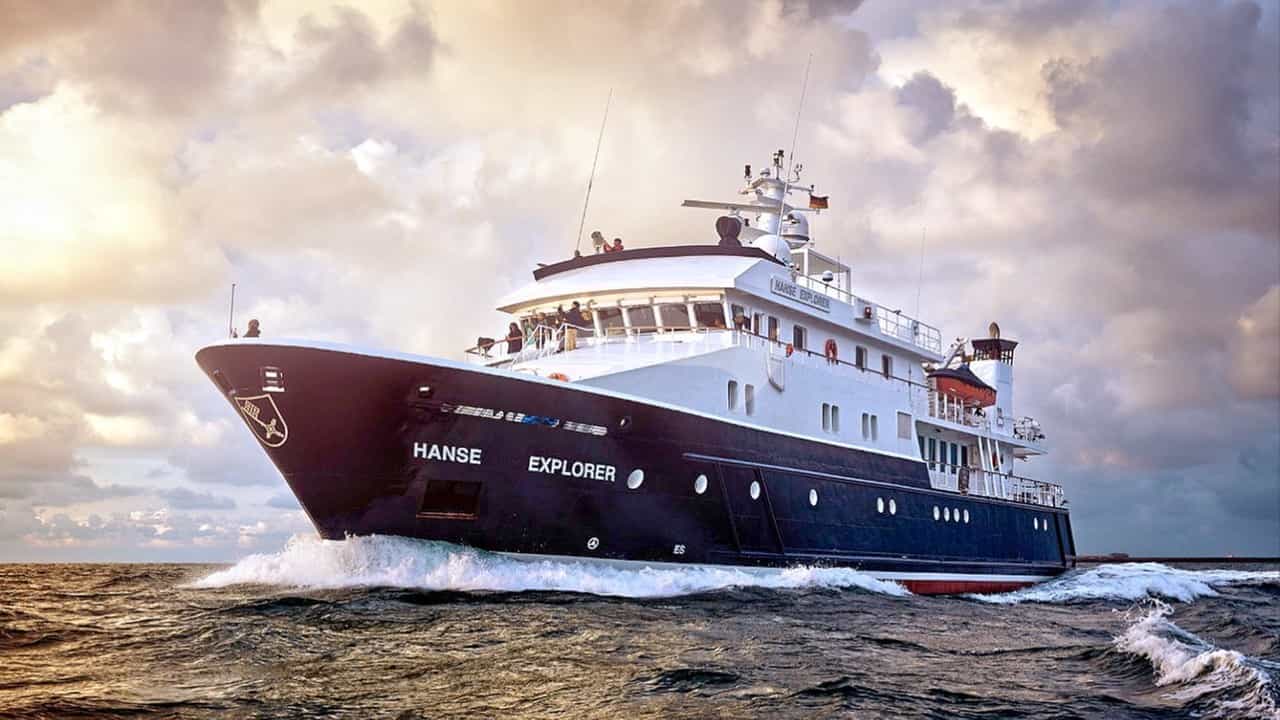
Your standard white GRP Med yacht is the wrong tool for this job. Norway demands a proper expedition or explorer yacht. We are looking at vessels of 40 metres and up, almost exclusively with full-displacement steel or aluminium hulls for stability and strength. An ice-class hull is a bonus, and essential for any serious exploration around Svalbard or the high north.
Key features are paramount:
- Zero-Speed Stabilisers: Essential for comfort in anchorages that can be subject to swell or wind.
- Range and Fuel Efficiency: Passages are long. A yacht with a 4,000nm+ range ensures you aren't constantly planning around fuel stops.
- Exceptional Tenders: A high-performance, enclosed limousine tender or a rugged RIB is vital for exploring narrow inlets, fishing expeditions, and comfortable transfers in potentially choppy, cold conditions.
- Helicopter Capability: For the ultimate Norwegian charter, a certified helideck is a game-changer. It unlocks access to glaciers for hiking, remote rivers for salmon fishing, and the Lyngen Alps for unforgettable summer heli-skiing in May and June.
- Explorer Toys: The garage should be stocked for adventure: multiple kayaks, paddleboards, professional fishing gear, and ideally, a submersible for exploring the deep fjord walls.
Vessels from shipyards like Damen Yachting (the SeaXplorer series), Bering, Cantiere delle Marche, and Arksen are built for this environment. A classic, well-maintained Feadship or Abeking & Rasmussen with the right pedigree can also be an excellent platform for the southern fjords. Expect to be chartering a yacht in the €250,000 - €500,000+ per week bracket to get the right capabilities.
Money
The charter fee for a suitable 45-55m explorer yacht will be in the region of €250,000 to €400,000 per week for summer 2026. The real financial consideration, however, is the tax structure. Norway is not in the EU, which has a significant impact on VAT.
While a correctly structured charter delivered in international waters and cruising into Norway can be exempt from EU VAT on the charter fee, you cannot escape the local consumption tax. Norway has a standard VAT rate (merverdiavgift or mva) of 25% which is applied to almost all goods and services supplied within the country. This includes all your provisions, beverages, fuel bunkered in Norway, harbour fees, agent fees, and any shore-based activities or guides. This 25% surcharge will be reflected in your APA settlement and needs to be factored into your budget from the outset. There is no getting around it.
APA and the small print
We advise clients to budget for an Advance Provisioning Allowance (APA) of 30-35% of the charter fee. This is higher than the Mediterranean standard of 25-30%, for several clear reasons.
First, fuel. The distances are significant. A cruise from Bergen up to the Geirangerfjord and back is a journey of hundreds of nautical miles through winding channels, not a short hop between islands. Your yacht will be running its main engines for long periods, and fuel consumption is a major cost driver.
Second, provisioning costs are high. Norway is one of the most expensive countries in the world. While the quality of local produce—seafood, lamb, dairy—is exceptional, the cost of both local and imported goods will inflate your food and beverage bill. Alcohol is particularly expensive due to high state taxes.
Third, ancillary costs add up. Pilotage through areas like the Nærøyfjord is a significant but necessary expense. Mooring fees, even in small villages, are not trivial. Any specialist activities like heli-skiing, private guides for glacier hiking, or chartering a fishing boat for Atlantic salmon will be premium-priced. Your APA covers these operational necessities.
Finally, the paperwork is non-negotiable. The cruise permit from the Sjøfartsdirektoratet is mandatory. We handle this as part of the charter planning process, but it underscores that this is a tightly regulated and professionally managed cruising area.
How we'd plan a week
This itinerary out of Bergen offers a concentrated dose of the best of the southern fjords, balancing iconic sights with exclusive experiences only possible by yacht.
-
Day 1: Embark in Bergen & Cruise to Rosendal
Board your yacht at Vågen harbour. After a tour of the vessel and a safety briefing, you'll begin your journey, cruising south out of Bergen and into the mouth of the mighty Hardangerfjord. Your destination is the barony in Rosendal, where you'll anchor for the evening with views of the surrounding mountains and glaciers.
-
Day 2: Hardangerfjord & Helicopter to Vøringsfossen
After breakfast, the helicopter arrives on deck. You'll take a breathtaking flight over the Folgefonna glacier before landing near the Vøringsfossen, one of Norway's most powerful waterfalls. In the afternoon, the yacht repositions to a quiet anchorage near Lofthus. Go ashore by tender to visit a local cider producer like Ciderhuset for a private tasting of award-winning ciders.
-
Day 3: Deep into the Sognefjord
An early start for a long and spectacular day of cruising. You'll navigate the length of the Norwegian coast before turning inland into the Sognefjord, the longest and deepest of them all. The scale is staggering. Your destination is the historic village of Balestrand, known for its distinctive architecture. Moor at the quay and enjoy dinner ashore at the Kviknes Hotel.
-
Day 4: The UNESCO Nærøyfjord & Kayaking
From Balestrand, you'll cruise into the Aurlandsfjord and then enter the Nærøyfjord. At its narrowest point, it's only 250 metres wide, with cliffs soaring 1,700 metres overhead. The yacht will anchor in a suitable spot while you explore by kayak and tender, getting up close to the waterfalls and feeling the immense scale of the landscape. It's a humbling and unforgettable experience.
-
Day 5: Flåm & the Flåmsbana Railway
Cruise the short distance to Flåm at the end of the Aurlandsfjord. This is your chance to experience one of the world's most spectacular train journeys. We will arrange pre-booked, first-class tickets on the Flåmsbana Railway, which climbs 867 metres up a steep valley through 20 tunnels to the mountain station at Myrdal. The views are simply astonishing.
-
Day 6: Fishing & Fjord-side Lunch
Leave the main tourist routes behind. The Captain will navigate to a secluded side-fjord known for its excellent fishing. Spend the morning with a local guide angling for cod and pollock from the yacht's tenders. The chef will then prepare your catch for a magnificent lunch, served on the aft deck in total privacy, surrounded by nothing but granite and green water.
-
Day 7: Return Cruise to Bergen
Enjoy a final, leisurely breakfast against a backdrop of fjordland scenery. The yacht will begin its cruise back towards Bergen. It’s a final opportunity to absorb the grandeur of the coastline before arriving back at Vågen harbour for your afternoon disembarkation and onward flight.