The Zadar Gambit: Securing a Superior Dalmatian Charter
The conventional wisdom for a Croatian charter points to a Split or Dubrovnik departure. It's the path of least resistance, the milk run. But for a strategic charter client focused on maximising time in the country’s premier cruising ground—the Kornati archipelago—this is a critical error. The Split embarkation day is a scrum. You’re competing for air and sea space with the entire flotilla of the central Adriatic. The real play, the one we execute for principals who value operational efficiency, is Zadar.
Embarking from Zadar isn't just about choosing a different airport. It's a strategic decision that re-calibrates your entire itinerary, re-allocates your APA, and places you two cruising hours ahead of the pack before your first glass of champagne is finished. This is the operational advantage that defines a superlative charter.
Berth Politics: D-Marin Dalmacija vs. Marina Zadar
Your point of embarkation dictates the first 24 hours of your charter, setting the tone for the entire week. In Zadar, you have two primary options, each with distinct operational profiles.
D-Marin Dalmacija (Sukošan)
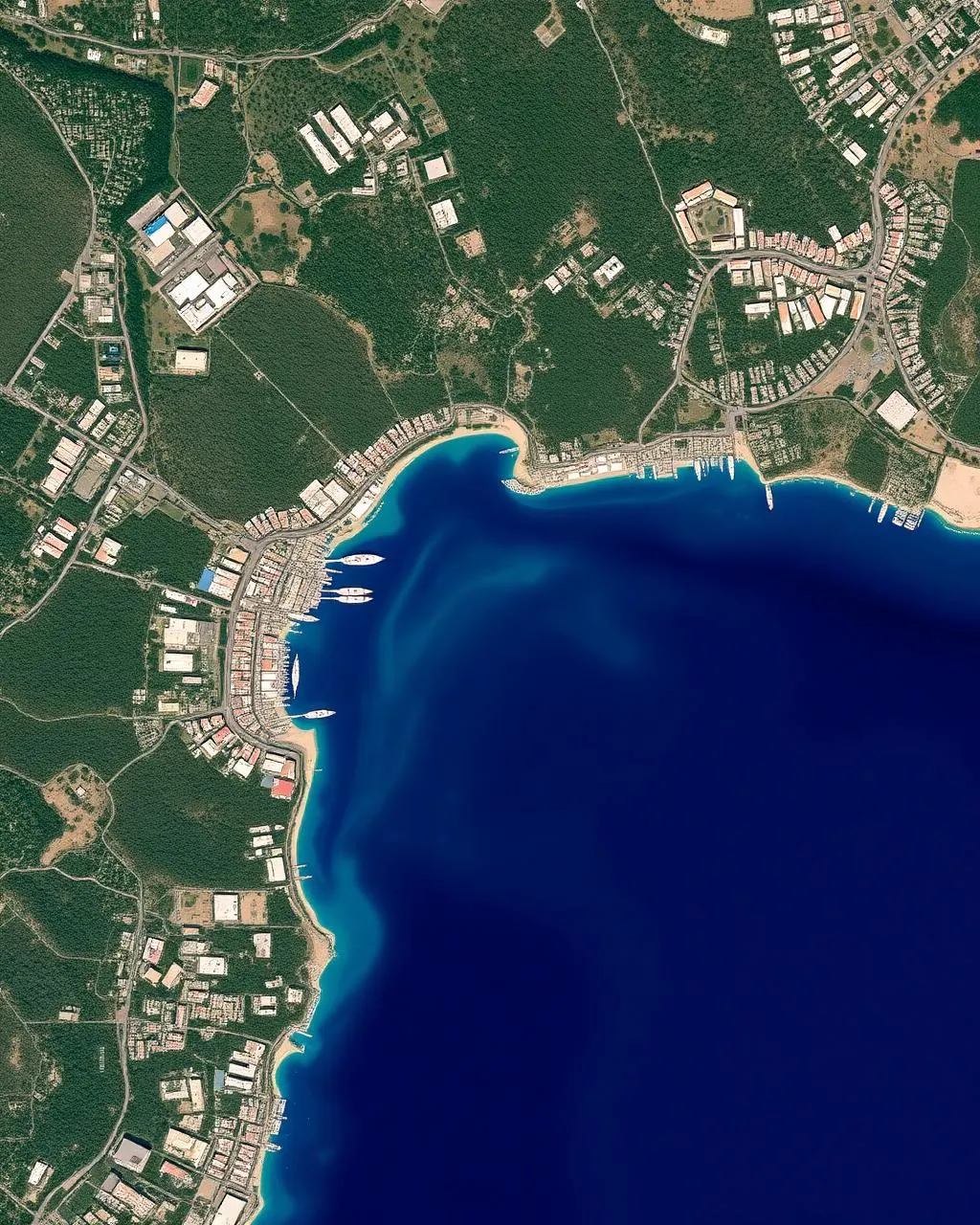
This is the largest marina in the Adriatic, located approximately 10km southeast of Zadar city. Do not let the distance from the old town fool you; for a superyacht operation, this is the default and superior choice.
- Logistics: The scale of D-Marin is its primary asset. It offers deep-water berths for yachts well over 50m, ample turning basins, and professional shore support that understands the demands of a large charter vessel. Provisioning is seamless. Your pre-stocked goods arrive via dedicated service roads, not through a tourist-clogged promenade. Fueling is efficient. Crew movement is unrestricted.
- Access & Privacy: Clients fly into Zadar International Airport (ZAD), a 15-minute VIP transfer from the marina. You are screened from public view, boarding in absolute privacy. For heli-ops, the marina has designated landing capabilities, a rarity in this part of Croatia. The departure is surgically clean: you clear the marina and are in open water, heading south to the Kornati gateway, in minutes.
- The Trade-Off: The only conceivable downside is the detachment from Zadar’s historic core. This is easily mitigated. If the principal wishes to experience the city’s famed Sea Organ or dine at Foša, it’s a pre-planned executive transfer arranged by your captain or broker. It is an excursion, not the backdrop to your embarkation logistics.
Marina Zadar (Tankerkomerc)
Situated directly in the city’s port, adjacent to the old town peninsula, Marina Zadar offers immediate immersion at the cost of operational efficiency.
- Logistics: This is an older, tighter marina. Berthing a larger yacht here is more complex and subject to availability and prevailing winds. Provisioning is a significant challenge, often requiring vans to navigate pedestrian zones and tourist traffic. Noise from the adjacent ferry terminal and city life is a constant. It's a public-facing environment, and privacy is compromised.
- Access & Atmosphere: The appeal is undeniable for those who want to step off the passerelle and be in the heart of the action. You are a five-minute walk from Roman ruins and Riva-side cafes. For a smaller vessel or a client prioritising urban energy over seclusion, it has merit.
- The Verdict: For any charter over 30m where a smooth, predictable, and private start is paramount, D-Marin Dalmacija is the only professional choice. Marina Zadar is a tactical option for specific, smaller-scale charters with a high tolerance for urban friction.
The Itinerary Head Start: The Kornati in Half the Time
The core value of the Zadar gambit is time-to-destination.
- From Split: Your Day 1 involves navigating the busy Split channel, cruising northwest past Šolta and Drvenik. Best case, you might anchor for a late lunch off Maslinica. You are realistically 4-5 hours of cruising time from the southern entrance to Kornati National Park. Your first day is a transit day.
- From Zadar (D-Marin): Upon departure, you are immediately navigating the Pašman channel. Within 90 minutes, you are clearing the southern tip of Pašman island and entering the waters at the gateway to the Kornati. Your first anchorage is not a waystation; it is the destination. You can be swimming in the pristine bay of Telašćica Nature Park on Dugi Otok, the symbolic precursor to the Kornati, while the Split fleet is still burning fuel getting halfway there.
This isn't just about a few hours. It unlocks a more relaxed itinerary for the entire week. It means an extra afternoon in a secluded cove, the ability to linger over a shoreside lunch, and the flexibility to outrun a weather system without sacrificing a key destination. Your APA a is more efficiently allocated to enjoyment, not transit.
Navigational Realities: Working the Wind
The Northern Dalmatian islands offer a unique protective barrier that mitigates weather risk. Understanding the local wind patterns is key to a smooth operation.
- The Maestral (NW): This is the hero wind of the Adriatic summer. A predictable, thermal afternoon breeze, typically Force 3-4. It provides perfect sailing conditions, cools the deck, and dies down by sunset. The dense island chains of the Zadar archipelago provide countless leeward anchorages for calm afternoons and evenings.
- The Bura (NE): This is the wind to respect. A cold, katabatic wind that funnels down from the Velebit mountains. It arrives with sudden, violent gusts and can make open water crossings untenable. However, the Kornati islands, running parallel to the coast, act as a massive breakwater. When the Bura blows, a knowledgeable captain will use the islands as a shield, tucking into protected bays on the southwestern sides of islands like Kornat or Levrnaka, ensuring guest comfort while other yachts are stuck in port.
- The Jugo (SE): A warm, humid wind that builds over a day or two, bringing cloud cover and a rolling swell. It's less common in peak summer but impacts sea state. The Zadar departure again provides an advantage, allowing the yacht to quickly access the sheltered northern coves of Dugi Otok or Ugljan.
Kornati National Park: Rules of Engagement
Accessing the heart of the charter ground requires adherence to strict protocols. This is not a free-for-all.
- Permits: Entry into the Kornati National Park requires a permit, the cost of which is based on the yacht's Length Overall (LOA). This is handled by your captain and charged to the APA. The key is to purchase the permit in advance. On-the-spot purchases within the park carry a 100% surcharge. A professional crew has this sorted before you even leave the dock.
- Anchoring vs. Buoys: Anchoring is permitted only in specific, designated bays. Elsewhere, you must use the established mooring buoys. This is a critical piece of local knowledge: the majority of these buoy fields are owned and operated by the local konobas (family-run waterside restaurants). Taking a buoy implies you will be dining at their establishment. It is a reservation system. Your captain or chief stewardess will radio ahead to the desired konoba (e.g., Konoba Opat, Konoba Levrnaka), securing both a mooring and a table for the evening. This is the symbiotic commercial and social structure of the islands.
Tender Logistics and Shore-Side Hierarchy
In the Kornati, the yacht is your floating villa; the tender is your vehicle. The mothership will rarely, if ever, go "stern-to" a quay here.
- The Workhorse: A powerful, seaworthy RIB is non-negotiable. It’s your transport to dinner, your ski boat, and your key to exploring the shallow coves and cliffs that are inaccessible to the main yacht. Operations are tender-intensive.
- The Konoba Protocol: The hierarchy is simple: the konoba owner is king. When you call to reserve a buoy and table, you are entering their domain. They are often fishermen who have caught your dinner that morning. Respect the system. Your crew will coordinate the tender drop-off. Sometimes the restaurant will send their own small transfer boat to a pre-arranged point. This is part of the experience, not an inconvenience.
- What to Skip: Don't chase trends. The recent phenomenon of beach clubs and DJs has no place in the Kornati. The authentic experience is a simple meal of grilled fish, local olive oil, and wine at a stone-built tavern run by the same family for generations. Skip the imported rosé and ask for the local Pošip or Debit. Skip Sakarun Beach on Dugi Otok mid-day in August; it’s beautiful but overrun. A good captain will take you there for an early morning swim before the day-tripper boats arrive. Avoid the urge to "see it all." The Kornati is about depth, not breadth. Pick three or four anchorages and immerse yourself. The frantic island-hopping itinerary is the amateur’s mistake.
By leveraging Zadar, you trade the chaos of Split for operational control, gaining a full day of quality cruising time and placing the Adriatic's most coveted national park on your immediate doorstep. It’s the smarter, more efficient, and ultimately more exclusive way to execute a world-class Croatian charter.