
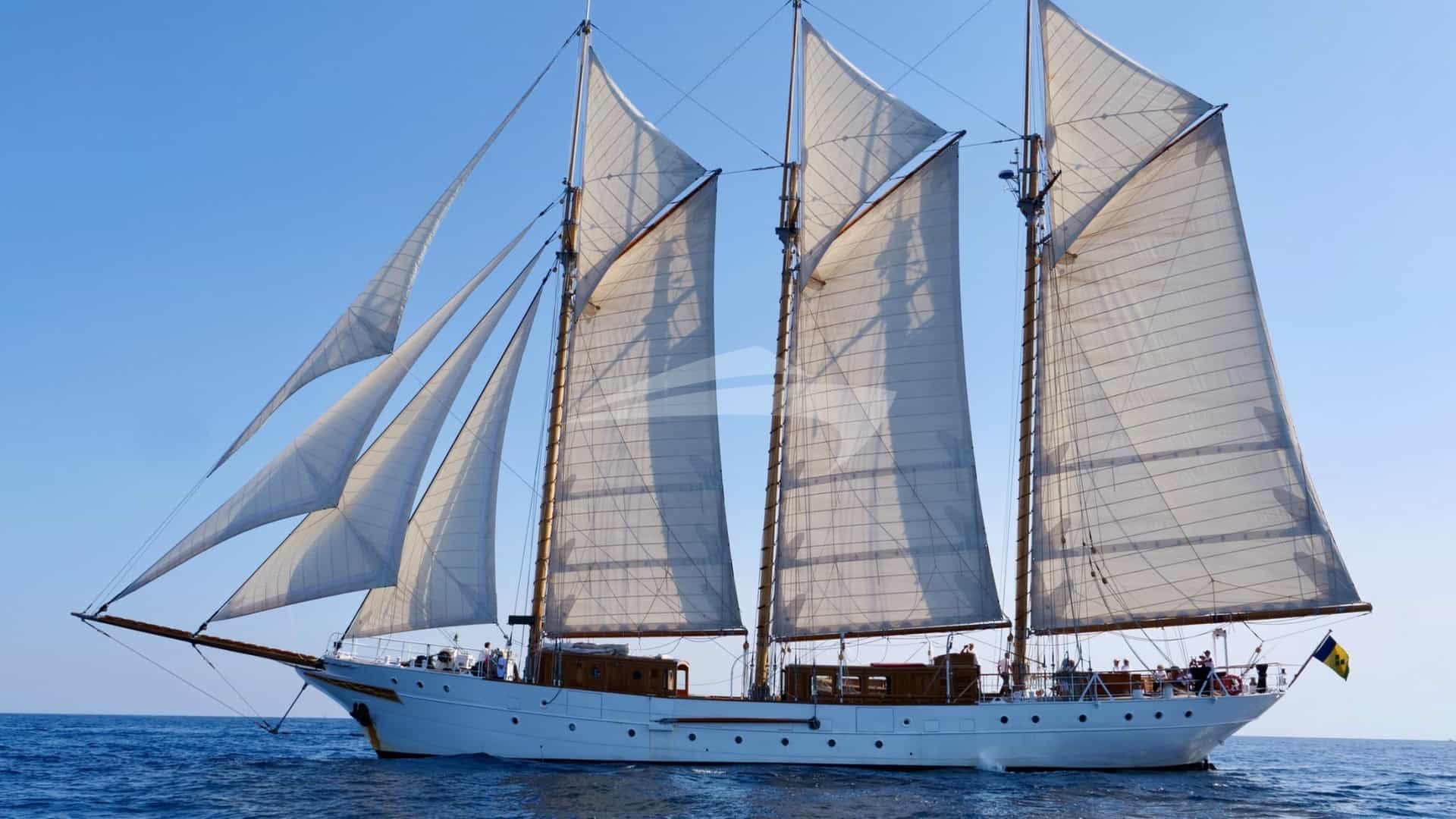
There is a moment, usually somewhere between the third coffee and the moment your broker sends over the fifth shortlist, when the season stops being an abstraction and starts being a choice. Not just a yacht. Not just a week. A place. And 2026, more than any year in recent memory, is a season defined by where you go rather than what you go on.
We have spent the last twelve months in the same rooms as the fleet — brokers, captains, chefs, harbourmasters, provisioners, event producers, insurers, meteorologists. We have watched availability calendars fill and empty in real time. We have listened to what our clients actually did last summer, not what they said they would do in January. What follows is not a scraped top-ten. It is the shortlist Blue Ocean Club is actively booking against for 2026 — the destinations that have earned a repeat visit from the guests who could go anywhere.
1. Croatia — the coast that keeps reinventing itself
Croatia is no longer the "value alternative" it was a decade ago, and that is precisely why it belongs at the top of any honest 2026 shortlist. The Dalmatian coast has quietly rebuilt itself around the yachts that visit it. Split has become a serious embarkation port, ACI marina Rogoznica handles superyachts up to 60 metres without a scene, and the smaller island moorings — Palmižana, Vis, Šolta — have upgraded tenders, concierge and provisioning in ways that were unthinkable in 2019.
What makes Croatia work editorially in 2026 is the shape of the coastline. Fourteen hundred islands, most of them close enough that even a slow motor yacht can knock off two anchorages before lunch and a third before sunset. You are never sailing across open water for eight hours to get to the good stuff. The good stuff is fifteen minutes away, and then another fifteen minutes further on.
We are seeing a strong swing toward the Kornati archipelago in mid-July — a national park of nearly empty limestone islands where the light is almost unfairly good — and toward Mljet''s twin saltwater lakes for guests who want a walk more interesting than a marina stroll. Hvar remains loud in a specific stretch of town; the rest of the island, and Vis just beyond it, remains one of the last genuinely quiet Mediterranean coastlines you can charter without a helicopter.
Practical note for 2026: book Split embarkation early. The slot windows for changeovers at ACI Split have compressed as fleet numbers have grown, and the calmer alternative — repositioning to Trogir or Kaštela — adds real time to a seven-day itinerary.
2. The Greek Islands — Ionian for first-timers, Cyclades for connoisseurs
Greece is the one destination we struggle to describe in a single voice, because the Ionian and the Cyclades are two entirely different holidays and 2026 is the year to treat them as such.
The Ionian — Corfu, Paxos, Antipaxos, Lefkada, Kefalonia, Ithaca — is the softer edit. Warm swimming water, protected channels, short crossings, tavernas where the fish is landed the same morning. This is where we send first-time charter guests, families with younger children, and anyone who wants the pace to feel like an inhale. The meltemi does not blow here, which changes the entire feel of the trip: shorter passages, calmer anchorages, gentler afternoons.
The Cyclades are the opposite temperament. Wind, whitewash, hard sun on hard stone. But if you can time it — early July or late September avoids the worst of the meltemi and the worst of the crowds simultaneously — the Cyclades in 2026 are the closest a yacht charter comes to a curated exhibition. Milos for the sculpted coastline. Folegandros for the near-silent villages. Amorgos for the drama and the diving. Antiparos for the private beaches. Santorini only if your captain can guarantee an offshore mooring; the caldera is a hostile berth and the town is a mistake.
A quiet piece of advice, worth its weight this season: hire a Greek-flagged yacht where possible. The paperwork around foreign-flagged vessels in Greek waters continues to sharpen year on year, and the cleanest itinerary is the one your captain does not have to negotiate at every port.
3. French Riviera — still the room where the season is set
Some clients still hesitate to book the Côte d''Azur, worried it has become a caricature of itself. It has not. It has become something more interesting: the operational spine of the entire Mediterranean charter season. Every serious yacht passes through, every serious agent has an office within a fifteen-minute drive, and the coastline itself — Monaco to Cap Ferrat, Villefranche, Antibes, Cannes, the Îles de Lérins, Golfe-Juan, Théoule, and eventually Saint-Tropez — is a working stretch of water that rewards attention.
The 2026 case for the Riviera is not the parties. It is the compression. In a single week you can attend an event of your choosing (Cannes Film Festival in May, the Monaco Grand Prix in late May, the Cannes Yachting Festival in September, the Monaco Yacht Show a week later), spend three days quietly at anchor off the Îles de Lérins reading a book, take the tender to a two-star Michelin lunch in Mougins, and finish the trip walking out of Saint-Tropez under sail.
The Riviera is also the one destination where "day charter" makes real editorial sense in 2026. Our own fleet has expanded the number of yachts programmed for single-day bookings out of Monaco, Cannes, Antibes and Saint-Tropez. If you cannot commit to a week, this is the coast where a well-planned day still feels like a real holiday.
4. Amalfi Coast and Capri — the trip that photographs itself
If the Riviera is the working spine, the Amalfi is the postcard. Positano, Amalfi town, Ravello above them, Praiano quieter between them; Capri to the north with its two harbours and its almost embarrassingly good swimming; Ischia and Procida west and slightly forgotten, which is exactly the reason to go.
The honest read on Amalfi in 2026 is that it is small. The coastline itself is barely thirty nautical miles end to end. You will not accumulate mileage here; you will accumulate lunches, dinners, tenders in and tenders out, the specific pleasure of being ferried into a village that has no road access from the north. The trip works best combined with the Pontine islands (Ponza, Palmarola, Ventotene — the sleeper hit of the western Mediterranean) at the start of the week, or with a hop to Aeolian Sicily (Stromboli, Panarea, Salina) at the tail.
Book berths early. The Amalfi coast has no meaningful marina infrastructure by design — the beauty of the place is the vertical drop from village to sea — and yachts almost universally anchor and tender. That said, dinner reservations, particularly at Da Adolfo, Le Sirenuse''s La Sponda and anything in Ravello, are the tighter constraint. If your broker is not booking your restaurants alongside your yacht, you are not being served properly.
5. Balearics — Ibiza and Formentera, still, but read the room
Ibiza did not go anywhere. What has changed is how our clients use it. The two-night, four-club run is largely a story from a previous decade; the yachts we place in Ibiza in 2026 spend two days on the west coast for sunset (Cala d''Hort, Es Vedrà, Cala Comte), one deliberately loud night at anchor off Formentera''s Illetes with the tender back to Beso Beach or Juan y Andrea, then a slow drift up to the north — Cala Xarraca, Portinatx, Benirràs — where the pace resets.
Formentera itself is the essential half of any Balearic charter. The sand at Illetes is a specific colour of white that we still cannot describe better than "the reason you booked the trip." The mooring field has been reorganised for 2026 to protect the seagrass, which has made the arrival slightly more procedural and the water considerably cleaner — a fair trade.
Mallorca is the underrated third act. The southwest coast (Andratx, Sa Dragonera, Deià from the sea) is a genuinely beautiful sail, and Palma has quietly become one of the two or three best embarkation ports in the Mediterranean. If a guest wants a full week of Balearic charter without the compressed intensity of Ibiza-Formentera, Mallorca alone can carry it.
6. Sardinia and Corsica — the two-country week
The Costa Smeralda has a reputation. Some of it is deserved (Porto Cervo in August is a fashion show), most of it is misread. Sardinia''s real gift is the Maddalena archipelago just north of Cervo — Spargi, Budelli''s famous pink beach (view-only, not swim), the wind-carved rocks around Caprera — and the wilder east coast down to the Gulf of Orosei, which is closer to a Norwegian fjord than to anywhere else in the Mediterranean.
Cross the Bouches de Bonifacio and Corsica opens up on the other side. Bonifacio itself is a serious contender for the most dramatic port in the Mediterranean — the cliff, the fortress, the entrance from the sea. From Bonifacio you can work up the east coast (Porto-Vecchio, the calanques near Piana) or down into the Lavezzi archipelago, which reads like the Bahamas dropped into the middle of the Med.
A two-country week — Olbia, north through La Maddalena, cross to Bonifacio, Lavezzi, back down through the Costa Smeralda — is one of the most complete seven-day charters we book in 2026. The wind cooperates, the coastline never repeats, and the change of language halfway through the week gives the trip a shape most single-region itineraries lack.
7. Turkey — Bodrum, Göcek and the return to the Turquoise Coast
Turkey took a quiet couple of years and came back in 2026 as one of the strongest editorial destinations on the Mediterranean board. The Turquoise Coast — from Bodrum east through the Datça peninsula, then down through Marmaris, Göcek, Fethiye, Kalkan, Kaş and into the Lycian coast beyond — is a coastline the yachting world half-forgot and is now remembering fast.
What Turkey offers that nowhere else in the Mediterranean quite does is scale of anchorage. Sarsala Bay in Göcek. Twelve Islands. The Bay of Boncuk. Bodrum''s western coast around Türkbükü and Gündoğan. These are large, protected, uncrowded bodies of water where a 40-metre yacht drops its hook and does not see another vessel for the afternoon. Combined with the country''s excellent gulet-yard traditions, the pricing, and a food culture that our chefs consistently rank alongside Italy and Greece, this is where a lot of the 2026 repeat charters are going.
Two operational notes: Turkey does not participate in the Schengen area, which matters for guest paperwork and for repositioning yachts across borders (a Türk-Yunan crossing to the eastern Dodecanese is possible but requires planning). And the country''s Blue Card system for grey-water discharge is now strictly enforced, which is good news for the water you swim in and a non-issue on any properly run charter.
8. The British Virgin Islands — the winter case that still wins
When the Mediterranean shuts down in October, the fleet moves west, and the British Virgin Islands become the answer for December, January, February and March. There is a reason the BVI has been the most-chartered winter cruising ground in the world for thirty years, and 2026 is not the year that changes.
Line-of-sight sailing between islands. Trade winds that are consistent and forgiving. Water temperatures that stay in the high twenties Celsius all winter. Anchorages — Norman Island''s Bight, the Baths at Virgin Gorda, Anegada''s flat horizon, the loop through Jost Van Dyke — that are, by design, no more than a two-hour hop apart. This is the destination that non-sailors leave saying "I now understand what the fuss is about."
The BVI is also where the case for a catamaran is at its strongest. Shallow draft, wide beam, generous deck space, easy tender launching, and the ability to nose into anchorages that a deep monohull cannot reach. A crewed catamaran in the BVI for a family of six in February is one of the tightest, best-value luxury charters we book all year.
9. The Bahamas Exumas — the winter answer for guests who do not want to sail
Not everyone wants trade winds and a heeling yacht. For guests who want the same winter escape without the sailing programme, the Exuma cays are the answer. Motor yacht territory, primarily; a long thin chain of small islands south of Nassau, running down toward George Town, with water that photographs the way tourism boards wish it would.
The set pieces are famous — the swimming pigs at Big Major, Thunderball Grotto, the iguanas of Bitter Guana, the sandbars of Compass Cay — but the trip works because of what is in between. Miles of uninhabited cays, private beaches you actually have to yourself, tenders and jet skis and paddleboards used constantly, and, for the fishing guests, some of the most straightforward permit and bonefish flats in the Atlantic.
Nassau embarkation is the standard opening move; Great Exuma at the south end of the chain is the standard close. Fly in and out on the same private aircraft, and the transit weeks that eat other Caribbean itineraries simply disappear.
10. The Maldives and beyond — the long-haul entry that earned its place
The one long-haul destination we are placing more of in 2026 than in any prior year is the Maldives. Not the resort model — the yacht model. A crewed motor yacht based out of Malé, moving north into Baa and Raa atolls or south into Ari and beyond, opens up a version of the Maldives that the fixed-island resorts cannot reach: private sandbanks in the morning, a manta cleaning station in the afternoon, a reef nobody else is anchored on at sunset.
The 2026 case for the Maldives is straightforward. The winter Caribbean has a specific temperament; the Maldives has another one entirely. Warmer water, calmer sea state, glassier conditions, and — for the divers and snorkellers among our clients — a marine ecosystem that ranks in the top three we visit anywhere in the world. It is a longer flight and a longer commitment, and it rewards both.
What ties the ten together
Read this list back and a pattern emerges. Every destination on it does something the others do not. Croatia gives you density of anchorages. The Cyclades give you drama. The Riviera gives you compression. Amalfi gives you a specific photographic quality of light. The Balearics give you controlled hedonism. Sardinia-Corsica gives you a two-country week. Turkey gives you scale. The BVI gives you the sailing case. The Exumas give you the motor-yacht winter. The Maldives give you the long-haul reset.
The mistake, most seasons, is to try to combine them. To build a fantasy itinerary that goes Amalfi to Croatia to Greece in one week. Yachts move at eight to twelve knots. Miles matter. The best 2026 charters our team is booking are the ones that pick one of the ten above and go deep, not wide.
The second mistake is to book on price alone. The truest luxury of a private yacht charter is the calibration of the trip to the guests on board — the chef who has read the family''s dietary notes before they arrive, the captain who has already re-routed around a weather window you never noticed, the deckhand who remembers that your son wanted to try wakeboarding. That calibration is invisible in a rate card. It shows up in the trip.
Where to start for 2026
If you already know the destination, our destination pages carry the practical detail — anchorages, weather windows, event weeks, indicative pricing — and our fleet page lists the yachts available for the dates you are considering. If you do not know yet, that is what our concierge team is here for. Send us the number of guests, the two or three weeks you can move, and one or two things you know you want out of the trip. We will come back with the shortlist.
The 2026 season, more than most, is not going to reward late booking. The 30- to 45-metre segment of the fleet — the workhorse of luxury charter — is already 40 to 60 percent locked in for peak weeks across the Mediterranean. The winter Caribbean fleet is tighter still. The season will happen either way. Whether it happens on your terms depends, mostly, on whether you started the conversation before Christmas.
We would rather you started it now.
A short note on timing, weather and value
One question we hear on almost every intake call: when, exactly, is the right time to go? The honest answer, in 2026, is that shoulder season has never mattered more. May and September in the Mediterranean now deliver most of the weather people book July and August for, at 20 to 30 percent lower cost, with far less pressure on marinas, restaurants and beach clubs. Early October across the Ionian, late April in the Balearics, and the first two weeks of June on the Amalfi coast are three specific windows we would highlight to any repeat client this year. In the Caribbean, late November and early December offer the same pattern: the trade winds have set in, the water has cooled just enough to be refreshing rather than warm-bath, and the fleet has not yet compressed around the holiday weeks.
Peak-week charter — the second and third weeks of August in the Mediterranean, the two weeks bracketing Christmas and New Year in the Caribbean — will always have its place, and the events that anchor those weeks (the Ferragosto crescendo in Italy, the Boxing Day regattas in Antigua) are worth planning around if they matter to you. But if the constraint is calendar rather than event, shoulder season is the answer. The trip is almost always better.
The Blue Ocean Club shortlist for 2026
None of the ten destinations above is a surprise on its own. What is worth taking away is the specific case each one makes, and the fact that in 2026 those cases have sharpened rather than blurred. Croatia has become more capable. Greece has split cleanly into two products. The Riviera has doubled down on being the industry''s operational hub. The Amalfi has stayed exactly the same size, which is now its most valuable feature. The Balearics have quietly tidied up. Sardinia and Corsica have grown into a two-country week. Turkey is back. The BVI is still the BVI. The Exumas own the winter for motor-yacht guests. The Maldives has earned the long haul.
Pick one. Go deep. Book early. Everything else is detail — and detail is what we handle.