# The Yacht Deck Has Become the New Deal Room for Private Capital
The first conversation about a €180 million logistics park outside Barcelona didn''t happen in a glass tower on Avinguda Diagonal. It happened on the aft deck of a 38-metre motor yacht moored stern-to in Port Vell, somewhere between a chilled bottle of Chablis and a plate of Palamós prawns. By the end of the week the term sheet had been redlined twice, the equity stack had a new co-investor, and the operating partner had agreed to fly out and walk the site.
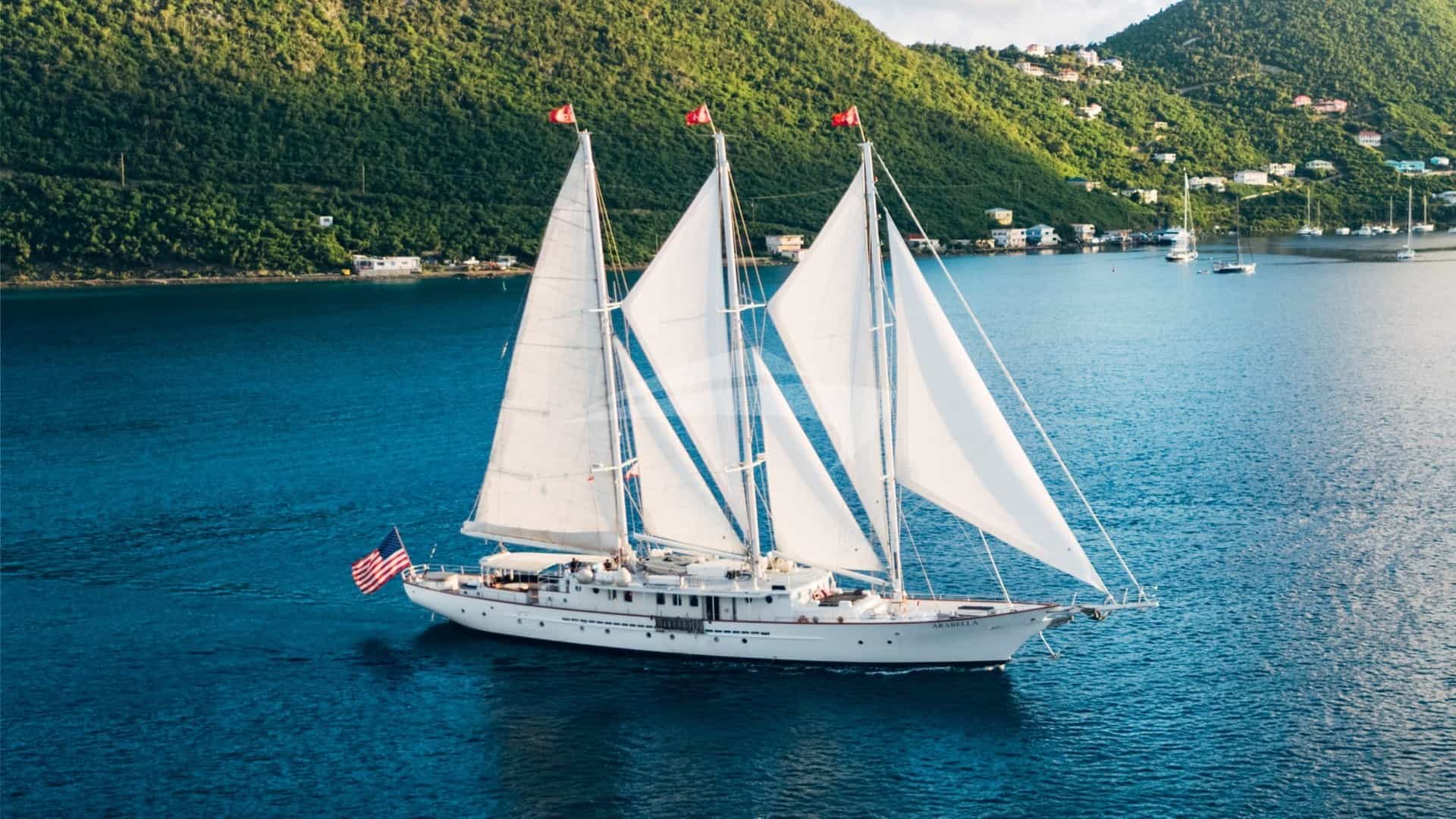
This is not an outlier story anymore. Across our charter calendar — Monaco in May, Mykonos in July, Porto Cervo in August, St Barths over New Year — we are watching a clear pattern emerge: the first serious discussions about real estate developments, private equity transactions and venture capital rounds are increasingly taking place not in conference rooms, but on yachts.
Why the deck is winning over the boardroom
The boardroom was designed for hierarchy. Long table, head seats, a screen at one end, lawyers on the wings. It is excellent for signing things. It is unsuited to the part of dealmaking that actually matters most: deciding whether you trust the people on the other side of the table enough to wire them eight, nine or ten figures.
A yacht inverts almost every variable. There is no head of the table. Phones have weak signal. Calendars relax because nobody can leave for the next meeting. A captain announces departure and the conversation that was scheduled for forty minutes becomes a three-hour lunch as the boat repositions to the next bay. Time, the single scarcest resource in private capital, suddenly behaves differently.
For real estate sponsors, that compression of time is everything. A developer pitching a hotel conversion in Sicily can, in a single afternoon, take an LP from "interesting" to "send me the model" — without ever opening a deck. Site photos come out on an iPad over coffee. The architect joins for dinner. By the time the tender is dropped for a sunset swim, the LP has met the team, asked the awkward questions, and watched how the sponsor handles a wet phone and a difficult guest. That is diligence — soft diligence, but diligence — that an Investor Day cannot replicate.
What private equity learned first
Private equity figured this out earlier than most. The summer migration from London, New York and Geneva to the Western Mediterranean has been quietly institutionalised. Mid-market GPs charter for a week and rotate LPs through in three-night windows. Mega-funds take 60-metre+ yachts in Sardinia or the Côte d''Azur and use them as a floating annual meeting — without anyone calling it that.
The economics are sharper than they look on paper. A week on a 35-metre motor yacht for ten guests, all-in with crew, chef, fuel and dockage, typically lands between €180,000 and €260,000. Split across the relationships closed, accelerated or rescued during that week — fundraises in flight, portfolio company introductions, co-investment dialogues — the per-relationship cost compares favourably with a single trans-Atlantic IR trip. And the conversion quality is, by every anecdote we hear from clients, materially better.
What private equity also figured out is that yachts solve a specific governance problem: how to spend unstructured time with a small number of investors without it looking, or feeling, like a lobbying exercise. A dinner in Monaco during the Grand Prix is a corporate event. Three days of cruising the Îles d''Hyères with the same group is a relationship.
Venture capital, slower to adopt, now catching up
Venture has historically been more allergic to overt luxury — the optics around founder dinners on superyachts are not always comfortable for funds that market themselves as scrappy. That is changing, for two reasons.
First, the LP base has shifted. Sovereign wealth, family offices and large endowments now account for a meaningful share of venture commitments, and those LPs operate at a different cadence and a different aesthetic. A weekend on the water in the Cyclades with a single GP and four founders from the portfolio is, for that LP profile, a far better use of time than another panel in Half Moon Bay.
Second, the founders themselves have begun to ask for it. Series C and later founders — particularly in fintech, climate and deep tech — are looking for unstructured strategic time with their boards and prospective acquirers. A yacht in the BVI between Christmas and New Year, with two board members, the prospective acquirer''s corp dev lead and the founder''s spouse, is the closest thing modern venture has to the steakhouse dinner of an earlier era. It just happens to be on the water.
Real estate: where the deck does the most work
Of the three asset classes, real estate is where the yacht-as-deal-room shift is most pronounced — and most underestimated. Real estate is a fundamentally relational business. Land assemblies, planning negotiations, off-market acquisitions, joint ventures with local operators: none of it gets done on a Zoom call.
We have watched a single charter week in Mallorca produce: a refinancing of a five-asset hospitality portfolio, the introduction of a UAE family office to a London-based logistics platform, and the verbal agreement that became the seed of a €400 million Iberian build-to-rent vehicle. None of those conversations were on an agenda. All of them happened because the same eight people were on the same boat for six days.
The reason real estate slots so naturally into this format is that the asset class travels well. You can fly the architect in for one night. You can divert the boat to look at a coastline a sponsor is acquiring. You can have the local mayor for lunch in Porto Cervo. None of that is possible from a sixtieth-floor conference room.
What we are seeing from the broker''s seat
A few patterns from our own charter book over the last twenty-four months:
The average guest list has shrunk. Six to ten people, not the fifteen-plus we used to see. Smaller groups produce more substantive conversations.
The shoulder season is filling up. May, June and September now book earlier than peak August for this profile of client. Quieter anchorages, cooler weather, and — critically — a less crowded calendar back home.
Itineraries are being designed around access, not scenery. Clients want to be in Monaco during the Yacht Show, in Cannes during MIPIM-adjacent weeks, in Mallorca during the Copa del Rey. The destination is chosen for the deal flow it intersects with.
The brief to the broker has changed. Five years ago the brief was "we want a beautiful boat with a good chef." Today it is "we are bringing two LPs and a target company CEO; we need a yacht with a workable indoor dining area for twelve, strong wifi at anchor, and a captain who is comfortable repositioning at night so we can be in Cannes by Tuesday lunch." The yacht is now infrastructure.
A note on discretion
The reason most of these conversations work on a yacht and not in a hotel is discretion. There is no front desk. There is no concierge logging movements. The crew is contractually bound to confidentiality and, in practice, is the most professionally discreet hospitality workforce in the world.
For the deals that matter — the ones that move markets, the ones that are not yet public — that discretion is not a luxury. It is the operating environment.
How to think about it if you are considering it
If you are an LP being invited onto a sponsor''s yacht for the first time, the right question is not "is this appropriate." The right question is "what am I actually going to learn about these people in seventy-two hours that I cannot learn in seventy-two emails." Usually the answer is: a lot.
If you are a GP or a sponsor thinking about chartering for the first time, the mistake to avoid is treating the week like a hosted offsite. Over-scheduling kills it. The week works because of the unstructured hours — the second coffee, the swim before dinner, the conversation that drifts into territory nobody planned to discuss. Build the itinerary to leave that space, and the deal-making takes care of itself.
The yacht is not replacing the boardroom. The signing still happens on paper, with lawyers, in offices. But the work that precedes the signing — the trust, the read, the calibration — is increasingly being done on the water. Our job, as charter brokers, has quietly become a small but real part of how private capital actually gets deployed.
If you are planning a week along these lines for 2026, the boats with the right specification — quiet, fast, large indoor dining, strong connectivity, crew used to this client profile — are already moving. The Mediterranean summer is the tightest market we have seen in a decade. The earlier the conversation, the better the boat.
---
Related reads: Private Capital × Yachting
Part of our editorial series on how private capital, family offices and founders are using yachts as a working venue: